
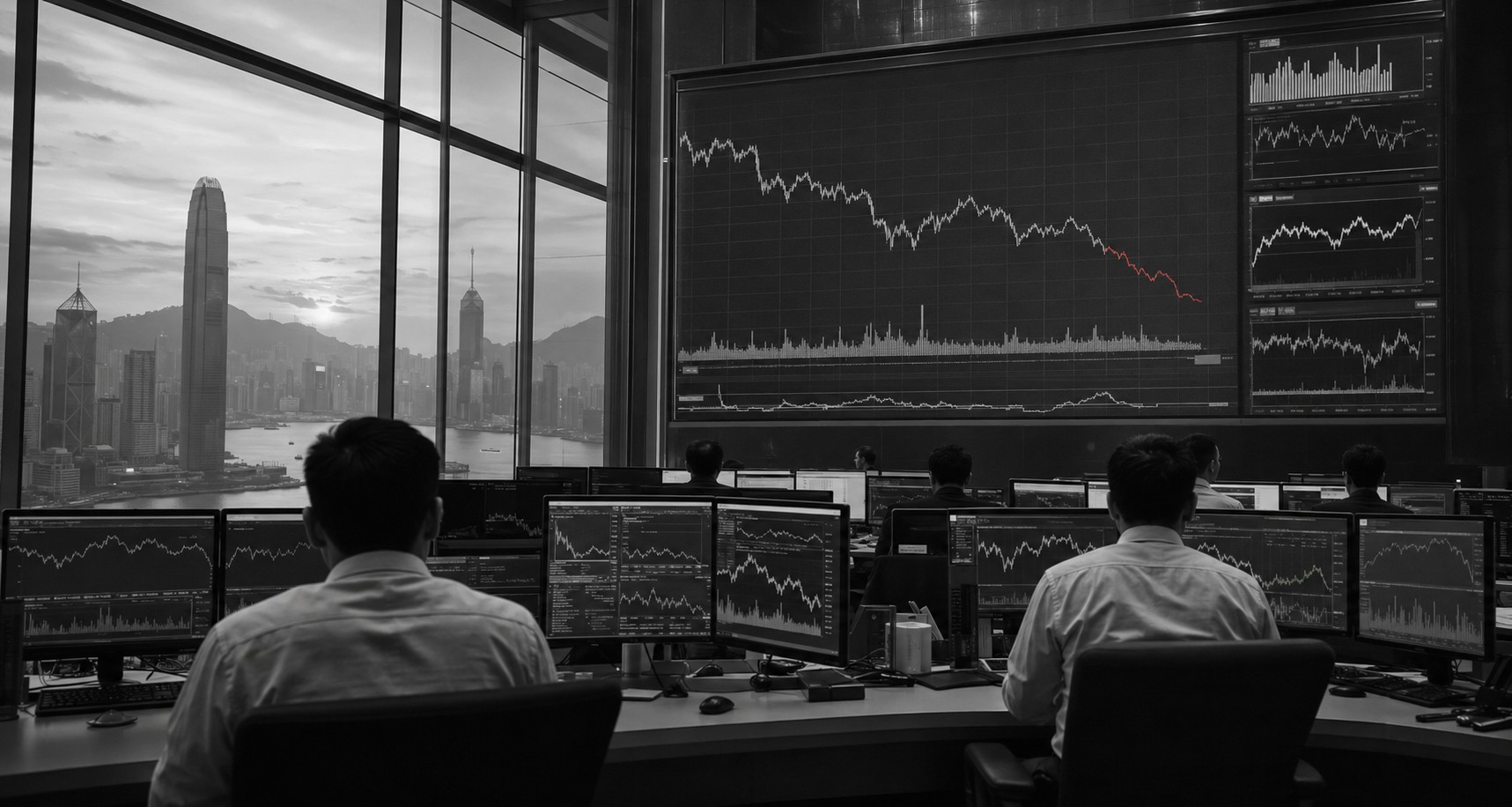
Asian stock markets opened the week on a cautious note on Monday, with investors balancing falling oil prices against concerns over technology valuations, high global bond yields and threatened new US sanctions on Iran. Japanese shares remained close to unchanged, while losses in South Korea and mainland China weighed on the wider region.
Tokyo struggles for direction
Japan’s Nikkei 225 moved between modest gains and losses after the opening bell, following a decline of almost 4% during the previous week. The index traded below 66,000 as caution surrounding artificial intelligence stocks and higher international borrowing costs limited demand for equities.
The broader Topix performed slightly better, indicating that the pressure remained concentrated among technology and other highly valued growth companies. A weaker yen offered some support to exporters, but it was not enough to create a decisive upward move.
Seoul falls as Samsung disappoints
South Korea delivered one of the weakest openings in the region. The Kospi initially dropped around 2% and extended its losses as Samsung Electronics fell sharply.
Samsung shares declined by more than 8% after the company announced a record shareholder-return programme that nevertheless failed to meet elevated investor expectations. The lack of greater detail regarding share buybacks disappointed a market already nervous about the outlook for semiconductor valuations.
Taiwan’s Taiex was comparatively stable, with investors reluctant to take large positions before Nvidia publishes its quarterly results on Wednesday. Nvidia’s performance is considered particularly important for Asian chipmakers and suppliers exposed to continued investment in AI infrastructure.
Alibaba weighs on Hong Kong
Hong Kong opened lower as Alibaba shares dropped following the announcement of a major new share placement. The Chinese technology group raised approximately HK$80 billion, or US$10.2 billion, to finance further investment in artificial intelligence.
Alibaba’s shares fell around 8% during early trading, reflecting concerns about shareholder dilution and the enormous cost of developing AI infrastructure. The placement was priced at HK$112.70 per share, below the company’s previous closing price.
Mainland Chinese markets also weakened. The CSI 300 index of leading Shanghai- and Shenzhen-listed companies declined approximately 0.8%, contributing to a 0.9% fall in MSCI’s broad index of Asia-Pacific shares outside Japan.
India and Australia resist the decline
India opened marginally higher after two consecutive weeks of losses. The Nifty 50 gained 0.14% to 24,285.05, while the Sensex advanced 0.11% to 77,629.56. Most major sectors recorded small gains, although uncertainty surrounding Iran prevented a stronger recovery.
Australia provided another area of relative strength, with the S&P/ASX 200 moving higher after the opening. Mining companies supported the market as demand for copper and other industrial commodities strengthened.
Iran, Nvidia and interest rates set the agenda
Investors were awaiting details of planned US sanctions against Iran, particularly any measures capable of affecting oil supplies through the Strait of Hormuz. Brent crude fell approximately 1.5% to US$93.02 per barrel, although prices remained elevated after gaining 6.6% during the previous week.
Attention will now turn to Nvidia’s results, US inflation figures and Federal Reserve Chair Kevin Warsh’s speech at Jackson Hole on Friday. Until those signals arrive, Asian markets are likely to remain sensitive to technology valuations, bond yields and developments in the Middle East.
Newshub Editorial in Asia – 24 August 2026

Ask NF GPT
If you have an account with ChatGPT you get deeper explanations,
background and context related to what you are reading.

Recent Comments