
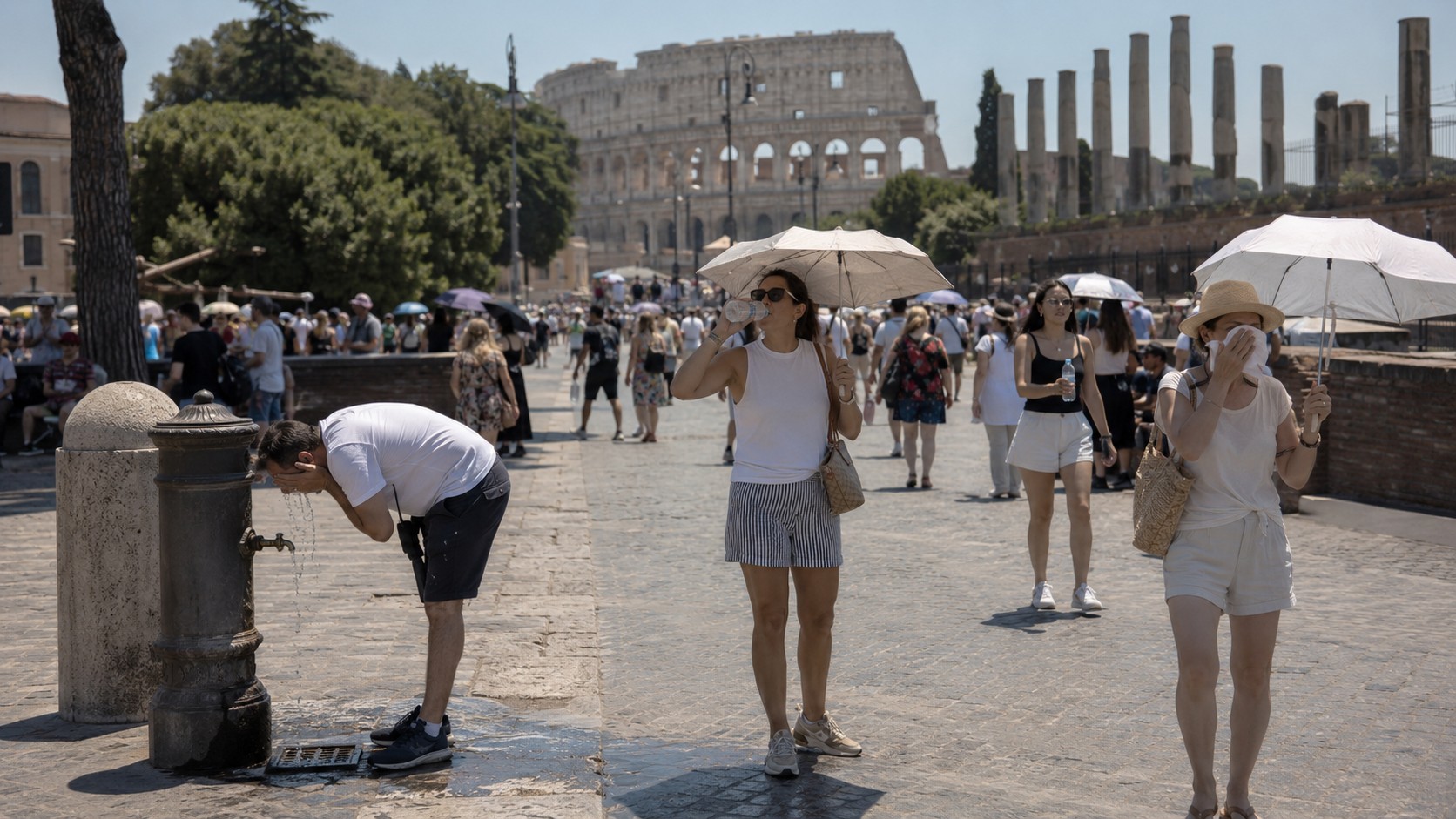
taly has placed all 27 cities covered by its national heat-monitoring system under the highest red alert as the country’s fourth heatwave of the summer intensifies. Temperatures are approaching 40°C in several regions, prompting authorities to warn that the prolonged conditions represent a serious health risk to the entire population, not only elderly or medically vulnerable people.
Nationwide red alert takes effect
The maximum alert applies on Thursday from Trieste in the north to Palermo in Sicily. Rome, Milan, Florence, Bologna, Venice, Naples and Turin are among the cities affected, while Messina and Reggio Calabria have been upgraded from amber to red.
It is the first time during 2026 that all 27 cities monitored by Italy’s health ministry have simultaneously reached the highest warning level. A red designation is issued when extreme temperatures persist for several days and conditions are considered capable of causing a public-health emergency.


The warning system assesses more than daytime temperature alone. It also considers humidity, night-time conditions and the length of the heat episode, all of which influence the human body’s ability to recover.
North African heat drives temperatures higher
Meteorologists have attributed the latest surge to a powerful anticyclone carrying hot air northwards from Africa across the Mediterranean. Temperatures have already reached around 40°C in parts of Italy, with little meaningful relief expected before the weekend.
High overnight temperatures are adding to the danger, particularly in densely populated urban areas where concrete and asphalt retain heat. The effect can prevent homes and streets from cooling properly after sunset, increasing pressure on residents without air conditioning.
Authorities have advised people to avoid direct sunlight between 11am and 6pm, remain hydrated, wear light clothing and avoid strenuous outdoor activity. Employers have also been urged to protect staff working in construction, agriculture and other exposed occupations.
Several recent deaths have been linked by Italian media to the extreme temperatures, including workers in Lombardy and the Bologna area. Heat-related illness can develop rapidly, with outdoor workers, older people, children and those with chronic health conditions facing the greatest immediate danger.
Cities introduce protective measures
Local authorities are opening air-conditioned public buildings and strengthening assistance for isolated residents. Rome has made some cooled cultural venues available as places of refuge, while selected attractions are extending evening access so visitors can avoid the hottest hours.
Hospitals and emergency services are monitoring admissions for dehydration, heat exhaustion and cardiovascular problems. The sustained demand for cooling is also placing additional pressure on electricity networks.
Agriculture and water supplies under strain
The heatwave is worsening drought conditions in the Po valley, one of Italy’s most important agricultural and industrial regions. More than 100 towns in parts of Piedmont and Lombardy are reportedly facing pressure on local water supplies.
Farmers are experiencing lower yields, reduced milk production and faster ripening of grapes. While earlier harvesting can protect some crops, prolonged heat and limited rainfall may reduce quality and increase irrigation costs.
Extreme heat becomes a recurring risk
Italy’s fourth major heatwave of the summer underlines how extreme temperatures are becoming a repeated challenge rather than an isolated emergency. Scientists have consistently warned that human-driven climate change is making European heatwaves longer, more frequent and more intense.
The immediate priority is protecting residents and visitors. Over the longer term, Italy faces growing pressure to adapt cities, workplaces, healthcare systems and water infrastructure to increasingly severe summer conditions.
Newshub Editorial in Europe – 6 August 2026
taly has placed all 27 cities covered by its national heat-monitoring system under the highest red alert as the country’s fourth heatwave of the summer intensifies. Temperatures are approaching 40°C in several regions, prompting authorities to warn that the prolonged conditions represent a serious health risk to the entire population, not only elderly or medically vulnerable people.
Recent Comments