
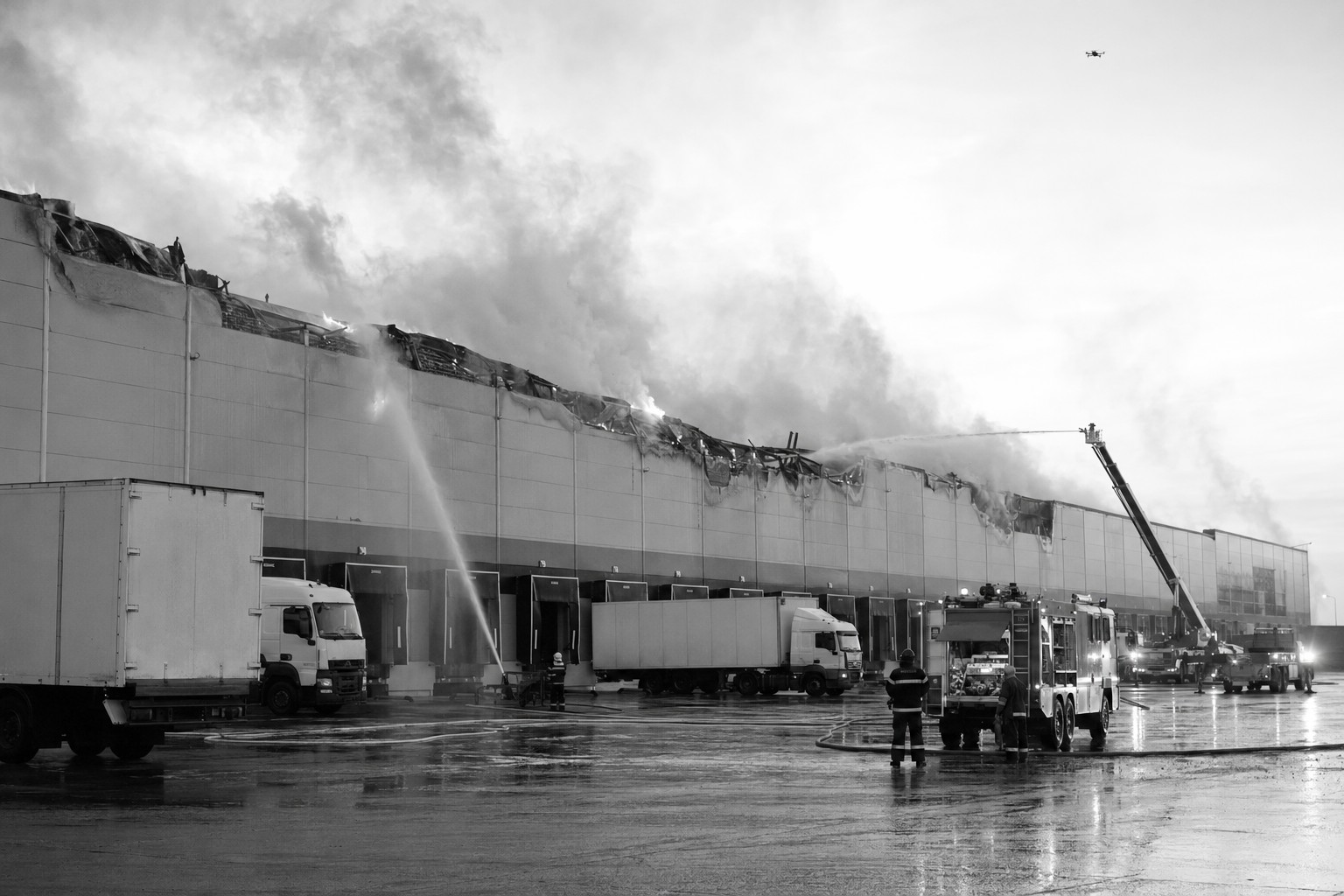
Two more warehouses connected to Wildberries, Russia’s largest online retailer, have been struck in Ukrainian drone attacks, extending Kyiv’s campaign against commercial logistics facilities it says are supplying equipment and components to Moscow’s military.
New strikes in southern Russia
The latest attacks hit Wildberries warehouses in Russia’s Krasnodar region and in Nevinnomyssk, in the Stavropol region. Fires broke out at both facilities, while Russian authorities reported several casualties among employees and people in the surrounding areas.
The attacks followed devastating strikes on Wildberries distribution centres in Kotovsk, in the Tambov region, and Elektrostal, near Moscow. Russian officials said eight workers were killed and more than 80 people injured in those earlier attacks.


Images and videos circulating online showed large industrial buildings engulfed in flames. Wildberries co-founder Tatyana Kim confirmed that further company facilities had been damaged and described those affected as civilians working in ordinary commercial operations.
Kyiv alleges a military supply role
Ukraine maintains that the warehouses form part of a wider logistics network supporting Russia’s armed forces. Ukrainian officials have alleged that facilities operated by the retailer have stored sanctioned electronics, navigation equipment and components used in the production and operation of military drones.
Wildberries sells an extensive range of commercially available goods that may have both civilian and military applications. These include radios, body armour, fibre-optic cable, electronic components and equipment capable of being adapted for battlefield use.
Volunteer groups and private buyers regularly use Russian online marketplaces to purchase supplies for military units. However, Wildberries and the Kremlin deny that the company operates as part of Russia’s formal military supply system.
The different accounts illustrate the increasingly blurred distinction between civilian commerce and military logistics in a prolonged war. Commercial warehouses, transport companies and online platforms can process ordinary consumer goods while simultaneously distributing products used by troops.
Retail sector seeks tax relief
The attacks have generated substantial losses for Wildberries, independent merchants and logistics contractors using the platform. Russian e-commerce representatives have asked the government to postpone tax payments and provide other financial relief to businesses affected by the destruction.
Wildberries processes millions of orders each day and has become a central part of Russia’s consumer economy. Damage to its warehouses could disrupt deliveries, destroy inventories belonging to thousands of sellers and create significant insurance and compensation claims.
The company’s importance also gives the attacks a psychological and economic dimension. By striking a business familiar to millions of Russian consumers, Ukraine is bringing the consequences of the war closer to people far from the front line.
Long-range campaign intensifies
Kyiv has expanded its long-range drone operations against Russian oil facilities, railway infrastructure, ports and industrial sites. Ukraine describes the campaign as an attempt to reduce Moscow’s ability to finance and sustain its invasion.
Russia, meanwhile, continues to target Ukrainian energy, transport and logistics networks with missiles and drones. A recent attack on an energy facility in the Chernihiv region reportedly left more than 100,000 people without electricity.
The Wildberries strikes demonstrate how the war is moving deeper into the economic structures supporting both countries. They also raise difficult questions about proportionality and civilian risk when commercial facilities are alleged to serve military functions.
Newshub Editorial in Europe – 23 July 2026

Ask NF GPT
If you have an account with ChatGPT you get deeper explanations,
background and context related to what you are reading.
Two more warehouses connected to Wildberries, Russia’s largest online retailer, have been struck in Ukrainian drone attacks, extending Kyiv’s campaign against commercial logistics facilities it says are supplying equipment and components to Moscow’s military.
Recent Comments