
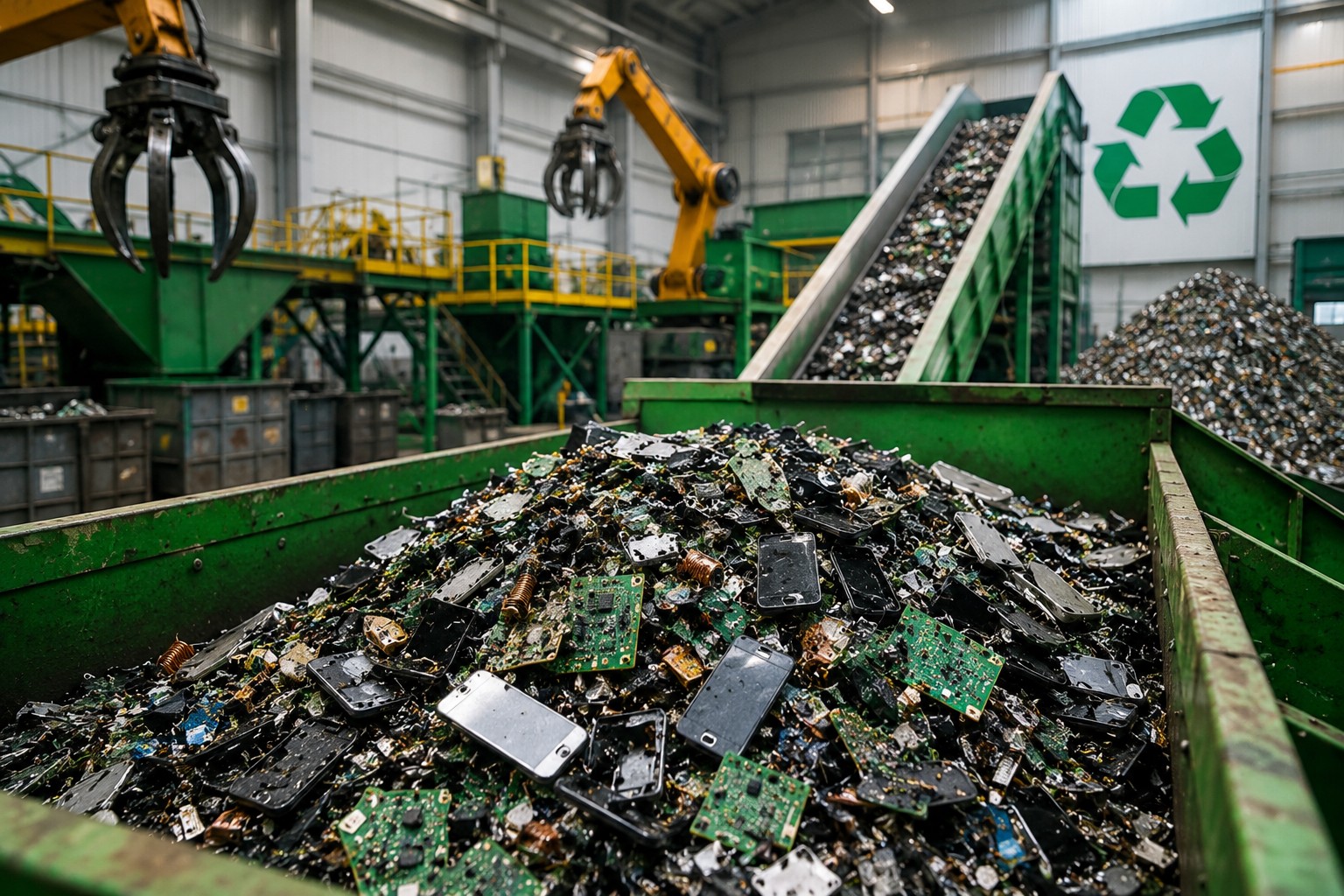
Europe could meet up to half of its future demand for several critical raw materials through recycling by 2050, according to a new EU-funded research report. The findings suggest that recovering valuable minerals from discarded electronics, batteries, vehicles and industrial equipment—often referred to as “urban mining”—could significantly reduce the European Union’s dependence on imported resources, particularly from China, while supporting the continent’s transition to a low-carbon economy.
Unlocking the value of urban mines
The report highlights the growing importance of materials already embedded within Europe’s existing infrastructure and consumer products. As millions of electric vehicle batteries, wind turbines, solar panels and electronic devices reach the end of their operational lives over the coming decades, they will become increasingly valuable sources of critical minerals.
These materials include lithium, cobalt, nickel, copper and rare earth elements, all of which are essential for manufacturing batteries, renewable energy technologies and advanced electronics. Rather than relying solely on new mining operations, researchers argue that recovering these resources from waste streams could become a cornerstone of Europe’s industrial strategy.

Reducing dependence on imports
The European Union currently imports much of its critical raw materials from a small number of countries, with China dominating the global supply chain for many rare earth elements and refined battery minerals.
The report concludes that expanding recycling capacity could substantially strengthen Europe’s strategic autonomy by reducing exposure to geopolitical tensions, supply disruptions and volatile commodity markets. Greater domestic recovery of critical materials would also help secure long-term supplies for manufacturers of electric vehicles, renewable energy systems and advanced technologies.
Researchers note, however, that recycling alone cannot eliminate import dependence entirely. Primary mining and diversified international supply chains will remain essential components of Europe’s resource strategy.
Investment and innovation remain essential
Realising the potential of urban mining will require major investment in collection systems, sorting technologies and advanced recycling facilities across the continent. Improving product design to make components easier to dismantle and recycle will also play a critical role in increasing recovery rates.
The report encourages policymakers to strengthen circular economy regulations, support innovation in recycling technologies and encourage manufacturers to incorporate recycled materials into new products wherever possible.
Such measures would not only improve resource security but also reduce greenhouse gas emissions and minimise the environmental impacts associated with extracting virgin raw materials.
A circular future for Europe’s green transition
As demand for critical minerals continues to accelerate alongside the global shift towards clean energy, Europe’s growing stock of retired products may become one of its most valuable strategic assets. By viewing waste as a resource rather than a disposal problem, the EU has an opportunity to build a more resilient and sustainable industrial base.
While significant challenges remain, the report suggests that urban mining could play a decisive role in helping Europe achieve both its climate ambitions and its economic security. If supported by continued investment and effective policy, recycling may become one of the defining pillars of Europe’s green transition over the coming decades.
Newshub Editorial in Europe – 6 July 2026

Ask NF GPT
If you have an account with ChatGPT you get deeper explanations,
background and context related to what you are reading.
Open an account:
Recent Comments