
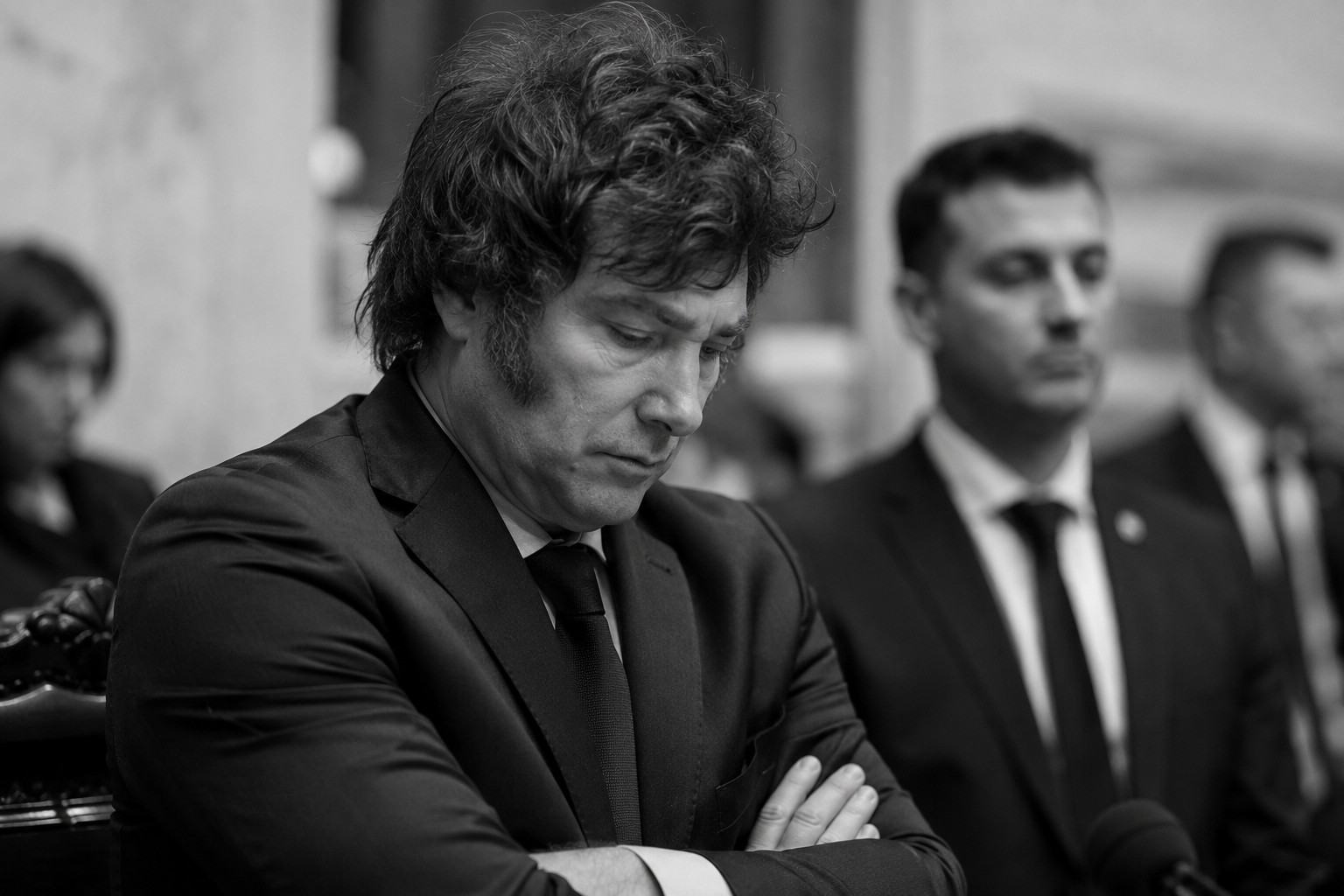
Argentina’s political landscape has been shaken after President Javier Milei’s Cabinet Chief and close confidant, Manuel Adorni, resigned following months of mounting corruption allegations. The departure marks the most significant political setback for Milei’s administration since taking office and raises fresh questions about the government’s anti-corruption credentials, a cornerstone of the president’s electoral campaign.
Resignation follows months of scrutiny
Manuel Adorni, who previously served as President Milei’s chief spokesperson before becoming Cabinet Chief, announced his resignation after prosecutors intensified investigations into allegations of illicit enrichment and financial irregularities. The accusations focus on a series of luxury property acquisitions, expensive overseas travel and undeclared assets that appeared inconsistent with his declared government income. Adorni has consistently denied any criminal wrongdoing, insisting that his assets were accumulated through legitimate means, including earlier cryptocurrency investments, and has pledged to defend himself through the judicial process.
A major blow for Milei
Adorni had become one of the most influential figures within Milei’s administration, acting as both the public face of many government announcements and a key negotiator with provincial leaders and lawmakers. His departure removes one of the president’s closest political allies at a time when the government is pursuing ambitious economic reforms aimed at reducing inflation, cutting public spending and attracting foreign investment. Although President Milei had repeatedly defended Adorni and maintained that accusations alone should not determine political appointments, growing judicial, political and public pressure ultimately led to the resignation.

Anti-corruption message tested
The scandal carries particular political significance because Milei built much of his 2023 presidential campaign around promises to dismantle what he described as Argentina’s entrenched political establishment and eradicate corruption from public life. Critics argue that the allegations involving one of the president’s closest advisers undermine that message and could weaken public confidence in the administration. Government supporters, however, contend that the resignation demonstrates institutional accountability by allowing judicial investigations to proceed without interference while maintaining the presumption of innocence.
Political and economic implications
The resignation is expected to complicate relations between the executive branch and Congress, where Adorni had played a central role in negotiating support for the government’s legislative agenda. Analysts believe the administration may face greater difficulty advancing further economic reforms without one of its principal political operators. Financial markets will also be monitoring whether the political turbulence affects investor confidence, particularly as Argentina continues implementing fiscal consolidation measures and seeks to stabilise inflation after years of economic volatility. While the country’s macroeconomic indicators have shown signs of improvement in recent months, political uncertainty remains a significant factor influencing investor sentiment.
Looking ahead
President Milei is now expected to appoint a new Cabinet Chief capable of restoring confidence within both the government and financial markets. The administration insists its economic reform programme will continue uninterrupted, but the corruption investigation is likely to remain a dominant political issue in the weeks ahead. As judicial proceedings continue, the outcome may have lasting consequences not only for Adorni’s political future but also for the credibility of Milei’s pledge to deliver a cleaner and more transparent government.
Newshub Editorial in South America – 28 June 2026

If you have an account with ChatGPT you get deeper explanations,
background and context related to what you are reading.
Open an account:
Open an account
Recent Comments