
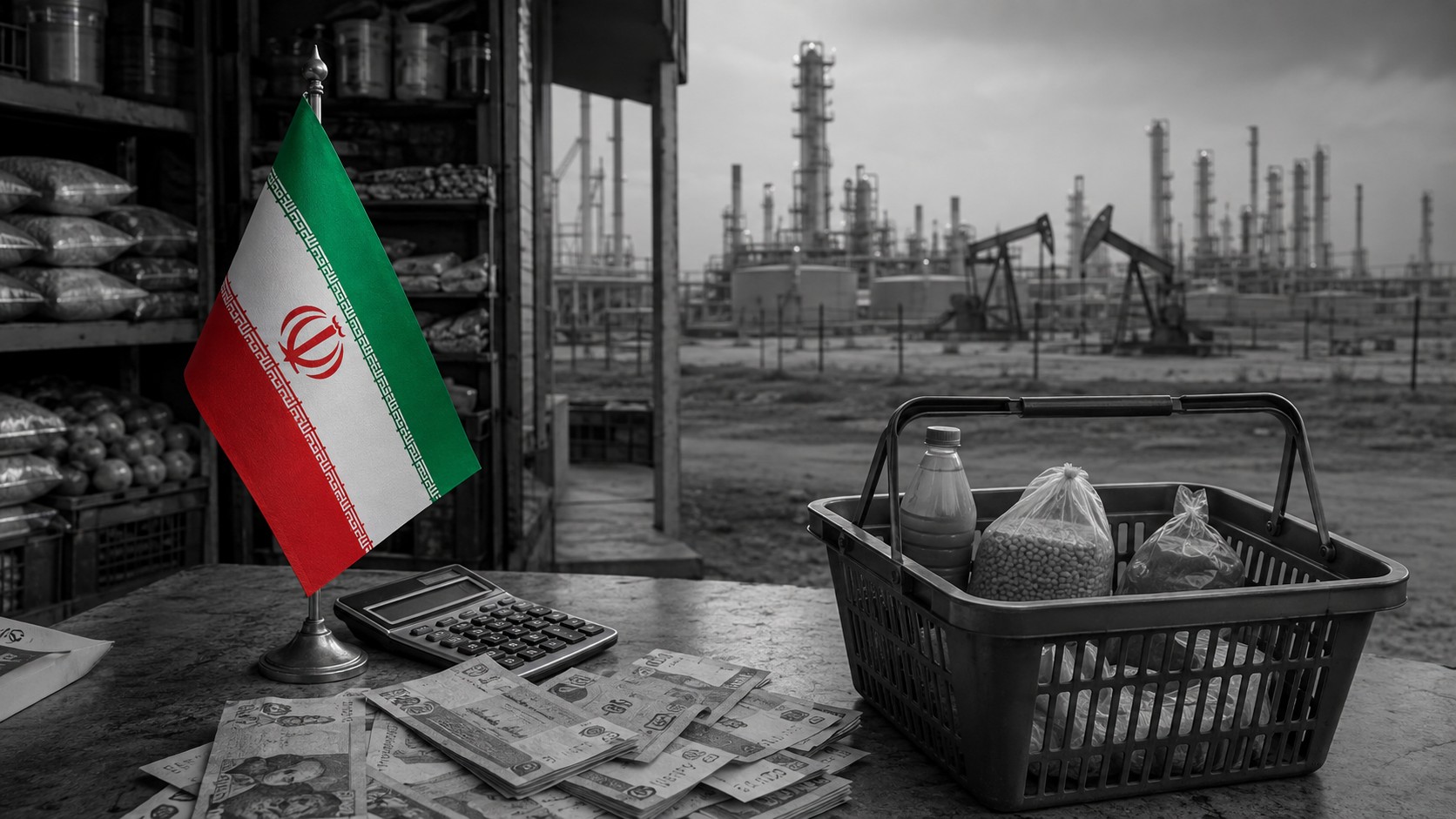
Nearly six months of war with the United States and Israel have pushed Iran’s already fragile economy into a deeper crisis, cutting oil exports, damaging infrastructure and accelerating inflation to levels that are rapidly eroding household incomes.
An economy already under pressure
Iran entered the conflict with longstanding economic problems, including international sanctions, a weakening rial, energy shortages and limited access to foreign investment.
The war, which began with US and Israeli attacks on 28 February, added damaged factories, power plants and transport networks to those structural weaknesses. Construction projects have been delayed or cancelled, while disrupted supply chains have forced some small businesses to close or reduce their workforces.


The International Monetary Fund now forecasts that Iran’s economy will contract by 5.4% during 2026. Average consumer-price inflation is projected to reach 68.9%.
Inflation destroys purchasing power
Iran’s official annual inflation measure reached 66% in July, while consumer prices were 87.9% higher than a year earlier, according to data reported from the Statistical Centre of Iran. Food inflation reached 128%.
The increase has forced households to reduce purchases of meat, poultry and other basic goods. Although the minimum wage was raised by approximately 60% this year, depreciation of the rial has eliminated much of the benefit.
The dollar value of the minimum wage reportedly fell from around $105 in late March to approximately $86. Housing costs have also increased sharply, with rents rising 31% year-on-year in March and Tehran property prices reported to be around 50% higher than a year earlier.
Oil revenues fall sharply
Oil remains Iran’s most important source of foreign currency and government revenue. US pressure and disruption to maritime trade have reduced Iranian oil exports by approximately 85% from pre-war levels.
Exports fell to an estimated 250,000 barrels per day in August. The decline has deprived the government of income at the same time that it must finance military operations, infrastructure repairs and support for an increasingly strained population.
President Masoud Pezeshkian has acknowledged that Iran is selling less oil and collecting less tax from damaged or struggling businesses.
Blockades increase the cost of trade
The conflict around the Strait of Hormuz has become a central economic battleground. Iran’s efforts to restrict shipping have disrupted global energy markets, but the closure has also damaged its own ability to import goods and export oil.
Alternative routes through neighbouring countries and the Caspian Sea are slower and more expensive. Damage to bridges and transport infrastructure has further increased delivery times and costs.
Iran is also facing pressure in its domestic fuel market. Gasoline production has reached approximately 130 million litres per day, while consumption is around 137 million litres. The US naval blockade has largely prevented Iran from covering the difference through imports.
Further sanctions threaten deeper isolation
Washington has expanded sanctions and warned countries that continue trading with Iran that they could face secondary measures. However, the United States has so far avoided its most disruptive options, particularly severe action against China, Iran’s principal remaining oil customer.
The Iranian government has demonstrated that it can continue operating despite the economic damage. The greater uncertainty is how long households and businesses can absorb falling incomes, rising prices and declining employment.
The war has not produced an immediate financial collapse. Instead, it is creating a prolonged economic erosion in which Iran loses export revenue, productive capacity and purchasing power with every additional month of conflict.
Newshub Editorial in Asia – 26 August 2026

Ask NF GPT
If you have an account with ChatGPT you get deeper explanations,
background and context related to what you are reading.
Nearly six months of war with the United States and Israel have pushed Iran’s already fragile economy into a deeper crisis, cutting oil exports, damaging infrastructure and accelerating inflation to levels that are rapidly eroding household incomes.
Recent Comments