
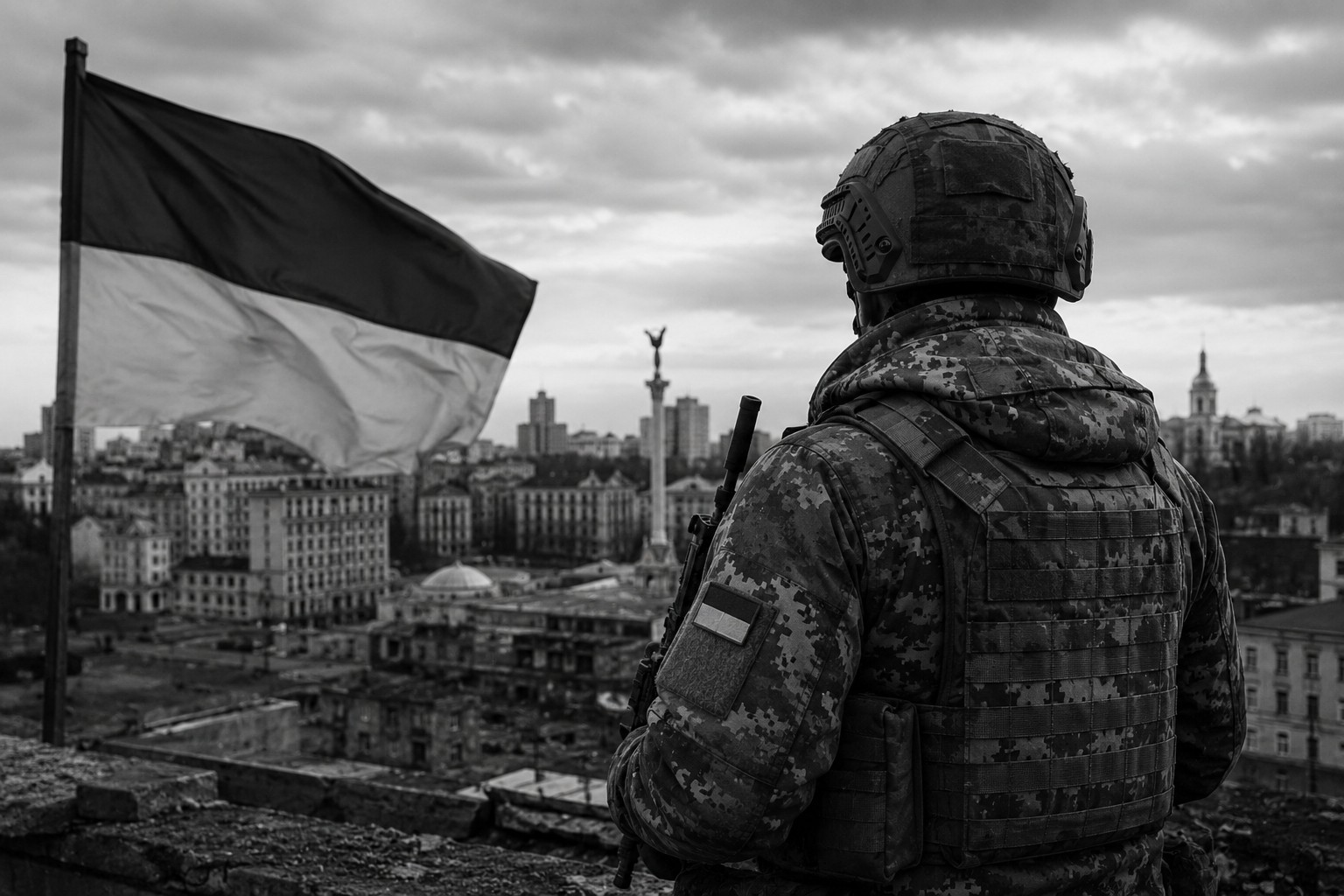
Ukraine’s armed forces have become one of Europe’s most experienced military organisations and could play a central role in the continent’s future security, according to former NATO secretary-general Anders Fogh Rasmussen. Speaking amid ongoing debate over Europe’s defence capabilities, Rasmussen argued that Ukraine’s battlefield experience gives it a unique position in helping strengthen European security in the years ahead.
A military transformed by war
Rasmussen described Ukraine as “militarily the strongest in Europe”, pointing to more than four years of large-scale warfare against Russia. Since the start of the full-scale invasion in 2022, Ukrainian forces have developed extensive expertise in modern warfare, including drone operations, electronic warfare, intelligence integration and battlefield innovation.
The conflict has transformed Ukraine’s military from a largely Soviet-era force into one of the most battle-tested armies in the world. Its experience has attracted significant attention from defence planners across NATO and the European Union.


Preparing for a changing security landscape
The former NATO chief has called for European countries to prepare for scenarios in which the United States could reduce its military presence on the continent. Such discussions have intensified amid uncertainty about future American defence commitments and growing calls within Europe for greater strategic autonomy.
Rasmussen argued that a coalition of European nations should be prepared to assume greater responsibility for continental defence if circumstances require it. In that context, he believes Ukraine could become a key contributor rather than merely a recipient of security assistance.
Lessons from the battlefield
Military analysts increasingly view Ukraine as a source of valuable operational knowledge. The war has accelerated developments in drone technology, cyber defence, battlefield communications and precision targeting systems.
European defence officials have sought to study Ukraine’s methods as armed forces across the continent adapt to emerging threats and evolving forms of warfare. Rasmussen suggested that these lessons could prove invaluable for strengthening Europe’s overall defence posture.
Security cooperation likely to deepen
Although Ukraine is not yet a member of NATO, cooperation between Kyiv and Western allies continues to expand. Joint training programmes, intelligence sharing and defence-industrial partnerships have deepened throughout the conflict.
Rasmussen’s comments reflect a broader debate about Europe’s future security architecture and the role Ukraine may play within it. As governments continue to reassess defence priorities, Ukraine’s combat experience is increasingly being viewed as a strategic asset that could help shape the next generation of European defence cooperation.
Newshub Editorial in Europe – 25 June 2026

If you have an account with ChatGPT you get deeper explanations,
background and context related to what you are reading.
Open an account:
Open an accountUkraine's armed forces have become one of Europe's most experienced military organisations and could play a central role in the continent's future security, according to former NATO secretary-general Anders Fogh Rasmussen. Speaking amid ongoing debate over Europe's defence capabilities, Rasmussen argued that Ukraine's battlefield experience gives it a unique position in helping strengthen European security in the years ahead.
Recent Comments