
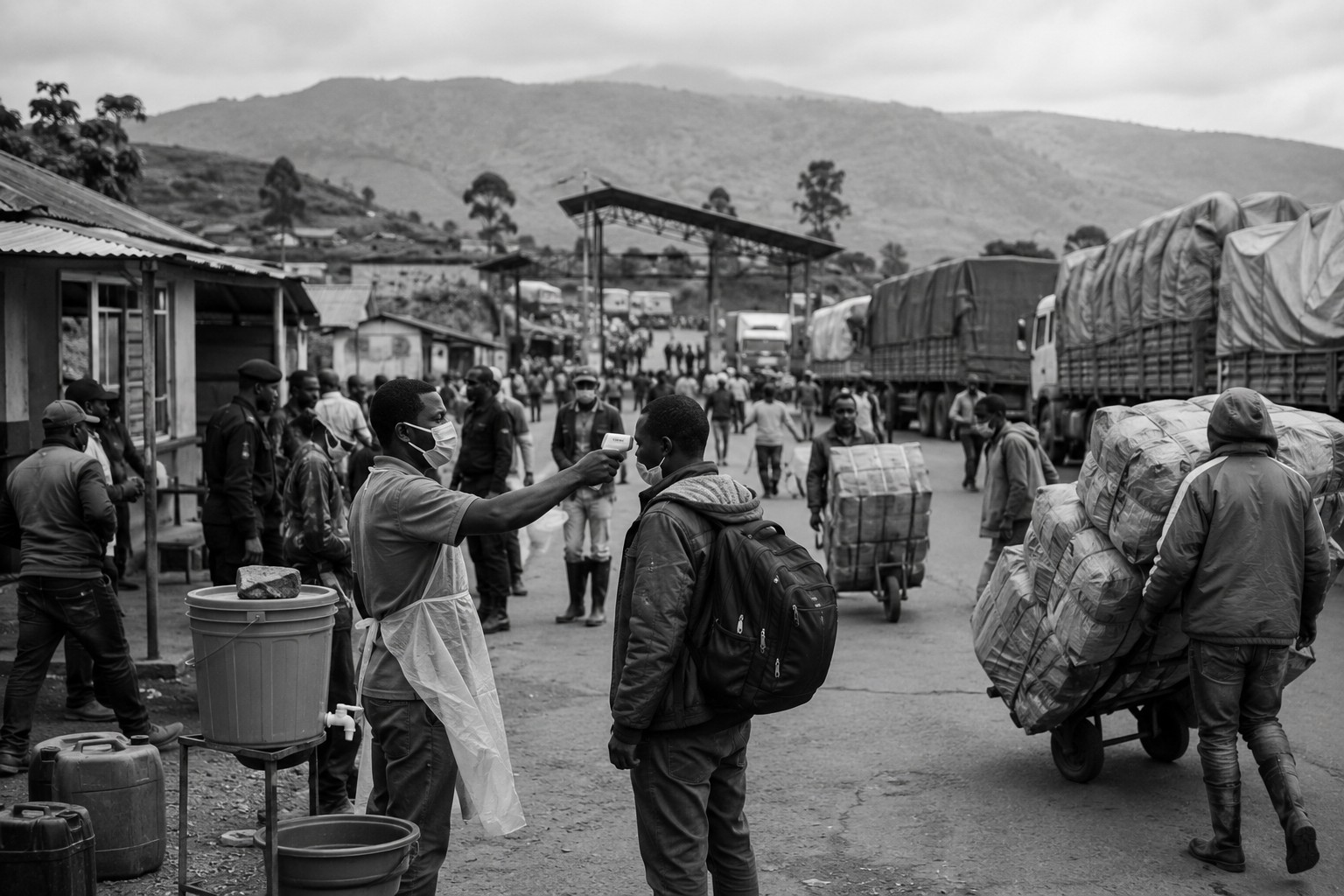
The temporary closure of key border crossings between the Democratic Republic of the Congo (DRC) and Rwanda in response to an Ebola outbreak has severely disrupted trade and daily life in one of Central Africa’s busiest commercial corridors. While health authorities insist the restrictions are essential to prevent the virus from spreading, thousands of traders and transport workers say the measures have cut off their primary source of income and interrupted the movement of vital goods.
A vital economic lifeline interrupted
The border between the eastern Congolese city of Goma and the Rwandan city of Gisenyi normally handles thousands of crossings each day. Small-scale traders, transport operators and shoppers rely on the route to move agricultural products, manufactured goods and essential household supplies between the two countries.
Since health officials introduced emergency restrictions following confirmation of new Ebola cases, commercial activity has slowed dramatically. Many vendors report that fresh produce is spoiling before reaching markets, while businesses on both sides of the border have experienced sharp declines in customers.

Health authorities defend the measures
Officials from the DRC’s Ministry of Health maintain that limiting cross-border movement is necessary to contain the outbreak before it spreads into neighbouring countries. Screening stations have been established, while health workers continue contact tracing and public awareness campaigns in affected communities.
The authorities argue that early intervention remains one of the most effective ways to prevent a wider regional health emergency, drawing on lessons learned during previous Ebola outbreaks in Central Africa.
Traders warn of growing hardship
For many families living around Goma, however, the restrictions have created immediate economic hardship. Informal cross-border trade provides employment for thousands of people, many of whom earn just enough each day to support their households.
Business associations say prolonged closures could lead to shortages of certain goods, rising food prices and increased unemployment in communities already facing the consequences of conflict and displacement in eastern DRC.
Some traders have urged governments to introduce controlled humanitarian and commercial corridors that would allow essential goods to continue moving while maintaining strict health screening procedures.
Balancing public health and economic stability
The latest Ebola-related restrictions once again highlight the difficult balance governments face between protecting public health and preserving economic activity. The Goma-Gisenyi border has long served as one of East and Central Africa’s most important commercial gateways, and any prolonged disruption is likely to affect both local livelihoods and regional supply chains.
As health officials continue monitoring the outbreak, residents, businesses and humanitarian organisations are hoping that containment efforts will prove successful, allowing border trade to resume safely in the coming weeks.
Newshub Editorial in Africa – 22 June 2026

If you have an account with ChatGPT you get deeper explanations,
background and context related to what you are reading.
Open an account:
Open an account
Recent Comments