
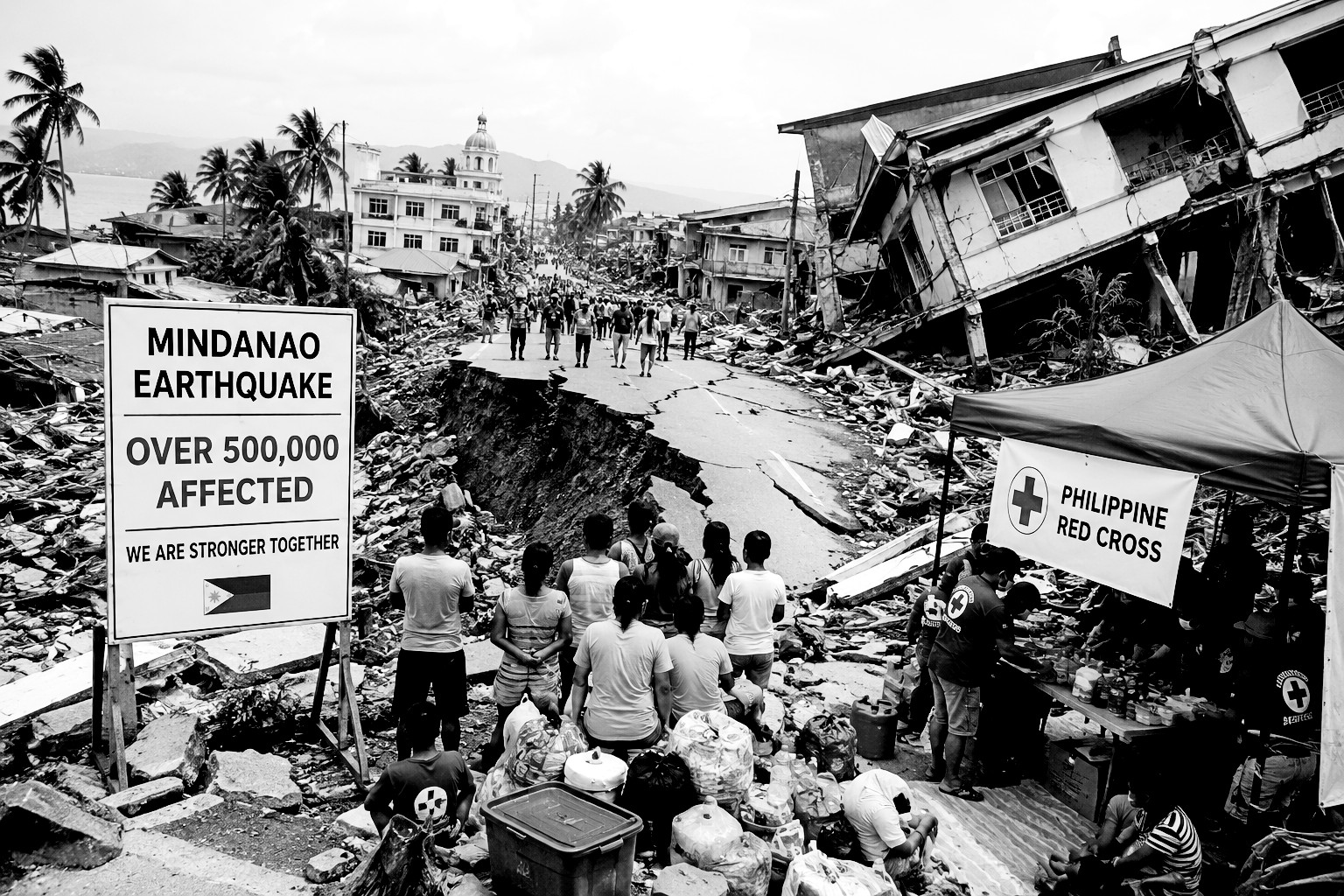
More than half a million people have now been affected by the devastating earthquake that struck the southern Philippine island of Mindanao, as emergency responders continue rescue operations and humanitarian agencies work to provide shelter, food and medical assistance. The disaster has left communities facing widespread destruction, with damaged infrastructure, disrupted public services and thousands of families unable to return to their homes.
Relief efforts expand across Mindanao
The powerful magnitude 7.8 earthquake struck off the coast of Mindanao, triggering severe ground shaking across much of the southern Philippines. Buildings collapsed, roads cracked, landslides buried homes and temporary tsunami warnings were issued before being lifted. The city of General Santos and surrounding areas remain among the hardest hit.
Philippine authorities report that more than 500,000 people have been affected by the disaster, with tens of thousands displaced into evacuation centres while many others remain without reliable access to electricity, clean water and healthcare. Rescue teams continue searching damaged buildings as aftershocks complicate recovery efforts.

Heavy toll on communities and infrastructure
The earthquake has claimed dozens of lives and left well over a thousand people injured, while thousands of homes, schools, hospitals and commercial buildings have sustained significant damage. Transport links have also been disrupted, delaying the delivery of humanitarian aid to some of the worst-affected communities.
Schools across the region have remained closed as engineers assess structural safety. Hospitals have been forced to operate under emergency conditions, with some medical services relocated to temporary facilities after buildings suffered severe damage. Water supply systems and communications infrastructure have also been affected, increasing the challenges facing emergency responders.
Government and aid agencies mobilise
The Philippine government has deployed military personnel, disaster response teams and emergency medical units throughout the affected region. The Philippine Red Cross and numerous humanitarian organisations are distributing emergency shelter materials, food, drinking water and medical supplies while providing psychological support for survivors coping with the trauma of the disaster.
International partners have also expressed support for relief operations, with assistance expected to focus on emergency response as well as the longer-term reconstruction of damaged infrastructure.
Long road to recovery
Mindanao lies within the Pacific Ring of Fire, one of the world’s most seismically active regions, making earthquakes a constant threat. However, the scale of this disaster has made it one of the most destructive to strike the Philippines in decades, leaving communities facing a prolonged rebuilding effort.
As emergency operations continue, authorities are urging residents to remain vigilant against aftershocks and avoid entering damaged buildings until safety inspections have been completed. While immediate rescue efforts remain the priority, attention is already turning towards rebuilding homes, restoring essential services and helping hundreds of thousands of affected residents return to normal life.
Newshub Editorial in Asia – 13 June 2026

If you have an account with ChatGPT you get deeper explanations,
background and context related to what you are reading.
Open an account:
Open an accountMore than half a million people have now been affected by the devastating earthquake that struck the southern Philippine island of Mindanao, as emergency responders continue rescue operations and humanitarian agencies work to provide shelter, food and medical assistance. The disaster has left communities facing widespread destruction, with damaged infrastructure, disrupted public services and thousands of families unable to return to their homes.
Recent Comments