
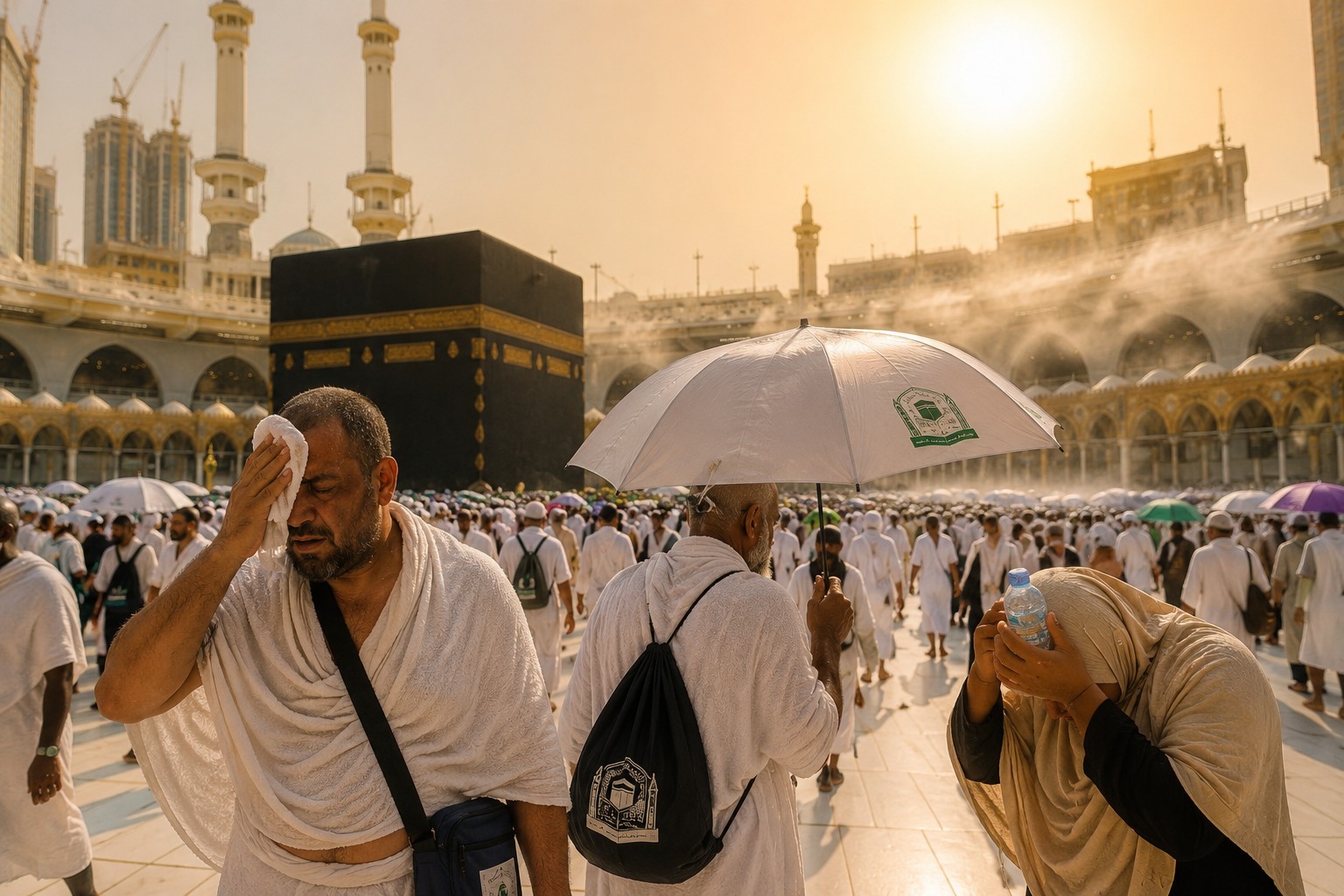
Rising temperatures driven by climate change are making the annual Hajj pilgrimage increasingly hazardous for millions of Muslims travelling to Saudi Arabia, according to a new report that warns extreme heat is becoming one of the most significant threats facing pilgrims. Scientists and public health experts say reducing fossil fuel emissions could substantially lower future risks.
Extreme heat creates growing health risks
The Hajj, one of the largest annual religious gatherings in the world, attracts millions of pilgrims to the holy city of Mecca each year. Many of the religious rituals take place outdoors and require significant physical exertion, often over several days.
As global temperatures continue to rise, Saudi Arabia has experienced increasingly intense heatwaves, with temperatures frequently exceeding 45°C during summer months. Medical experts warn that such conditions significantly increase the risk of heat exhaustion, dehydration, heatstroke and cardiovascular complications, particularly among elderly pilgrims and those with pre-existing health conditions.

The report highlights that climate change is increasing both the frequency and intensity of dangerous heat events across the Arabian Peninsula.
Recent tragedies underline the danger
Extreme heat has already had devastating consequences. During recent pilgrimage seasons, thousands of pilgrims required medical treatment for heat-related illnesses, while several years have seen significant numbers of heat-related deaths.
Saudi authorities have invested heavily in cooling infrastructure, including misting systems, shaded walkways, expanded medical facilities and improved crowd management technologies. Despite these efforts, experts caution that adaptation measures alone may not be sufficient if global temperatures continue to climb.
Population growth and increasing participation in the pilgrimage could further amplify future risks.
Climate change becoming a religious challenge
Researchers note that climate change is not only an environmental issue but also increasingly affects cultural and religious traditions worldwide. The Hajj represents one of the clearest examples of how rising temperatures can directly impact longstanding human activities.
Climate models suggest that without substantial reductions in greenhouse gas emissions, heat stress during future pilgrimage seasons could become significantly more severe by the middle and latter parts of the century.
Scientists argue that every fraction of a degree of warming avoided can reduce health risks and improve safety conditions for future pilgrims.
Calls for stronger climate action
The report concludes that while adaptation measures remain essential, long-term safety ultimately depends on limiting global warming through reduced fossil fuel consumption and accelerated investment in cleaner energy sources.
Many climate experts believe the risks facing Hajj pilgrims illustrate a broader challenge confronting societies worldwide as extreme weather becomes increasingly common. Rising temperatures are affecting public health, infrastructure, agriculture and major public events across every continent.
For millions of Muslims who hope to undertake the pilgrimage in the coming decades, the outcome of global climate policies may increasingly influence not only the environment but also the safety of one of Islam’s most important religious obligations.
A warning with global implications
The findings serve as a reminder that climate change is no longer a distant concern. Its effects are already being felt in some of the world’s most significant cultural, religious and social gatherings.
As governments debate energy policies and emissions targets, the future safety of millions of pilgrims may become one of the most visible examples of how global warming affects everyday life and human traditions.
Newshub Editorial in Asia – 30 May 2026

If you have an account with ChatGPT you get deeper explanations,
background and context related to what you are reading.
Open an account:
Open an account
Recent Comments