
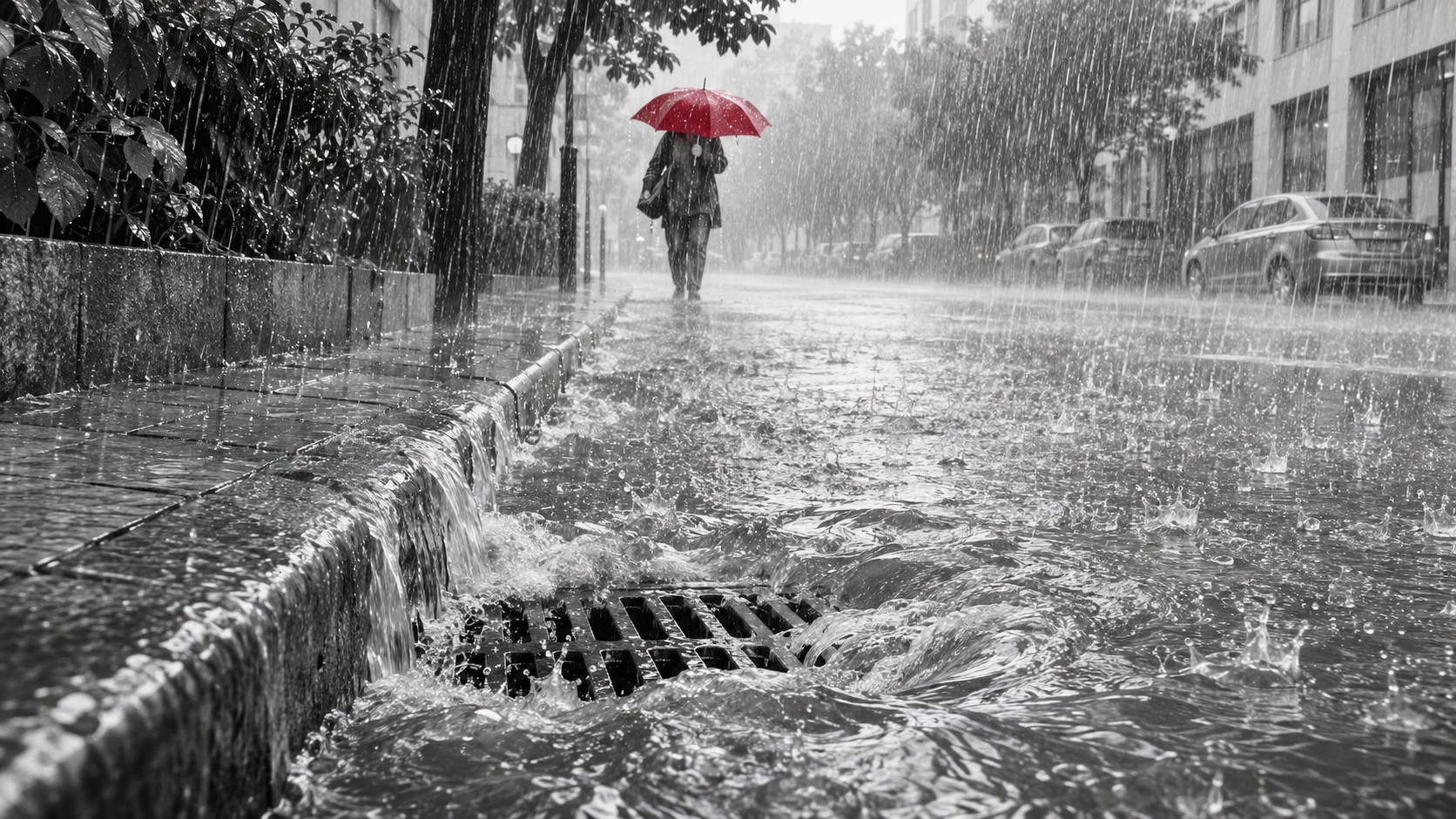
The wettest spells that deliver about half of annual precipitation are becoming shorter at weather stations around the world, according to a study of more than 19,000 rain gauges. The shift can increase the risk of flash flooding when rain arrives faster than the ground or drainage systems can absorb it, while leaving less water available during dry periods.
Half a year’s precipitation in 28 days
Researchers led by Jiajia Su analysed daily records from 19,183 stations between 1980 and 2022. For each station, they identified the wettest stretches of consecutive days needed to account for half of its annual precipitation. Across the network, that share typically fell in about nine events spanning a combined 28 days.
The time needed to deliver that share declined significantly at nearly 46% of stations. The selected wet spells shortened by about 86 minutes per event per decade on average, while the number of events needed to reach the halfway mark showed little overall change. The findings were published in the journal Earth’s Future.


The pattern varies by region
Shorter wet spells were a major reason rainfall became more concentrated in Europe and South America. In both regions, the average amount of precipitation delivered by each selected event fell. In Asia, by contrast, the average amount per event increased, though the overall trend in the time needed to deliver half the annual total varied widely across stations.
Why timing matters for water supplies
Heavy rain concentrated into a short period can overwhelm urban drains and send water rapidly into streams, increasing the risk of flash floods and erosion. Longer spells can produce a different kind of flooding as soils become saturated and rivers rise across an entire catchment.
Rainfall concentrated into brief periods can also leave longer gaps between downpours. When more water runs off quickly, less may be available to replenish soil moisture or be captured for later use. For farmers and water managers, the annual total can therefore tell only part of the story. How quickly rain arrives, and how long the ground goes without it, can shape both flood and drought risk.
Newshub Editorial in Asia – 5 November 2026
The wettest spells that deliver about half of annual precipitation are becoming shorter at weather stations around the world, according to a study of more than 19,000 rain gauges. The shift can increase the risk of flash flooding when rain arrives faster than the ground or drainage systems can absorb it, while leaving less water available during dry periods.

Recent Comments