
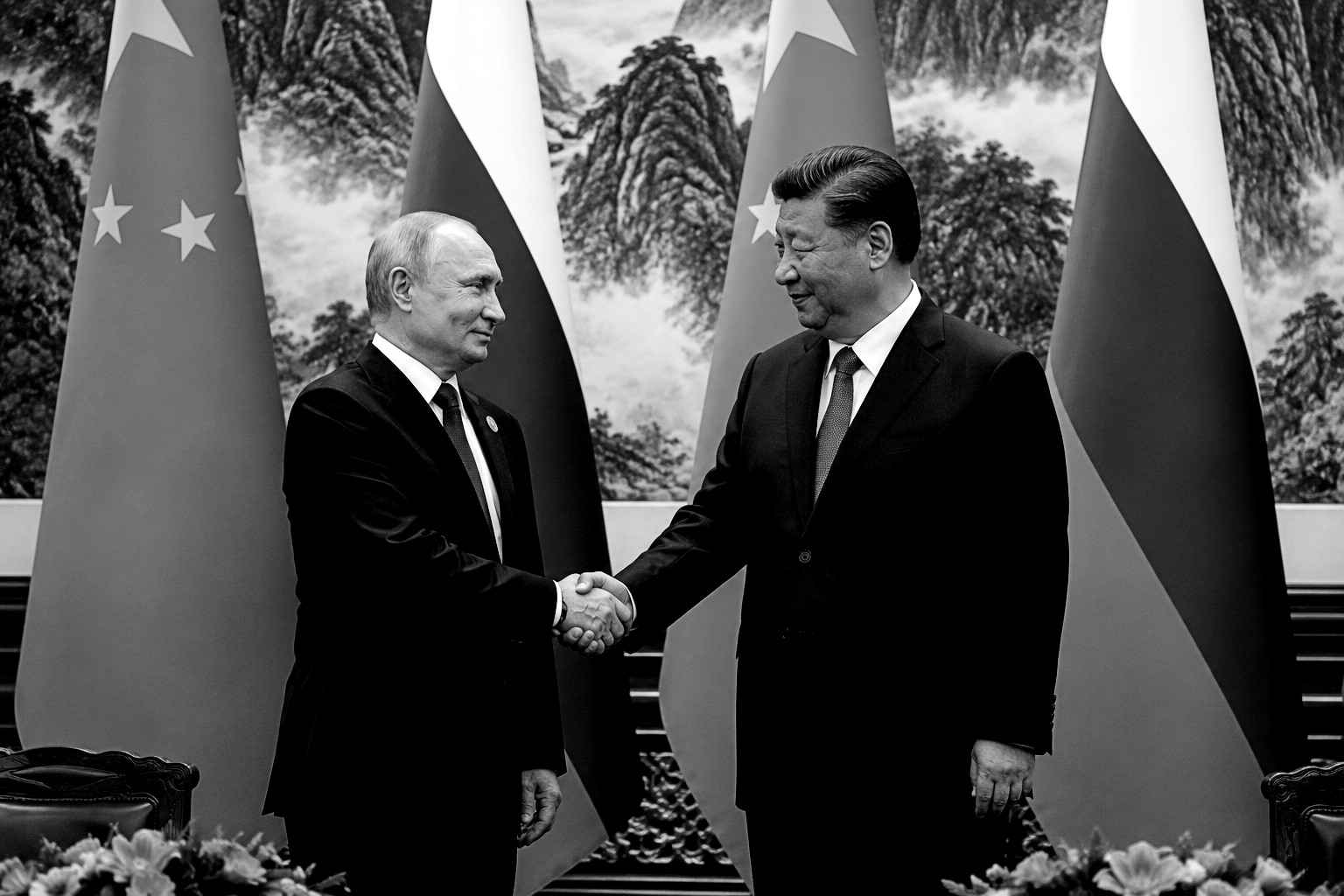
Chinese President Xi Jinping and Russian President Vladimir Putin met in Beijing less than a week after Donald Trump’s visit, placing China at the centre of a tightly watched diplomatic sequence involving the world’s three most powerful capitals.
Optics matter
The timing gives the meeting unusual weight. Beijing has just hosted the US president, while now receiving Russia’s leader with formal honours and strategic language. For China, the message is one of diplomatic range: engagement with Washington, but continued alignment with Moscow.
Energy and strategy
Russia remains under Western pressure over Ukraine and increasingly depends on China as a market, investor and political partner. Energy cooperation, including gas and oil supply, is expected to remain central to the talks, alongside broader security and trade issues.

China’s careful positioning
Beijing is trying to avoid being seen as a Russian satellite while also resisting Western pressure to distance itself from Moscow. Its challenge is to maintain stable relations with the United States while preserving a strategic partnership with Russia.
A signal to Washington
For the Trump administration, the meeting will be read as a reminder that China has alternatives and intends to manage great-power competition on its own terms. Any agreements, joint statements or language on Ukraine, energy or global governance will be closely examined.
A wider geopolitical message
The Xi-Putin meeting is not only bilateral. It reflects a world in which China is positioning itself as a central diplomatic platform, able to host rivals in quick succession while advancing its own strategic interests.
Newshub Editorial in Asia – 20 May 2026

If you have an account with ChatGPT you get deeper explanations,
background and context related to what you are reading.
Open an account:
Open an account
Recent Comments