
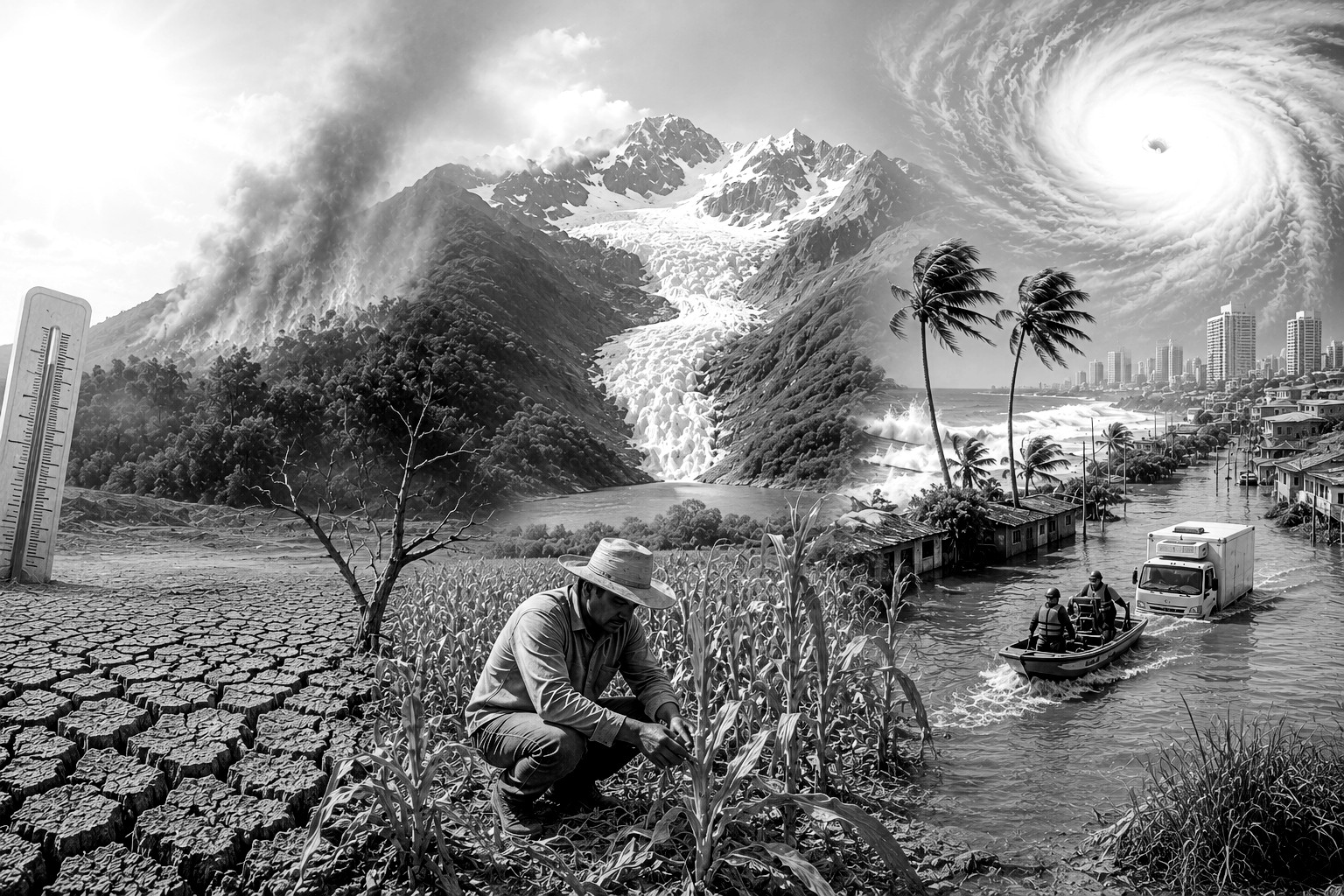
Latin America and the Caribbean faced record-breaking heat, stronger climate extremes and growing risks to food, water and public health in 2025, according to the World Meteorological Organization’s latest regional climate report.
Heat becomes a health threat
The WMO said extreme heat is placing a heavier burden on public health systems. Repeated heatwaves, including temperatures above 40°C in parts of the region, are increasing risks for vulnerable communities, outdoor workers and urban populations.
Drought or deluge
The report points to a more extreme water cycle, with countries facing both prolonged drought and intense rainfall. This creates pressure on cities, agriculture, hydropower, transport and disaster response systems.

Hurricanes intensify rapidly
Rapidly intensifying hurricanes are testing preparedness across the Caribbean and coastal Latin America. Hurricane Melissa, which struck Jamaica in 2025 as a Category 5 storm, was highlighted as a major example of the scale of the threat.
Glaciers and water security
Accelerating glacier retreat in the Andes is creating short-term flood hazards while also threatening long-term water supplies. Communities, farms and cities that depend on glacier-fed rivers face growing uncertainty.
Food systems exposed
Extreme weather is also hitting agro-food systems. Drought, floods, heat and storms can damage crops, disrupt rural livelihoods, weaken supply chains and increase pressure on food prices.
A call for resilience
The WMO said the region needs stronger observation systems, better early warnings and climate information that reaches those who need it most. The report’s message is clear: climate risk is no longer distant. It is already reshaping health, food, water and economic security across Latin America and the Caribbean.
Newshub Editorial in Latin America – 20 May 2026

If you have an account with ChatGPT you get deeper explanations,
background and context related to what you are reading.
Open an account:
Open an account
Recent Comments