
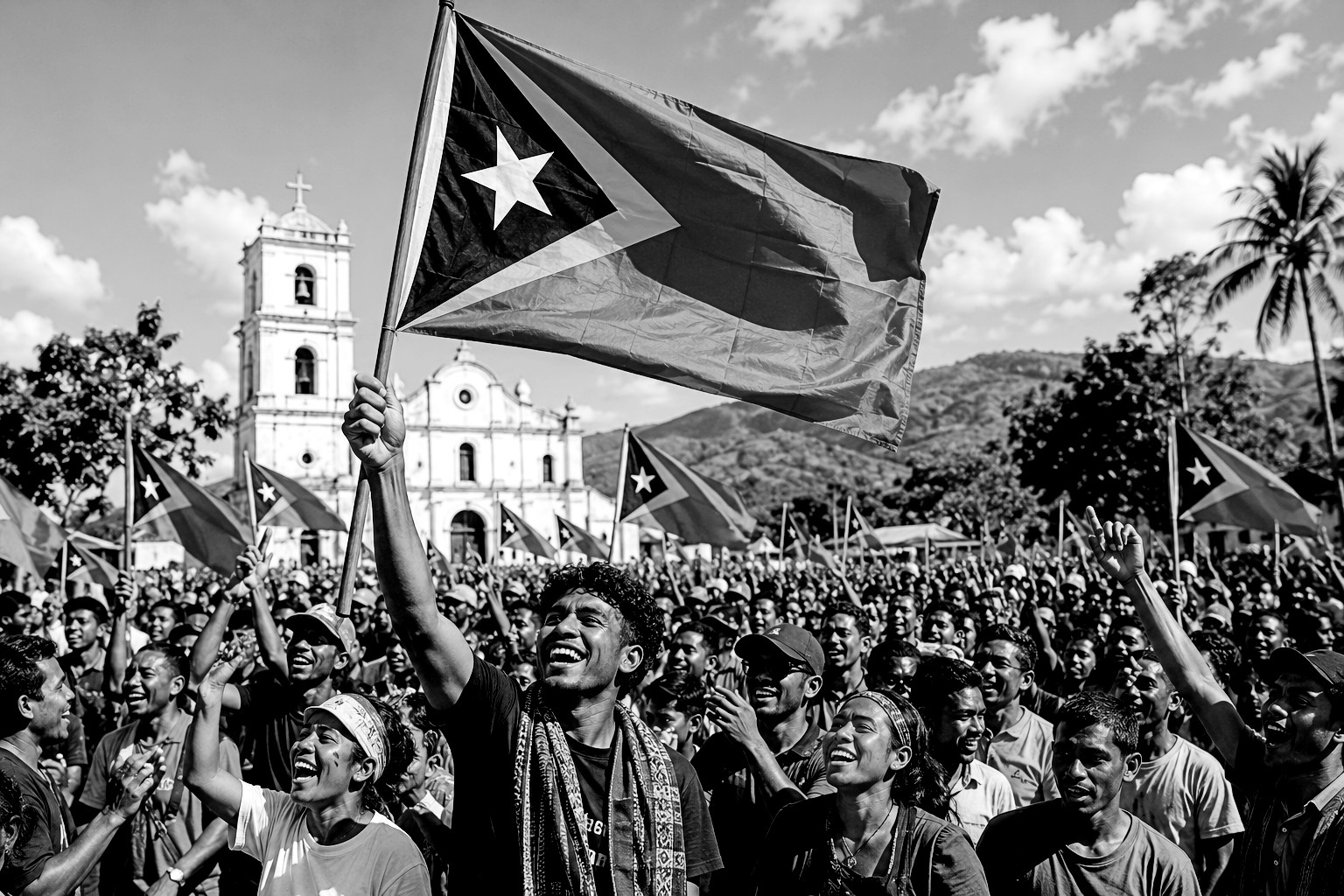
On 20 May 2002, East Timor officially became an independent state, ending a long and painful struggle shaped by colonial rule, occupation, violence and international intervention. The moment, celebrated in Dili, marked the restoration of sovereignty for a people who had voted overwhelmingly for independence in 1999.
A long road to statehood
East Timor, now officially known as Timor-Leste, had first declared independence from Portugal in 1975. Days later, Indonesia invaded and later annexed the territory, beginning a period of occupation that lasted more than two decades. Resistance continued inside the territory and abroad, keeping the independence question alive despite repression and instability.
The 1999 turning point
The decisive moment came in 1999, when a UN-organised popular consultation allowed East Timorese voters to choose between autonomy within Indonesia and independence. Nearly four-fifths supported independence. The result was followed by severe violence, displacement and destruction, prompting international intervention and a United Nations transitional administration.

Independence under UN supervision
The United Nations Transitional Administration in East Timor helped rebuild institutions, prepare elections and transfer authority to local leaders. In April 2002, Xanana Gusmão was elected the country’s first president. On 20 May 2002, sovereignty was formally transferred, and East Timor became the first new sovereign state of the 21st century.
A symbol beyond its borders
East Timor’s independence became a landmark for self-determination, post-conflict reconstruction and international peacekeeping. It also showed the limits of military occupation in the face of sustained national identity, diplomacy and popular will. For Asia and the wider developing world, the country’s birth carried significance far beyond its small size.
Challenges after independence
Independence did not end East Timor’s difficulties. The new state faced poverty, weak institutions, security tensions and dependence on oil and gas revenues. Yet the restoration of sovereignty gave the country control over its political future and a platform for national reconstruction.
A continuing national project
Today, Timor-Leste remains a young democracy still building its economy, institutions and regional role. Its independence anniversary is not only a celebration of statehood, but also a reminder of the cost of freedom and the long work required to turn sovereignty into lasting stability.
Newshub Editorial in Asia – 20 May 2026

If you have an account with ChatGPT you get deeper explanations,
background and context related to what you are reading.
Open an account:
Open an account
Recent Comments