
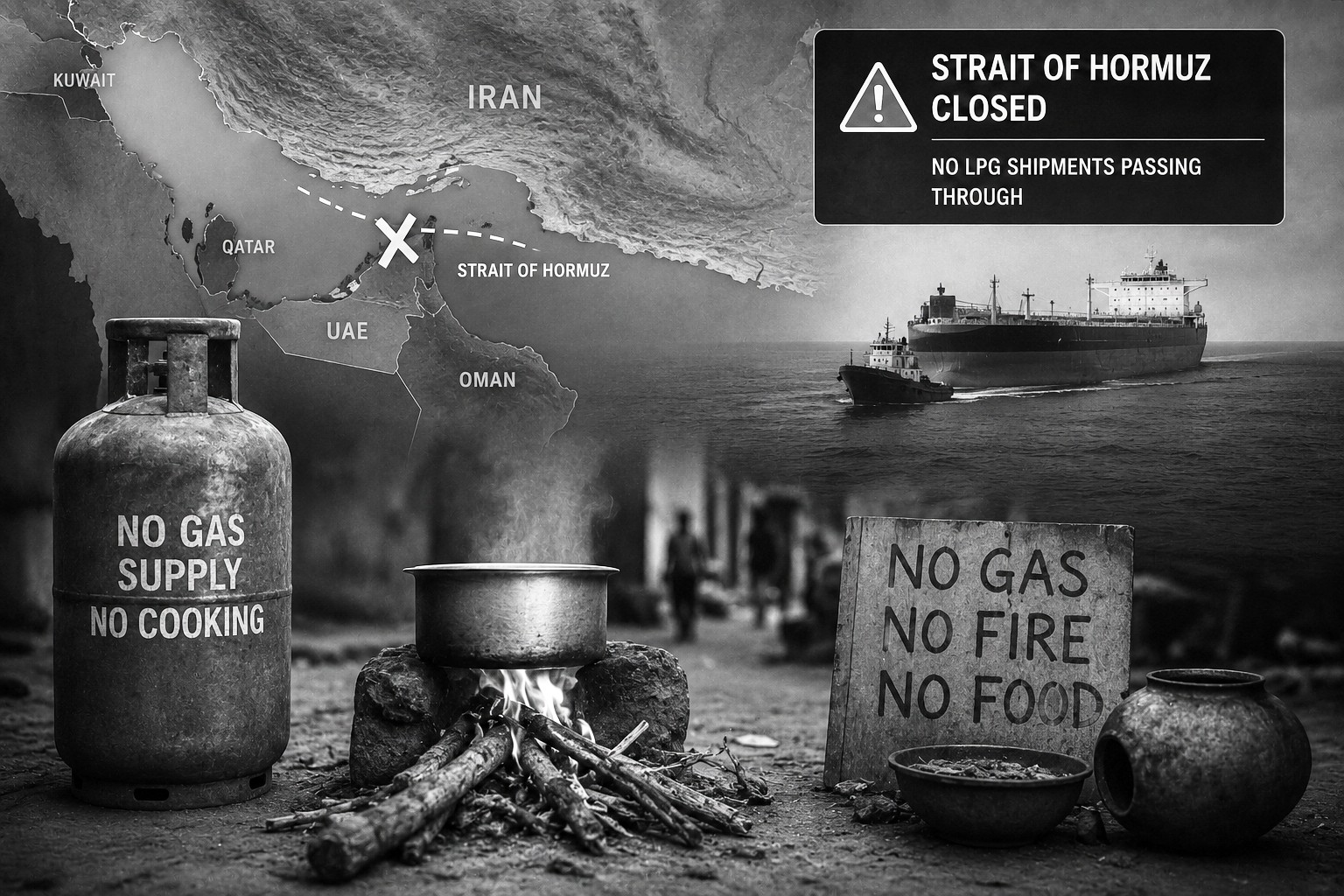
A worsening energy shock linked to the crisis surrounding Iran and disruptions to fuel supplies through the Strait of Hormuz is rapidly becoming a public health emergency across parts of Asia, as soaring cooking gas prices force millions of families back toward firewood, coal and charcoal for daily cooking. Health experts and environmental groups warn the shift risks reversing years of progress on cleaner household energy and urban air quality.
Families abandon cleaner fuels
Across countries including India, the Philippines, Bangladesh and parts of Southeast Asia, rising prices and shortages of liquefied petroleum gas (LPG) have pushed lower-income households toward traditional fuels that generate far higher levels of indoor smoke and pollution. In many cities, families are once again collecting firewood or purchasing charcoal as gas cylinders become increasingly unaffordable or difficult to obtain.
Health risks growing rapidly
Medical experts warn that prolonged exposure to smoke from burning biomass fuels is strongly associated with respiratory disease, heart problems, strokes and lung cancer. Women and children are considered particularly vulnerable because they are more frequently exposed to cooking smoke in poorly ventilated homes. The World Health Organization has previously linked household air pollution to millions of premature deaths annually worldwide.

The Iran crisis disrupts Asian energy supplies
Many Asian countries rely heavily on imported LPG transported through the Strait of Hormuz, one of the world’s most strategically important energy shipping routes. Ongoing instability connected to Iran and regional military tensions have disrupted fuel flows, increased shipping costs and contributed to sharp price increases across Asia’s energy markets.
Energy transition facing a major test
Governments across Asia have spent years encouraging households to move away from wood and coal toward cleaner fuels such as LPG. Subsidy programmes and infrastructure investments were designed to reduce pollution, improve public health and limit deforestation. The current crisis is exposing how fragile that transition remains when affordability collapses.
Urban pollution likely to worsen
Cities already struggling with severe air pollution may face worsening conditions if the shift back toward biomass fuels accelerates. Environmental activists warn that densely populated urban areas are particularly vulnerable because smoke and fine particulate pollution become trapped between buildings and residential neighbourhoods. Several Indian cities already rank among the world’s most polluted urban environments.
Governments scramble for emergency solutions
Asian governments have begun implementing emergency measures ranging from fuel rationing and strategic reserve releases to temporary subsidies and conservation campaigns. However, analysts warn that these measures may only provide short-term relief if energy disruptions continue. Some countries are also reconsidering renewable energy expansion and domestic energy security strategies.
A crisis extending beyond economics
What began as a geopolitical and energy supply crisis is increasingly becoming a broader social and health emergency. Rising fuel costs are not only affecting transportation and industry, but also basic household survival. For millions of families across Asia, access to clean cooking fuel has become a question of affordability rather than infrastructure.
Public health now intertwined with energy security
The growing return to wood, coal and charcoal highlights how closely energy policy, public health and geopolitical stability are connected. As Asia confronts rising fuel insecurity, governments may face mounting pressure to ensure that clean energy transitions remain economically accessible during periods of global crisis and market volatility.
Newshub Editorial in Asia – 14 May 2026

If you have an account with ChatGPT you get deeper explanations,
background and context related to what you are reading.
Open an account:
Open an account
Recent Comments