
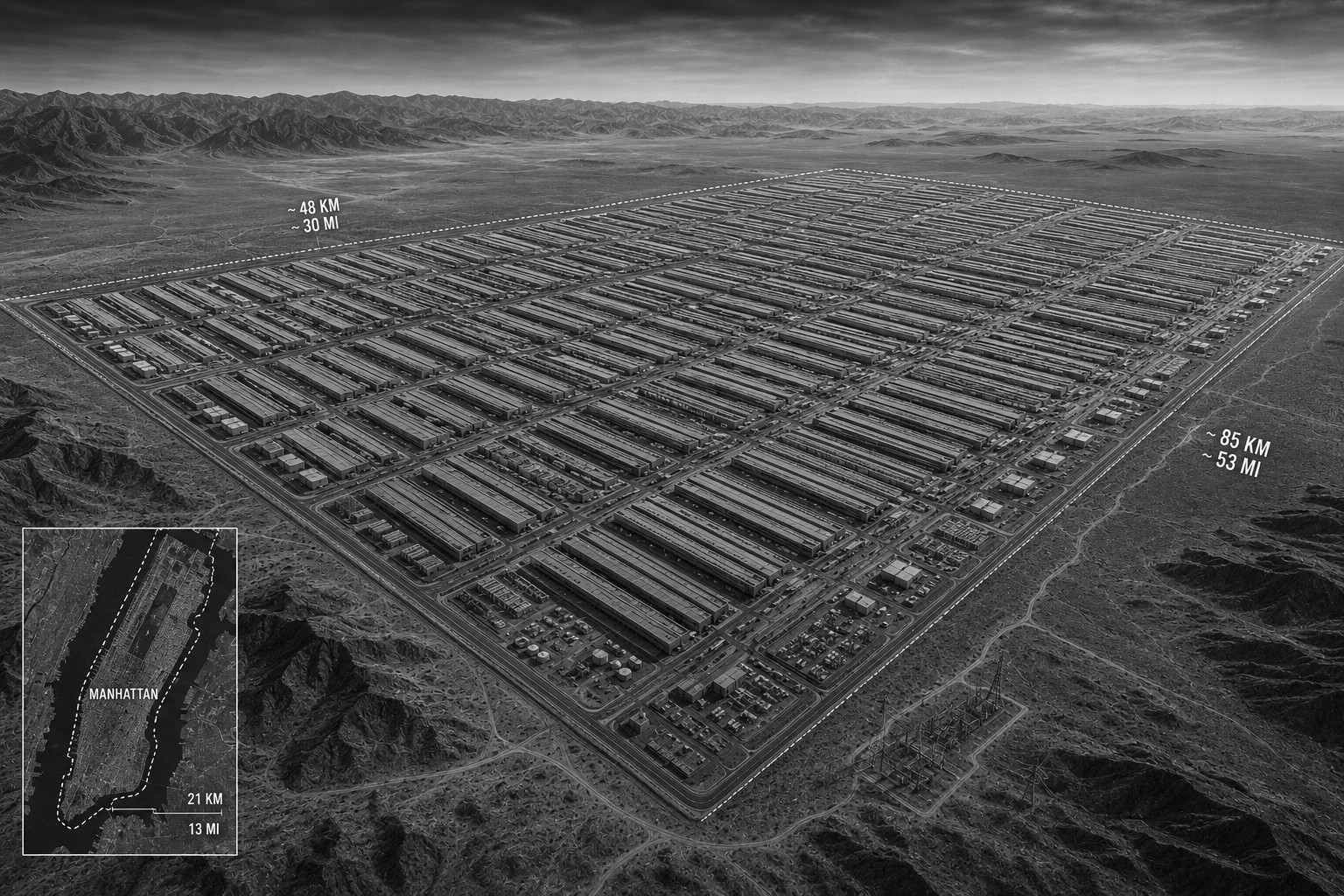
A massive datacentre development approved in the US state of Utah is facing growing criticism from environmental groups, local residents and energy analysts after reports suggested the facility could eventually consume more electricity than the entire state currently uses. Opponents have described the project as “irresponsible”, particularly given the region’s worsening drought conditions and long-term water shortages.
Project linked to explosive AI infrastructure growth
The proposed facility, reportedly covering an area roughly twice the size of Manhattan, reflects the rapidly expanding demand for artificial intelligence and cloud computing infrastructure. Technology companies worldwide are investing heavily in hyperscale datacentres to support generative AI systems, machine learning models and increasingly data-intensive digital services.
The scale of the Utah project immediately drew attention because of its projected energy and water requirements.

Power demand raises major concerns
Critics argue that the electricity required to operate the facility could place extraordinary pressure on regional energy infrastructure. Analysts warn that AI-focused datacentres are becoming among the most energy-intensive forms of industrial development, with advanced computing clusters requiring constant cooling and uninterrupted power availability.
Some estimates suggest future AI datacentres could fundamentally reshape national electricity demand patterns over the coming decade.
Water usage sparks environmental alarm
Water consumption has emerged as one of the most controversial aspects of the Utah proposal. Datacentres require significant cooling capacity, particularly in hotter climates, and many facilities rely heavily on water-based cooling systems.
Environmental groups argue that approving such a project in a drought-prone region already struggling with water scarcity could deepen long-term ecological stress. Utah and several neighbouring western states continue facing severe pressure linked to climate change, declining reservoirs and reduced snowpack.
Local opposition intensifies
Community organisations and environmental activists have questioned whether local populations will benefit proportionally from the development compared with the strain placed on infrastructure and natural resources. Critics also argue that the rapid expansion of AI infrastructure is occurring faster than regulatory systems can properly evaluate its long-term environmental consequences.
Some residents fear future restrictions on household water use while industrial facilities continue operating at massive scale.
Technology industry under growing scrutiny
The controversy highlights a broader global debate surrounding the hidden environmental costs of artificial intelligence and cloud computing. While AI companies promote efficiency and innovation, critics increasingly point to the enormous energy, land and cooling resources required to sustain advanced computing infrastructure.
Governments are now facing growing pressure to balance digital expansion with environmental sustainability and energy security.
Economic opportunities versus environmental risk
Supporters of the project argue the datacentre could generate investment, infrastructure development and long-term tax revenues while helping position Utah as a major technology hub. Industry representatives also claim future cooling technologies and renewable energy integration could reduce environmental impact over time.
However, sceptics argue that current infrastructure realities do not yet support such large-scale expansion responsibly.
The AI boom enters a resource-intensive phase
As artificial intelligence adoption accelerates globally, demand for hyperscale datacentres continues rising sharply. The Utah project illustrates how the next phase of the AI economy may increasingly depend not only on algorithms and software — but also on land, electricity grids, water access and political acceptance.
A warning sign for future infrastructure battles
The backlash surrounding the Utah facility may become an early example of a broader global confrontation between technological ambition and environmental constraints. As AI infrastructure expands, debates over energy consumption, sustainability and resource allocation are likely to become increasingly central to technology policy worldwide.
Newshub Editorial in North America – 14 May 2026

If you have an account with ChatGPT you get deeper explanations,
background and context related to what you are reading.
Open an account:
Open an account
Recent Comments