
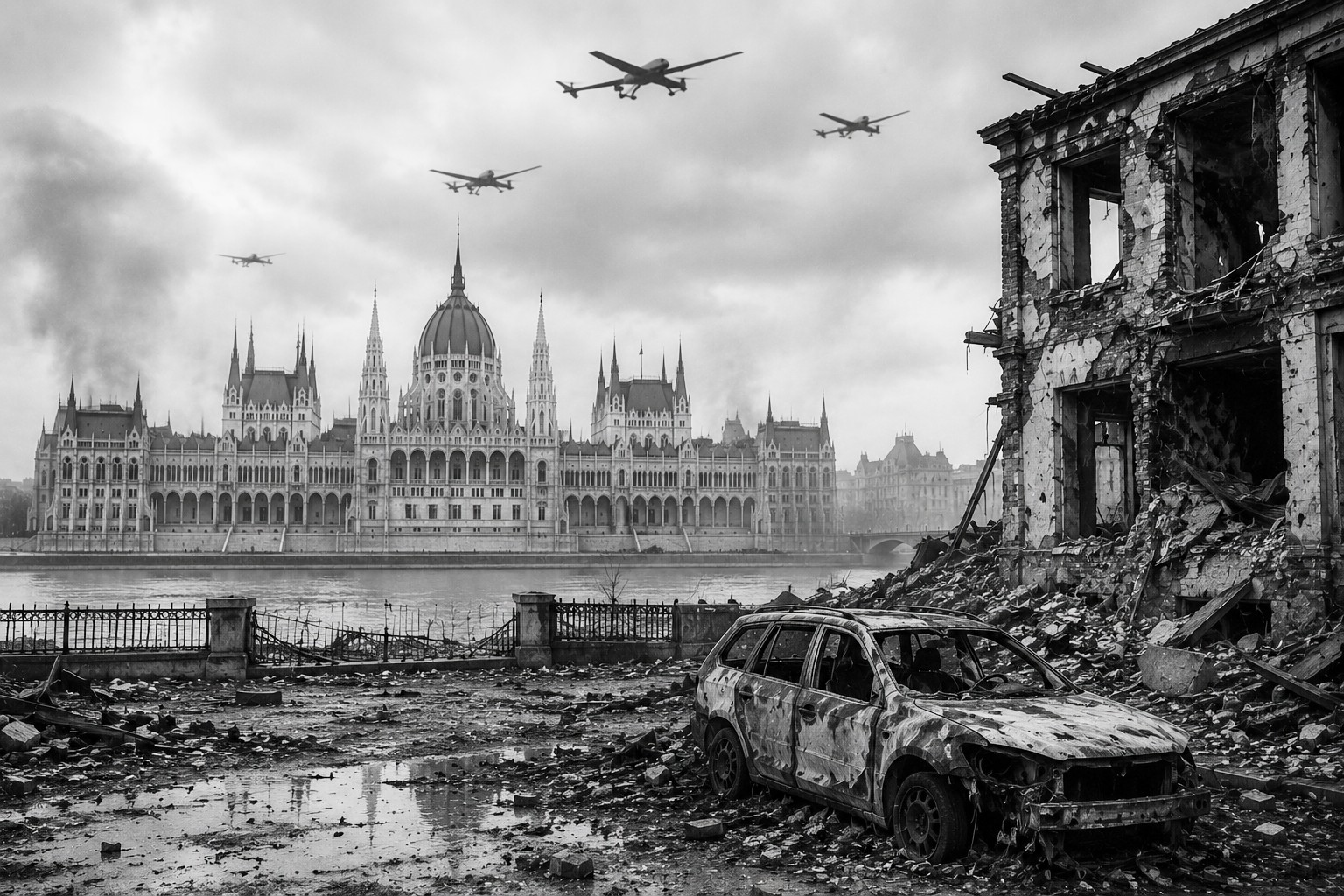
Hungary’s new prime minister, Péter Magyar, has signalled a potential shift in Budapest’s traditionally cautious approach toward Russia after a major drone attack in western Ukraine intensified security concerns near Hungary’s border. Magyar stated that his government had summoned Russia’s ambassador to demand answers regarding the escalation and to ask when Vladimir Putin intended “to finally end this bloody war.”
Drone strike raises regional tensions
The comments followed one of the largest recent drone assaults targeting Ukrainian territory near Hungary’s frontier. Although the attack occurred inside Ukraine, the proximity to NATO territory heightened concern across Central Europe and renewed fears surrounding regional spillover risks from the ongoing war.
Hungary has long maintained a more restrained position toward Moscow compared with several other European Union members, making Magyar’s remarks particularly significant diplomatically.


A notable change in tone from Budapest
Under previous leadership, Hungary frequently pursued a more pragmatic and energy-focused relationship with Russia, often resisting stronger EU pressure campaigns and sanctions rhetoric. Magyar’s statement suggests a potentially firmer alignment with broader European concerns over Russian military escalation.
Analysts view the summoning of the Russian ambassador as a symbolic but important diplomatic gesture designed to demonstrate that security concerns are increasingly outweighing previous political caution.
War fatigue spreading across Europe
More than three years into the conflict, frustration continues growing across Europe regarding the prolonged instability, economic strain and security uncertainty generated by the war. Drone and missile attacks deep inside Ukraine remain frequent, while neighbouring countries continue monitoring airspace and border security closely.
Several Central European governments have increased military readiness and infrastructure protection amid fears that accidental escalation or debris incidents could affect NATO member states directly.
Energy and security calculations evolving
Hungary’s relationship with Russia has historically been shaped heavily by energy dependency, particularly involving natural gas and nuclear cooperation. However, shifting geopolitical realities and continued attacks near EU borders are increasingly forcing governments to reconsider long-standing strategic balances between economic pragmatism and security concerns.
The latest developments may indicate that regional political dynamics are beginning to evolve even among governments previously viewed as more Moscow-friendly.
Pressure on Russia intensifies diplomatically
European governments continue urging Russia to reduce attacks on civilian infrastructure and seek pathways toward ending the conflict. Moscow, meanwhile, maintains that its military operations remain necessary for national security objectives and strategic defence.
Diplomatic relations between Russia and European states remain deeply strained, with direct political dialogue increasingly limited.
A broader signal to Europe and NATO
Magyar’s comments are likely to be closely watched both within the European Union and across NATO capitals. Any substantial shift in Hungary’s foreign policy posture could affect future EU negotiations surrounding sanctions, defence coordination and long-term support for Ukraine.
Central Europe faces a changing security landscape
The latest drone attacks underline how the war continues reshaping political calculations throughout Eastern and Central Europe. For Hungary, balancing economic interests, domestic politics and regional security concerns may become increasingly difficult as the conflict moves closer to NATO’s eastern frontier.
Newshub Editorial in Europe – 14 May 2026

If you have an account with ChatGPT you get deeper explanations,
background and context related to what you are reading.
Open an account:
Open an accountHungary’s new prime minister, Péter Magyar, has signalled a potential shift in Budapest’s traditionally cautious approach toward Russia after a major drone attack in western Ukraine intensified security concerns near Hungary’s border. Magyar stated that his government had summoned Russia’s ambassador to demand answers regarding the escalation and to ask when Vladimir Putin intended “to finally end this bloody war.”
Recent Comments