
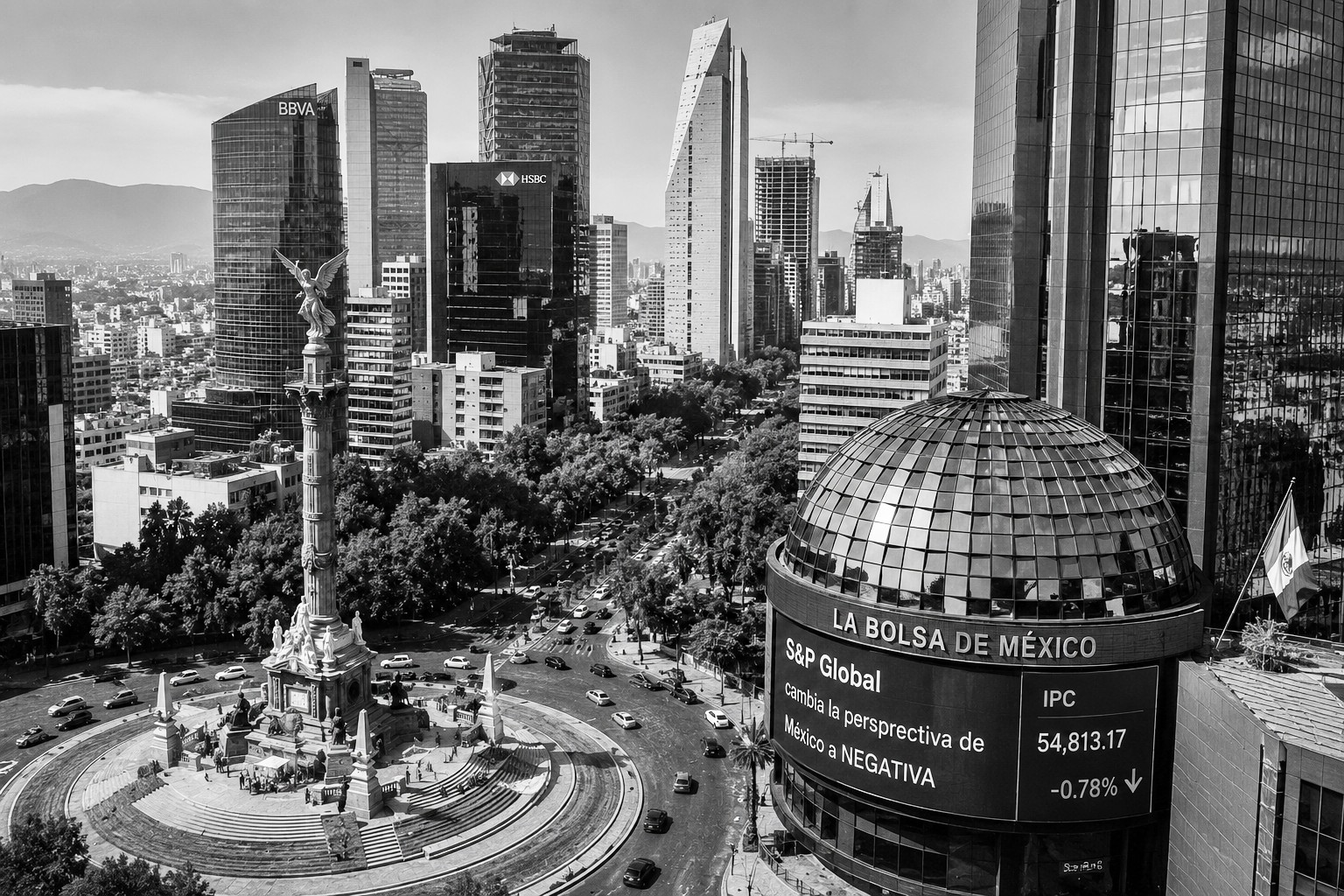
Mexico’s government has defended its economic strategy after credit rating agency S&P Global revised the country’s outlook to negative, arguing that ongoing fiscal and structural measures will ultimately strengthen confidence in Latin America’s second-largest economy. Finance Minister Rogelio Ramírez de la O said he remains convinced the outlook revision will eventually be reversed.
S&P cites fiscal and growth concerns
S&P maintained Mexico’s sovereign credit rating but changed the outlook from stable to negative, pointing to concerns surrounding slower economic growth, rising fiscal pressures and uncertainty linked to state finances. The agency also highlighted risks connected to public spending obligations and the financial position of state-owned energy giant Pemex, which has remained a long-standing concern for investors and international markets.
Government rejects pessimistic interpretation
Mexican officials responded quickly, insisting that the country continues taking what they described as “credit-positive” steps aimed at strengthening public finances and improving macroeconomic stability. Authorities emphasised continued fiscal discipline, controlled debt levels and efforts to maintain investor confidence despite global economic headwinds and softer growth forecasts.

Confidence in reversal of outlook
Finance Minister Rogelio Ramírez de la O said the government believes the negative outlook can be reversed as reforms and budget measures begin producing clearer results. Officials argue that Mexico’s economic fundamentals remain stronger than many peer economies, supported by manufacturing growth, nearshoring investment and stable banking conditions.
Nearshoring remains a strategic advantage
Mexico continues benefiting from companies relocating production closer to the United States, a trend widely referred to as nearshoring. Manufacturing investment, particularly in northern industrial regions, has increased as global companies seek alternatives to Asian supply chains. Analysts believe this trend could provide long-term support for employment, exports and foreign direct investment.
Pemex remains central to investor concerns
Despite positive signals in manufacturing and trade, international investors remain cautious regarding the financial condition of Pemex. The heavily indebted state oil company continues requiring significant government support, placing pressure on public finances and contributing to concerns raised by rating agencies. Energy policy and future fiscal commitments linked to Pemex are expected to remain key factors in future credit assessments.
Markets watching political and fiscal direction
Investors are also closely monitoring Mexico’s broader political environment and fiscal trajectory ahead of upcoming policy decisions. Currency stability, inflation management and the government’s ability to maintain budget discipline will likely determine whether confidence improves over the coming year.
A balancing act for Latin America’s second-largest economy
Mexico now faces the challenge of balancing social spending, industrial growth ambitions and fiscal stability at a time of increasing global economic uncertainty. While S&P’s outlook revision signals caution, government officials remain determined to present Mexico as one of the most resilient and strategically positioned economies in the developing world.
Newshub Editorial in North America – 14 May 2026

If you have an account with ChatGPT you get deeper explanations,
background and context related to what you are reading.
Open an account:
Open an account
Recent Comments