
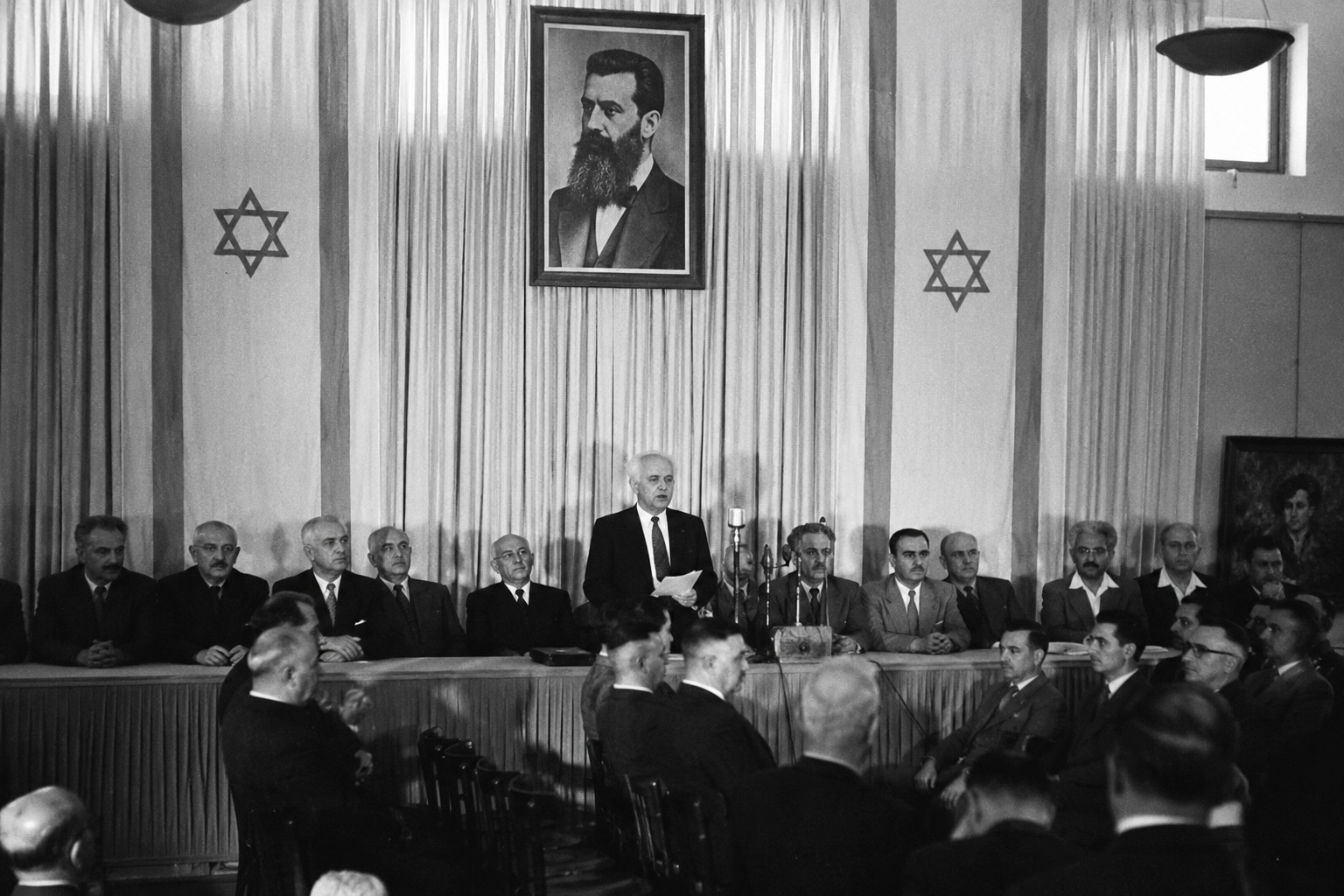
On 14 May 1948, David Ben-Gurion declared the establishment of the State of Israel in Tel Aviv, ending decades of British rule and turning a political project into a sovereign state. The declaration came hours before the British Mandate expired and immediately altered the strategic map of the Middle East.
A state born under pressure
The ceremony was held at the Tel Aviv Museum, later known as Independence Hall. It was deliberately modest and tightly organised, reflecting the security uncertainty of the moment. The Jewish leadership faced both opportunity and danger: international legitimacy had been strengthened by the United Nations partition plan of 1947, but conflict between Jewish and Arab communities was already escalating.
Recognition and war
The United States recognised the new state the same day, giving Israel immediate diplomatic weight. But the declaration did not bring peace. Neighbouring Arab states opposed the partition plan and fighting widened into the first Arab-Israeli war. For Israelis, the date became a foundational moment of national rebirth. For Palestinians, the same period is remembered through the Nakba, the displacement and dispossession that accompanied the war.

The declaration’s message
Israel’s declaration combined historical, religious and political arguments. It referred to Jewish attachment to the land, the trauma of persecution and the need for self-determination after the Holocaust. It also promised equality of social and political rights for all citizens, regardless of religion, race or sex — a commitment that has remained central to debates over Israel’s identity.
A legacy still contested
Seventy-eight years later, the declaration remains one of the defining documents of modern international politics. It marked the creation of a durable state, a military and technological power, and a central actor in global diplomacy. Yet it also stands at the beginning of a conflict that remains unresolved, shaping regional security, Palestinian statehood claims and the wider politics of the Middle East.
Why it still matters
The events of 14 May 1948 show how declarations can create facts on the ground, but not settle the disputes surrounding them. Israel’s independence was a decisive act of state formation. Its consequences continue to influence borders, alliances, identity and diplomacy across the region today.
Newshub Editorial in Asia – 14 May 2026

If you have an account with ChatGPT you get deeper explanations,
background and context related to what you are reading.
Open an account:
Open an account
Recent Comments