
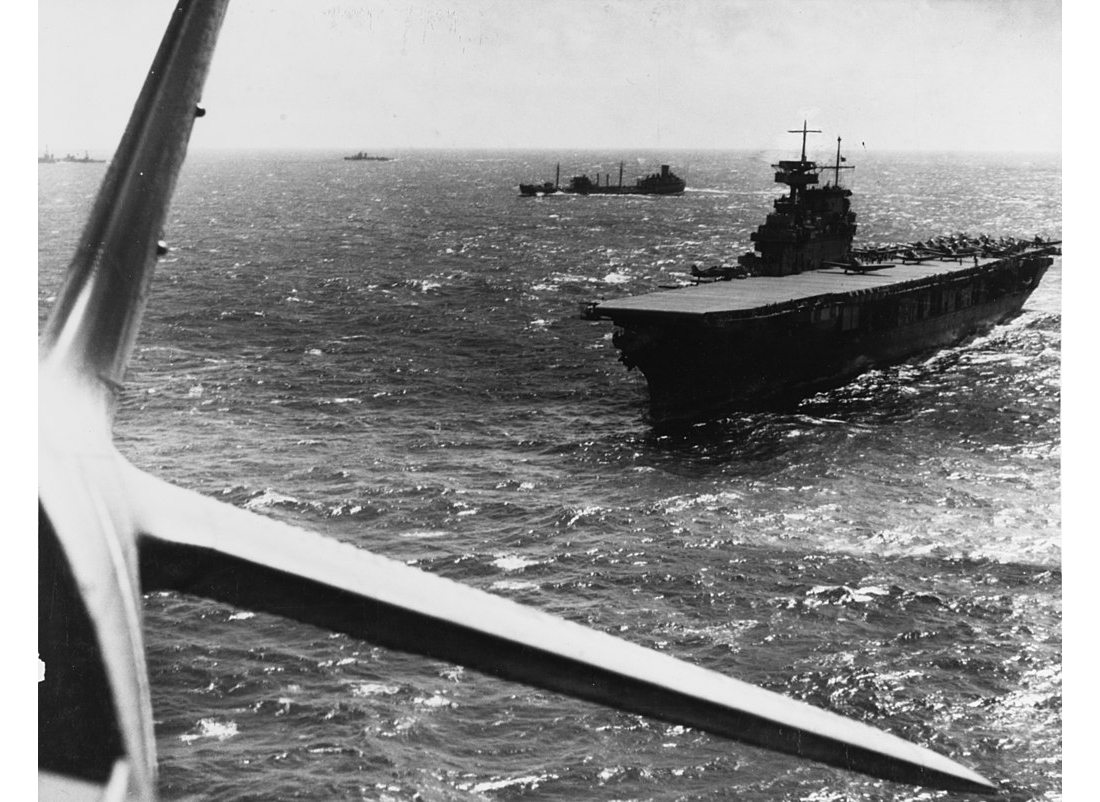
The Battle of the Coral Sea, which began on May 4, 1942, during World War II, marked one of the most significant turning points in naval history. Fought between the United States and Japan in the waters south of the Solomon Islands, the battle became the first major naval engagement where opposing fleets never directly sighted or fired upon each other. Instead, aircraft carriers and naval aviation became the decisive instruments of war, signalling a dramatic transformation in global military strategy.
The battle emerged from Japan’s broader campaign to expand its influence across the Pacific. Following rapid territorial gains after the attack on Pearl Harbor in December 1941, Japanese forces sought to capture Port Moresby in Papua New Guinea. Control of the area would have threatened Australia and strengthened Japan’s defensive perimeter in the Pacific.
The Allied response was swift. American and Australian forces moved to intercept the Japanese fleet in the Coral Sea, creating a confrontation that would unfold almost entirely through carrier-based aircraft. The United States deployed carriers including the USS Lexington and USS Yorktown, while Japan relied heavily on carriers such as Shōkaku and Zuikaku.

A new era of naval combat
What made the Battle of the Coral Sea historically unique was its reliance on aviation rather than battleship artillery. Aircraft launched from carriers conducted reconnaissance missions, bombing raids, and torpedo attacks across hundreds of kilometres of open ocean.
The battle lasted from May 4 to May 8, 1942, and involved intense air strikes from both sides. Japanese aircraft succeeded in sinking the USS Lexington, one of America’s key carriers, while the USS Yorktown sustained heavy damage. Japan, however, suffered critical losses of aircraft and experienced severe damage to the carrier Shōkaku.
Perhaps more importantly, the Japanese invasion force heading toward Port Moresby was forced to retreat. Strategically, this represented an Allied victory despite the heavy American losses.
Strategic consequences for the Pacific War
Military historians often describe the Battle of the Coral Sea as a precursor to the even more decisive Battle of Midway, which took place one month later. Because Japanese carriers and experienced pilots were damaged or unavailable after Coral Sea, Japan entered Midway at a disadvantage.
The battle also demonstrated the vulnerability of aircraft carriers and highlighted the growing importance of air superiority at sea. Traditional battleships, once regarded as the dominant symbol of naval power, were increasingly overshadowed by carrier groups and long-range aviation.
For Australia, the outcome was especially significant. Preventing the capture of Port Moresby reduced the immediate threat of direct Japanese expansion toward the Australian mainland.
Legacy in military history
Today, the Battle of the Coral Sea is widely regarded as one of the defining naval engagements of the twentieth century. It represented a transition from the old style of naval warfare to the modern era of carrier-based operations that would dominate military doctrine for decades.
The battle also underscored the importance of intelligence and codebreaking. Allied cryptographers had partially deciphered Japanese communications before the conflict, allowing the United States to anticipate Japanese movements and prepare a response.
More than eight decades later, the lessons of the Coral Sea remain relevant in discussions surrounding naval strategy, air power, and the evolving role of technology in warfare.
Newshub Editorial in Europe – May 4, 2026

If you have an account with ChatGPT you get deeper explanations,
background and context related to what you are reading.
Open an account:
Open an account
Recent Comments