
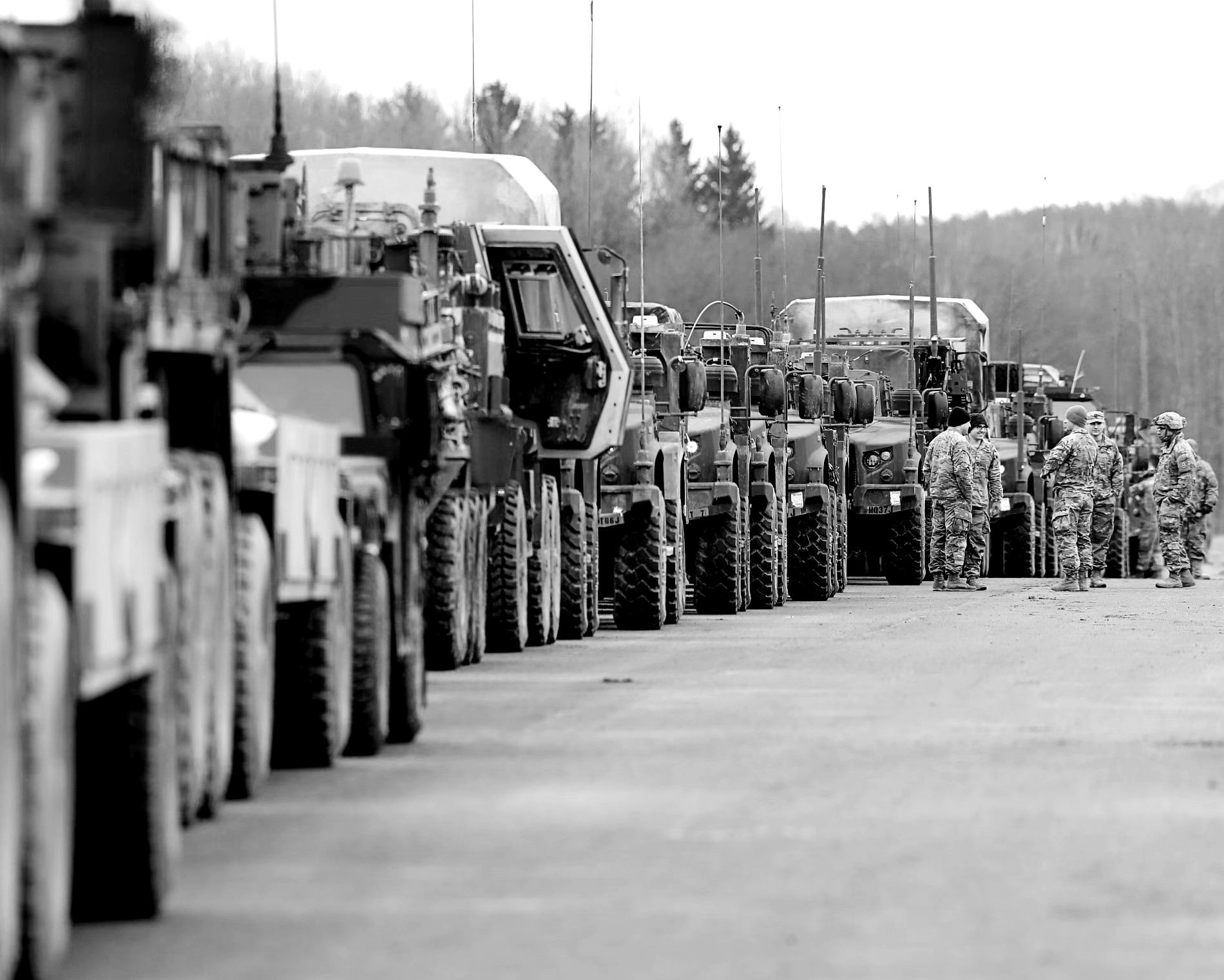
US President Donald Trump has threatened to reduce American troop numbers stationed in Germany, intensifying a growing dispute with key Nato allies amid disagreements over Iran, defence commitments and transatlantic strategy. The warning followed remarks from German Chancellor Friedrich Merz suggesting the Trump administration was being outmanoeuvred in negotiations connected to the Iran conflict.
Fresh strain in the transatlantic alliance
Trump stated that the United States was “studying and reviewing” a possible reduction of troops in Germany, with a decision expected in the near future. The comments come as relations between Washington and several European capitals face increasing pressure over the ongoing Iran crisis and broader Nato burden-sharing disputes.
Germany hosts one of the largest American military presences outside the United States, including major strategic facilities such as Ramstein Air Base and command centres supporting US operations across Europe, Africa and the Middle East.

The latest disagreement escalated after Friedrich Merz publicly argued that the Trump administration appeared to be struggling in its attempts to secure progress in negotiations linked to Iran and the reopening of the Strait of Hormuz. Merz reportedly warned that Europe was paying a significant economic price through energy disruption and higher oil costs.
Trump reacted sharply on social media, accusing Merz of being weak on Iran and claiming the German leader “doesn’t know what he’s talking about”.
Germany remains central to US operations
Despite Trump’s rhetoric, analysts note that Germany remains strategically critical for the US military. Tens of thousands of American troops are currently stationed there, alongside logistics infrastructure, intelligence facilities and medical support systems essential for Nato and global US operations.
Military experts have also pointed out that earlier attempts during Trump’s previous presidency to reduce troop levels in Germany faced strong resistance from Congress and defence officials concerned about weakening Nato deterrence against Russia.
At the same time, Germany has significantly increased defence spending in recent years and has pledged to strengthen its military capabilities further, partly in response to tensions with Russia and uncertainty surrounding future American commitments to Europe.
Iran conflict reshaping alliances
The Iran conflict has become a major source of friction between Washington and European governments. Several Nato countries have reportedly resisted direct military involvement or refused to fully support US-led operations connected to the Strait of Hormuz.
Trump has repeatedly criticised allies for relying too heavily on American military power while contributing insufficiently themselves. European leaders, meanwhile, have expressed concern over escalation risks, economic consequences and the absence of a clearly defined long-term strategy.
The disagreement reflects wider uncertainty about the future direction of Nato under a second Trump presidency. Security analysts increasingly warn that public disputes between Washington and major European allies could encourage geopolitical rivals to test the alliance’s cohesion.
For financial markets, the tensions are also significant. Any reduction in US military presence in Europe could reshape defence planning, security cooperation and investor perceptions regarding stability across the continent.
Newshub Editorial in Europe – 30 April 2026

If you have an account with ChatGPT you get deeper explanations,
background and context related to what you are reading.
Open an account:
Open an account
Recent Comments