
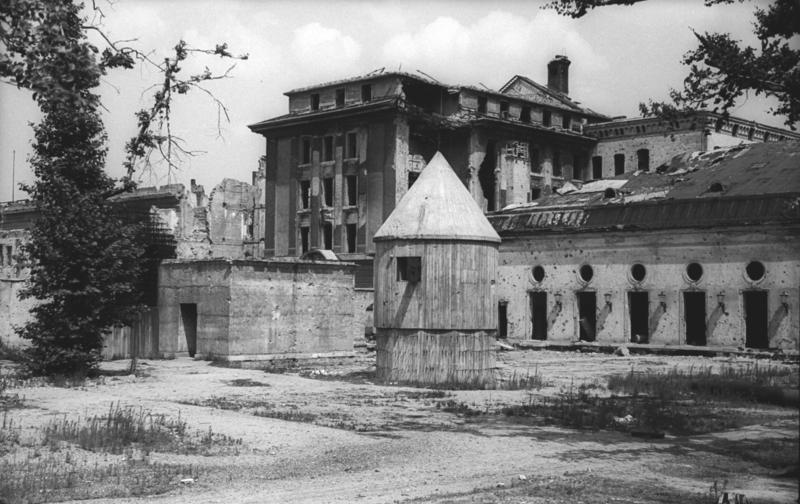
On 30 April 1945, Adolf Hitler died by suicide in his underground bunker in Berlin as Nazi Germany faced total military defeat and Soviet forces closed in on the German capital. His death marked the symbolic end of the Third Reich and one of the darkest chapters in modern history.
The final days in Berlin
By late April 1945, Berlin had become the centre of fierce urban combat as Soviet troops advanced street by street toward the Reich Chancellery. Hitler, who had ruled Germany since 1933 and led Europe into the Second World War, had retreated to the Führerbunker beneath the city.
Inside the bunker, senior Nazi officials attempted to maintain the appearance of control despite the rapid collapse of Germany’s military position. Communications with remaining German forces became increasingly chaotic, while reports confirmed that Soviet troops were only a short distance away.

On 29 April 1945, Hitler married Eva Braun, his longtime companion, during a small ceremony inside the bunker. Less than 24 hours later, both were dead.
The suicide and aftermath
According to historical accounts from bunker staff and surviving witnesses, Hitler shot himself while Eva Braun consumed cyanide. Their bodies were then carried outside the bunker and burned by aides in accordance with Hitler’s instructions, intended to prevent public display or capture by Soviet forces.
The Soviet army later discovered the remains amid the ruins of central Berlin. Debate and conspiracy theories about Hitler’s death persisted for decades, but historians and forensic investigations have overwhelmingly concluded that he died on 30 April 1945.
The event accelerated the formal collapse of Nazi Germany. Within days, Berlin surrendered, and Germany signed unconditional surrender documents in early May 1945, bringing the war in Europe to an end.
A regime responsible for unprecedented destruction
Hitler’s rule resulted in catastrophic human suffering. Under the Nazi regime, six million Jews were murdered in the Holocaust, alongside millions of other victims including Roma, disabled individuals, political opponents, prisoners of war and civilians across occupied Europe.
The Second World War caused tens of millions of deaths worldwide and devastated large parts of Europe. Hitler’s dictatorship remains one of history’s clearest examples of totalitarianism, militarism and state-sponsored genocide.
Today, the anniversary of Hitler’s death is often viewed not as a moment of commemoration, but as a reminder of the consequences of extremist ideology, authoritarian rule and racial hatred.
Historical legacy and remembrance
Germany and many European nations continue to maintain extensive educational and memorial programmes focused on the Holocaust and the crimes of the Nazi era. Historians argue that preserving accurate historical memory remains essential in countering antisemitism, extremism and disinformation.
The fall of Berlin and Hitler’s death also reshaped global geopolitics, leading directly into the Cold War era and the division of Europe between East and West for decades.
More than 80 years later, the events of April 1945 continue to serve as a defining warning about the dangers of dictatorship and unchecked political extremism.
Newshub Editorial in Europe – 30 April 2026

If you have an account with ChatGPT you get deeper explanations,
background and context related to what you are reading.
Open an account:
Open an account
Recent Comments