
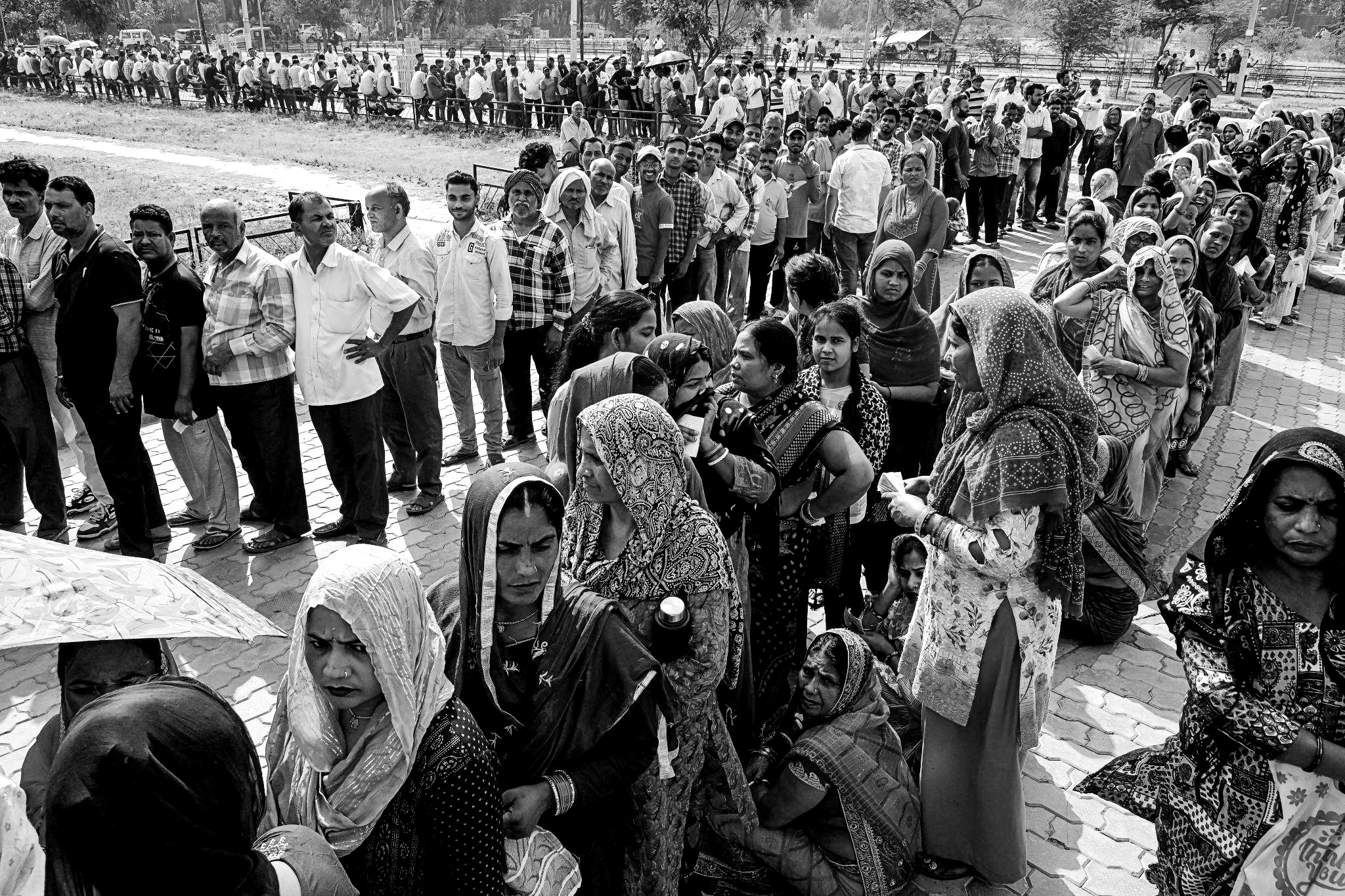
ndia’s increasingly competitive political landscape is entering a new phase as a prominent female opposition leader intensifies preparations for a direct political confrontation with Prime Minister Narendra Modi ahead of the country’s next major electoral battles. The emerging contest is drawing national attention as opposition parties seek to challenge the Bharatiya Janata Party’s long-standing political dominance.
The opposition figure, who has built a reputation as one of India’s most influential regional political leaders, has expanded her national profile in recent months through aggressive campaigning focused on economic inequality, unemployment, inflation and concerns surrounding democratic institutions.
Political analysts say the development reflects a broader effort among opposition movements to consolidate support around stronger personalities capable of countering Modi’s highly centralised political influence and enduring popularity.

The growing visibility of female leadership within India’s opposition landscape is also being viewed as a significant shift in the country’s political dynamics, particularly among younger and urban voters.
Modi remains dominant but pressure is growing
Narendra Modi and the BJP continue to maintain a formidable national political machine supported by strong grassroots organisation, digital outreach and a reputation for economic modernisation and nationalist positioning.
However, opposition parties have increasingly sought to capitalise on rising public concerns related to food prices, job creation, agricultural pressures and social polarisation.
The female opposition leader at the centre of the current political focus has sharpened criticism of the government’s economic management while presenting herself as a defender of federal balance and democratic accountability.
Large rallies and public appearances in recent weeks have highlighted attempts to build momentum ahead of future state and national elections.
Women play larger role in Indian politics
India has witnessed a growing presence of influential female political figures across both regional and national politics over the past two decades.
Observers note that women leaders often maintain strong regional voter bases and emotional political appeal, particularly in states where local identity and welfare policies play major roles in election outcomes.
The current political contest is therefore being framed not only as an ideological struggle but also as a symbolic challenge to the BJP’s dominance from a leader capable of mobilising broad public attention.
At the same time, analysts caution that uniting India’s fragmented opposition remains a major obstacle. Regional parties continue to hold differing political priorities, making nationwide coordination difficult despite shared opposition to Modi’s government.
Economic and geopolitical backdrop
The political rivalry unfolds during a period of significant economic and geopolitical importance for India.
The country remains one of the world’s fastest-growing major economies and continues expanding its influence in global manufacturing, technology and diplomacy.
Foreign investors are closely watching India’s political environment due to its importance as both a consumer market and strategic geopolitical partner for Western economies seeking alternatives to China.
Political stability has been a central pillar supporting investor confidence under Modi’s administration, though opposition groups argue that stronger institutional balance is necessary for long-term democratic resilience.
As campaigning intensifies, the contest is expected to become one of the defining political narratives shaping India’s future direction both domestically and internationally.
Newshub Editorial in Asia – 29 April 2026

If you have an account with ChatGPT you get deeper explanations,
background and context related to what you are reading.
Open an account:
Open an account
Recent Comments