
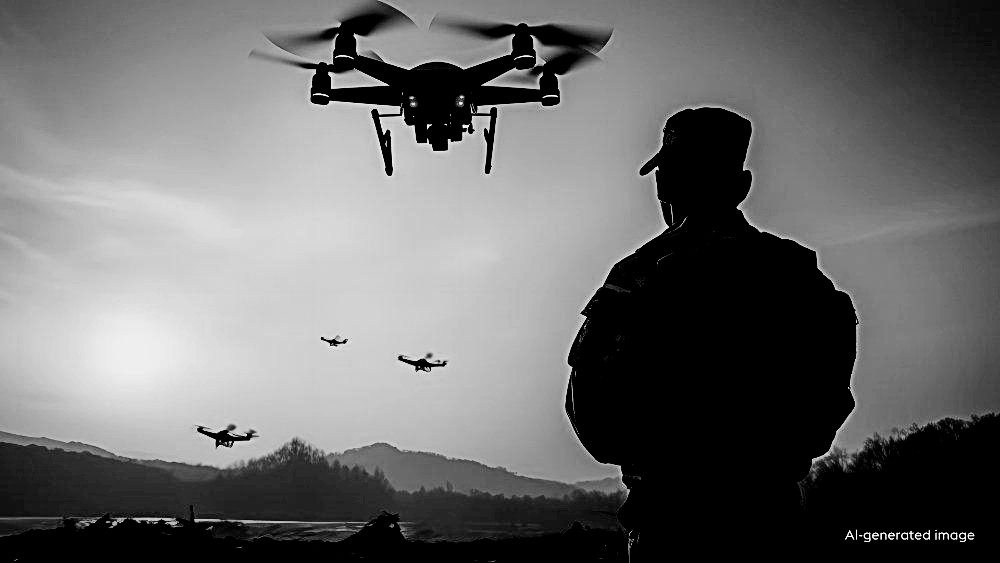
A new Ukrainian action thriller, Killhouse, is being billed as a modern-day counterpart to Saving Private Ryan for the drone age, reflecting how technology is reshaping both warfare and storytelling. Based on a real-life rescue of a civilian couple by Ukrainian drone operators, the film captures the evolving nature of conflict in the 21st century.
A war story for a new era
Set against the backdrop of the ongoing conflict involving Ukraine, Killhouse shifts the traditional war film narrative away from large-scale troop movements and towards precision, technology-driven operations. The story centres on a civilian couple trapped in an active combat zone, whose survival depends on the coordination and ingenuity of drone operators working remotely.
This approach reflects a broader transformation in modern warfare, where unmanned aerial systems play a central role in reconnaissance, targeting and rescue missions.

Inspired by real events
What distinguishes Killhouse is its grounding in real-life events. The film draws on documented cases in which civilians were located and assisted through the use of drones, highlighting both the risks faced by non-combatants and the increasingly sophisticated tools used to protect them.
By focusing on a single rescue mission, the narrative aims to humanise a conflict often understood through geopolitical analysis, bringing attention to the lived experiences of those caught in war zones.
Redefining the war film genre
The comparison to Saving Private Ryan underscores the film’s ambition to redefine the war genre for a new generation. While Steven Spielberg’s classic was noted for its visceral depiction of frontline combat, Killhouse seeks to translate that intensity into a digital battlefield, where operators engage from a distance but remain deeply connected to the consequences of their actions.
This shift introduces new cinematic challenges, including how to convey tension and immediacy when much of the action is mediated through screens, data feeds and remote communication.
Technology as both tool and theme
Drones are not only a narrative device but a central theme in the film. Their use raises broader questions about the ethics and psychology of remote warfare, where physical distance does not necessarily reduce emotional impact.
The film also reflects how rapidly evolving technologies are influencing not just military strategy but also cultural representation. As drone warfare becomes more prevalent, its depiction in media is likely to become increasingly common.
Global relevance and audience impact
With international interest in the conflict remaining high, Killhouse is positioned to reach a global audience. Its focus on a personal, real-life story may resonate with viewers seeking a more intimate understanding of modern warfare.
Beyond entertainment, the film contributes to a growing body of work that examines how conflict is changing in an era defined by technological innovation. In doing so, it reinforces the idea that the future of war—and its portrayal on screen—will be shaped as much by code and connectivity as by conventional force.
Newshub Editorial in Europe – April 26, 2026

If you have an account with ChatGPT you get deeper explanations,
background and context related to what you are reading.
Open an account:
Open an account
Recent Comments