
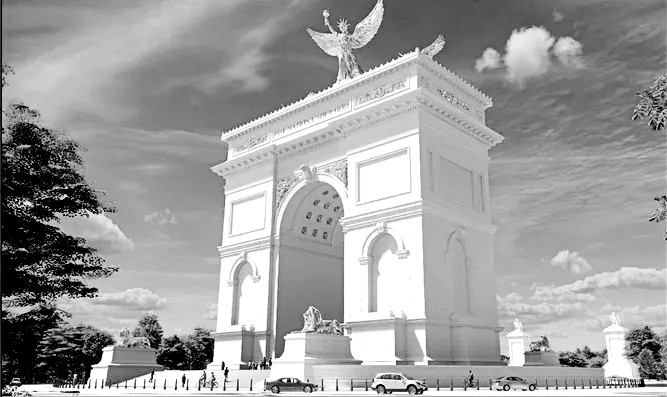
A gilded, winged figure surrounded by eagles and lions stands at the centre of newly revealed plans for a monumental triumphal arch in Washington, DC, as Donald Trump presents what he calls “the biggest and most beautiful arch in the world”.
A symbolic design rooted in power and history
According to a 12-page document released by the US Commission of Fine Arts, the proposed structure draws heavily on classical imperial motifs. The arch is topped by a winged golden figure, interpreted as a symbol of victory and national strength, flanked by sculpted eagles and lions — traditional emblems of authority, dominance and resilience.
The design language echoes historic triumphal arches seen in Europe, but on a significantly larger scale. Early renderings suggest a structure intended not only as a monument but as a defining visual landmark for the US capital, integrating neoclassical architecture with overt symbolic messaging.

Trump’s long-standing ambition
The project reflects a long-held ambition by Trump to leave a permanent architectural mark on Washington. During previous terms and public statements, he repeatedly criticised modern federal architecture and advocated for a return to more classical and monumental styles.
In presenting the plans, Trump emphasised both scale and aesthetics, positioning the arch as a global statement piece. The language used — “biggest” and “most beautiful” — aligns with his broader political and branding approach, where visibility and impact are central.
Institutional process and scrutiny
The involvement of the Commission of Fine Arts signals that the project has entered a formal review phase, though approval is far from guaranteed. The commission, which advises on design and aesthetics for federal projects in Washington, plays a critical role in shaping how such structures fit within the historic and symbolic fabric of the city.
Large-scale additions to Washington’s monumental core are typically subject to extensive scrutiny, including urban planning considerations, historical preservation concerns and political debate. The proposed arch is expected to trigger discussions around cost, purpose and national identity.
Political and cultural implications
Beyond architecture, the project carries clear political undertones. Triumph arches have historically been associated with military victories and imperial power, raising questions about the message such a structure would convey in a modern democratic context.
Supporters may view the proposal as a bold reaffirmation of national pride and historical continuity. Critics, however, are likely to question both the symbolism and the prioritisation of such a project amid competing national needs.
A landmark or a legacy debate
Whether the triumphal arch is ultimately built remains uncertain, but its unveiling has already positioned it as a focal point in the ongoing debate over America’s architectural identity and political symbolism.
If realised, the structure would stand as one of the most ambitious additions to Washington’s landscape in modern times — a physical manifestation of leadership style, national narrative and the enduring power of monumental design.
Newshub Editorial in North America – April 11, 2026

If you have an account with ChatGPT you get deeper explanations,
background and context related to what you are reading.
Open an account:
Open an account
Recent Comments