
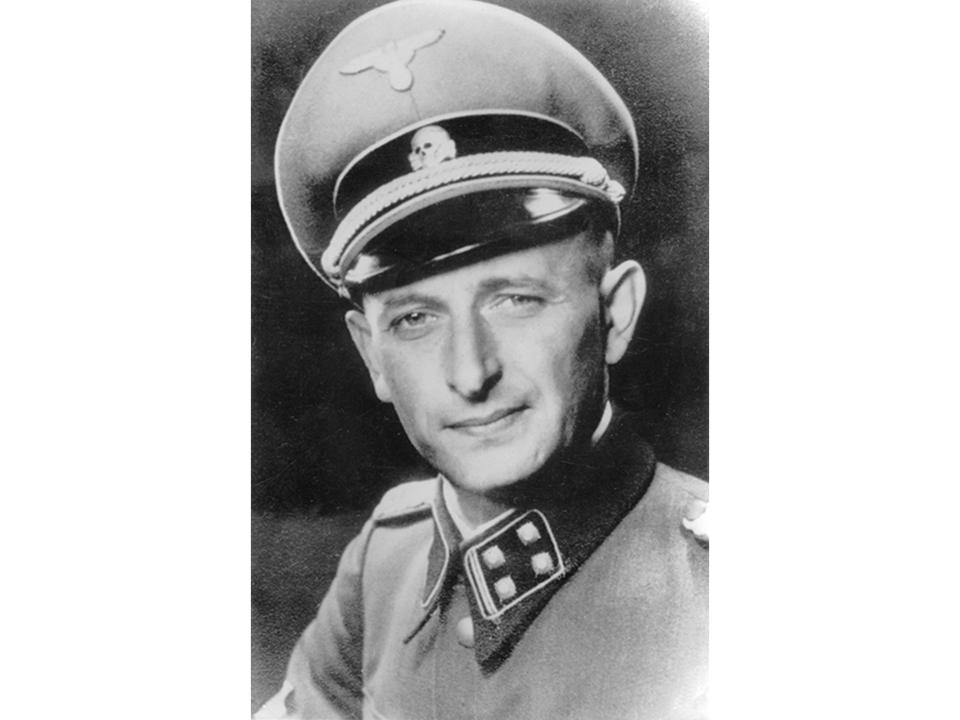
The trial of Adolf Eichmann began in Jerusalem on 11 April 1961, marking one of the most consequential legal proceedings of the 20th century and bringing the operational core of the Holocaust into global focus.
A bureaucrat of destruction
Born in Germany in 1906, Eichmann rose through the ranks of the SS to become a key organiser of the Nazi regime’s “Final Solution”. While not a frontline commander, his role was pivotal: he coordinated the identification, deportation and transport of millions of Jews to ghettos and extermination camps across occupied Europe. His position within the Reich Security Main Office made him one of the central logistical architects of genocide, overseeing timetables, quotas and cross-border coordination with chilling administrative precision.
From escape to capture
After the collapse of Nazi Germany in 1945, Eichmann fled Europe and eventually settled in Argentina under the alias Ricardo Klement. For years, he lived undetected until Israeli intelligence agency Mossad tracked him down. In May 1960, he was captured in a covert operation in Buenos Aires and secretly transported to Israel, a move that triggered diplomatic tensions but ensured he would stand trial.

A trial watched by the world
The trial took place before the Jerusalem District Court and became one of the first globally televised judicial proceedings. Survivors delivered extensive testimony, detailing deportations, ghettos and extermination camps. These accounts reshaped public understanding of the Holocaust, moving it from abstract statistics to deeply personal human narratives. Eichmann, seated in a glass booth, maintained that he was merely following orders — a defence that would become central to legal and philosophical debate.
Judgment and legal precedent
Eichmann was found guilty on multiple counts, including crimes against humanity, war crimes and crimes against the Jewish people. In 1962, he was executed, the only civil execution ever carried out in Israel. The case established a critical legal precedent: individuals can be held accountable for international crimes regardless of where they were committed, and obedience to authority does not absolve responsibility.
The trial also influenced intellectual discourse through Hannah Arendt, who reported on the proceedings and introduced the concept of the “banality of evil”, describing how ordinary individuals can commit extraordinary crimes within structured systems.
A turning point in historical memory
The Eichmann trial marked a decisive shift in global Holocaust remembrance. Survivor testimony became central to historical understanding, and the proceedings reinforced emerging international frameworks for prosecuting genocide and war crimes. It transformed the Holocaust from a primarily European post-war issue into a universal moral and legal benchmark.
More than six decades later, the trial remains a defining moment in the pursuit of justice, illustrating how accountability can extend across borders and time, even for those who attempted to disappear after orchestrating systematic atrocity.
Newshub Editorial in Europe – April 11, 2026

If you have an account with ChatGPT you get deeper explanations,
background and context related to what you are reading.
Open an account:
Open an account
Recent Comments