
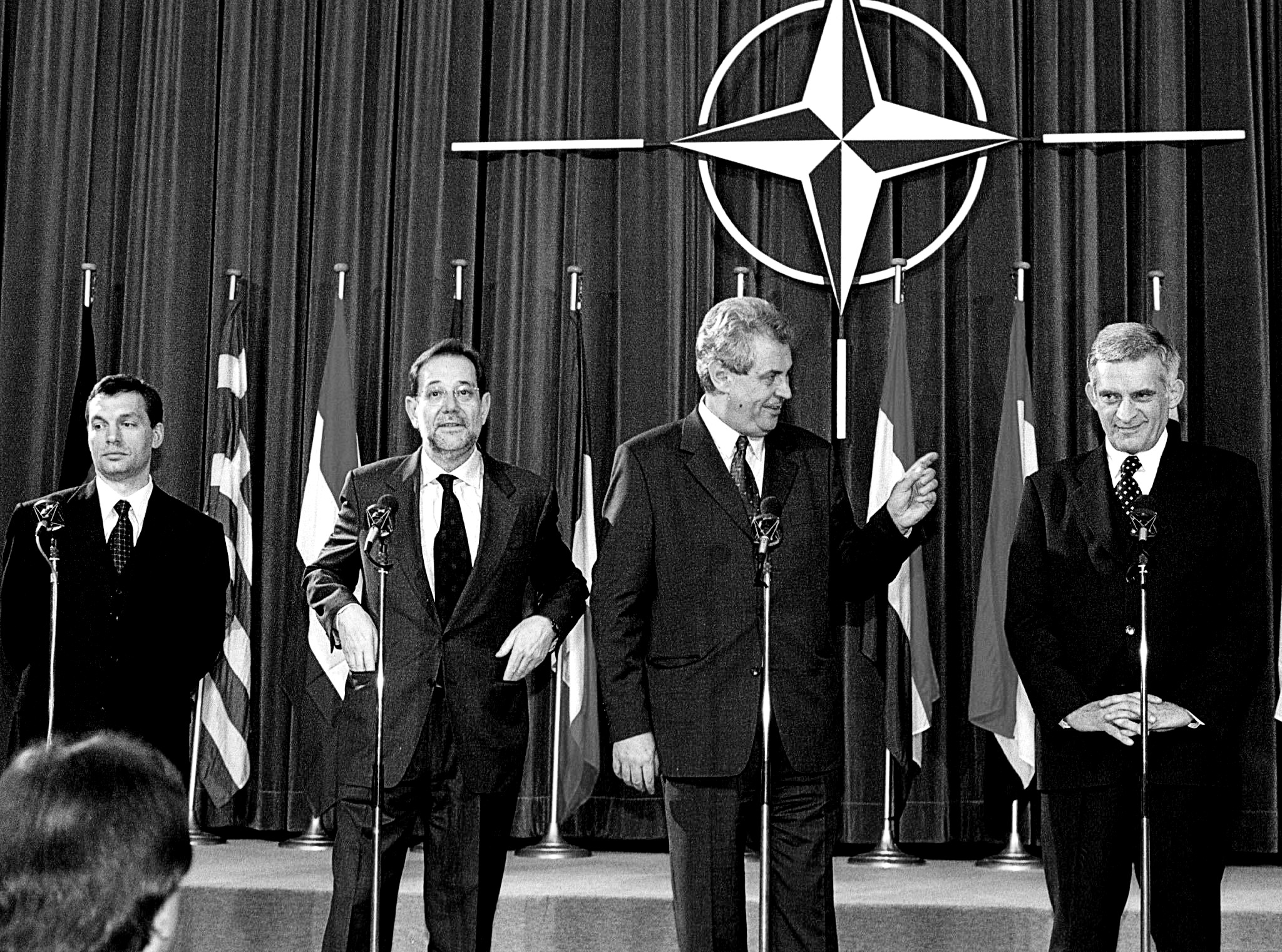
On 12 March 1999, Poland, Hungary and the Czech Republic formally became members of the North Atlantic Treaty Organization (NATO), marking the alliance’s first expansion into former Warsaw Pact territory and symbolising a major geopolitical shift in post-Cold War Europe.
A historic step after the Cold War
The accession of the three Central European countries came nearly a decade after the collapse of communist regimes across Eastern Europe and the dissolution of the Soviet-led Warsaw Pact. Their entry into NATO represented both a strategic and symbolic turning point, confirming that the region had firmly aligned itself with Western political and security structures.
The decision to admit the three countries was made at the NATO summit in Madrid in 1997, following several years of diplomatic engagement and military reforms. Poland, Hungary and the Czech Republic had spent much of the 1990s restructuring their armed forces, strengthening democratic institutions and aligning defence policies with NATO standards.

When the formal accession documents were deposited in Washington, the alliance expanded from 16 to 19 member states.
Security guarantees and strategic transformation
Membership provided the new allies with NATO’s collective defence guarantee under Article 5 of the North Atlantic Treaty, which states that an attack on one member is considered an attack on all. For the governments in Warsaw, Budapest and Prague, this guarantee was seen as a crucial safeguard during a period of political and economic transformation.
For NATO, the expansion represented the beginning of a broader strategy of integrating Central and Eastern Europe into Western security frameworks. The move was also intended to stabilise the region and prevent security vacuums following the collapse of Soviet influence.
At the time, the enlargement was not without controversy. Russia strongly opposed NATO’s eastward expansion, arguing that it undermined the post-Cold War security balance. NATO leaders, however, maintained that the enlargement aimed to strengthen European stability rather than threaten Moscow.
Long-term consequences for Europe’s security architecture
The 1999 enlargement paved the way for several subsequent rounds of NATO expansion. In 2004, seven more countries — including the Baltic states — joined the alliance, followed by additional members in later years. Today NATO has grown to include more than thirty countries.
For Poland, Hungary and the Czech Republic, the decision taken in 1999 remains one of the most consequential foreign policy moves since the end of the Cold War. Their membership integrated them deeply into Western defence planning and transformed their role in European security.
More than two decades later, the enlargement continues to shape debates about NATO’s strategic direction and relations between the West and Russia.
Newshub Editorial in Europe – March 12, 2026

If you have an account with ChatGPT you get deeper explanations,
background and context related to what you are reading.
Open an account:
Open an account
Recent Comments