
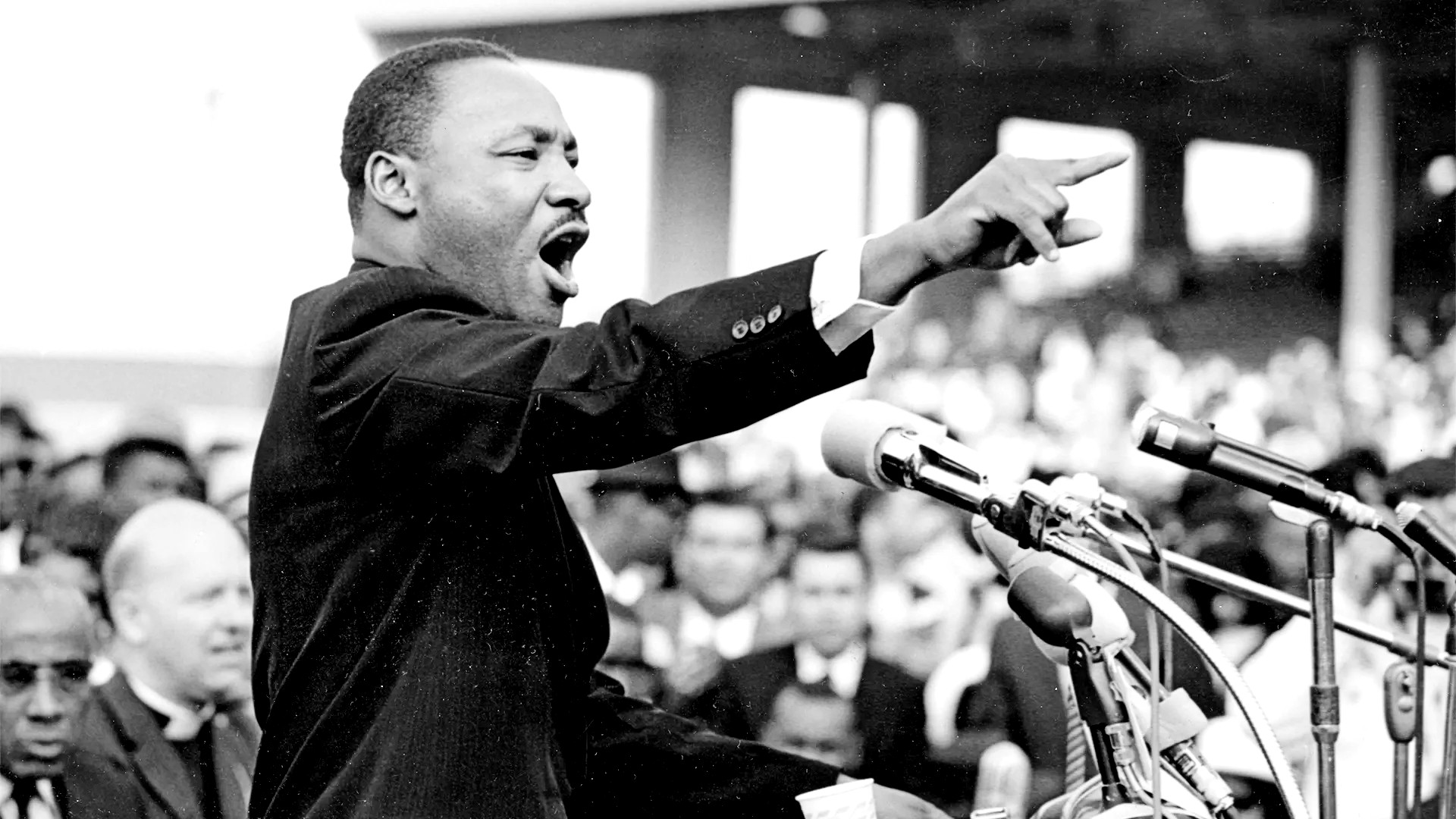
On 10 March 1969, James Earl Ray formally pleaded guilty in a Tennessee court to the assassination of American civil rights leader Martin Luther King Jr, bringing a swift but controversial end to one of the most consequential criminal cases in modern US history.
A crime that shocked the world
Martin Luther King Jr, one of the most influential figures of the American civil rights movement, was assassinated on 4 April 1968 while standing on the balcony of the Lorraine Motel in Memphis, Tennessee. King had travelled to Memphis to support striking sanitation workers and was preparing for further demonstrations when he was fatally shot.
The killing sent shockwaves across the United States and the world. Riots erupted in more than 100 American cities as grief, anger and frustration over racial injustice exploded into unrest. King, who had become globally recognised for his leadership in the struggle for racial equality and his advocacy of non-violent protest, was just 39 years old.

Following the assassination, a massive international manhunt was launched for the suspected gunman. Authorities eventually identified James Earl Ray, an escaped convict from the Missouri State Penitentiary, as the prime suspect. Ray fled the United States and travelled through several countries using false identities.
International manhunt and arrest
Ray’s escape ended on 8 June 1968 when he was arrested at London Heathrow Airport while attempting to board a flight to Belgium using a forged Canadian passport. British authorities detained him and he was later extradited to the United States to face trial.
Investigators alleged that Ray had purchased the rifle used in the assassination and had been staying at a boarding house overlooking the Lorraine Motel at the time of the shooting. The evidence compiled by prosecutors placed him at the scene and linked him to the weapon used in the attack.
Faced with overwhelming evidence and the possibility of receiving the death penalty if convicted at trial, Ray accepted a plea bargain. On 10 March 1969 he entered a guilty plea in a Memphis courtroom, admitting responsibility for the assassination.
A controversial plea
Ray was sentenced to 99 years in prison following the guilty plea. However, the case did not end the controversy surrounding King’s death. Just three days after entering the plea, Ray attempted to withdraw it, claiming he had been pressured into confessing.
For the rest of his life, Ray insisted that he had been part of a wider conspiracy and that other individuals were involved in the assassination. These claims fuelled decades of speculation and numerous investigations.
In 1979, the US House Select Committee on Assassinations concluded that King was likely the victim of a conspiracy, though it maintained that Ray was the gunman. Despite this finding, no definitive evidence has ever established a broader plot.
Enduring legacy
Martin Luther King Jr’s assassination remains one of the defining moments in American history. His leadership helped secure landmark civil rights legislation, including the Civil Rights Act of 1964 and the Voting Rights Act of 1965.
Today, King’s legacy continues to shape discussions about equality, justice and civil rights in the United States and beyond. The Lorraine Motel, where he was killed, is now home to the National Civil Rights Museum.
More than half a century later, the guilty plea of James Earl Ray remains a pivotal moment in the legal aftermath of the assassination — closing the courtroom chapter of the case, but leaving questions that still echo through history.
Newshub Editorial in North America – March 10, 2026

If you have an account with ChatGPT you get deeper explanations,
background and context related to what you are reading.
Open an account:
Open an account
Recent Comments