
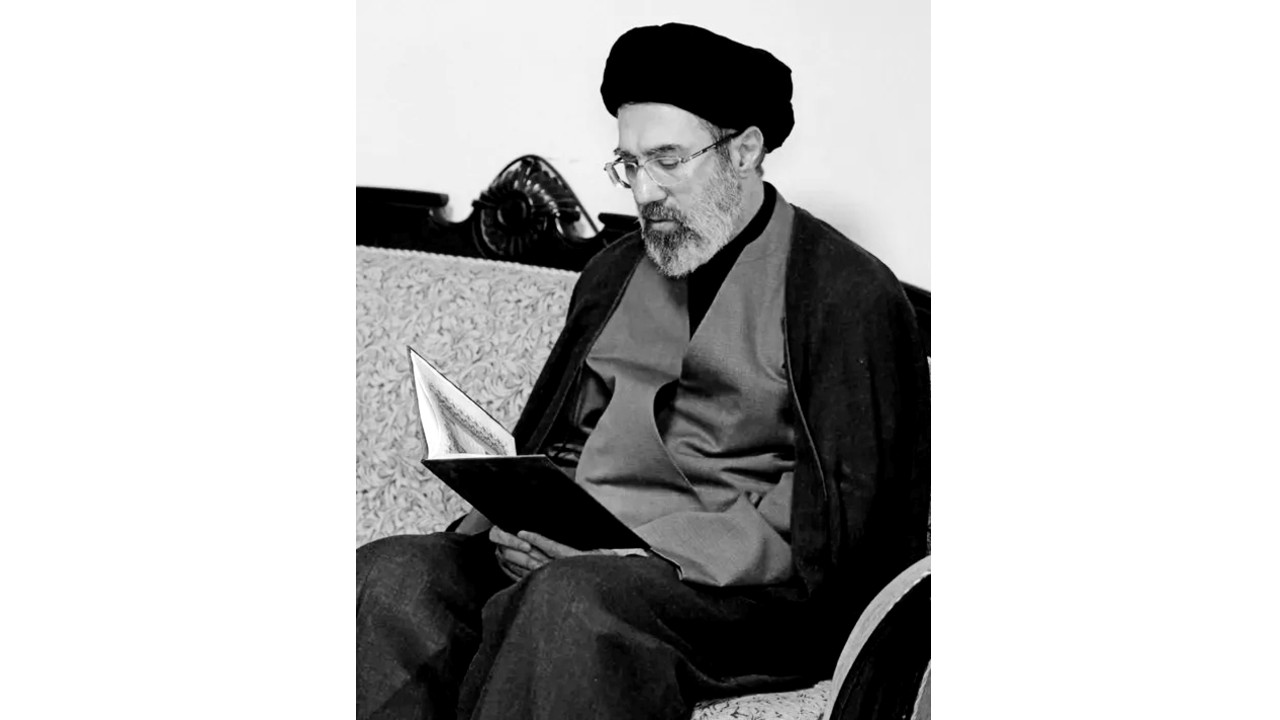
Iran’s Assembly of Experts has reportedly selected Mojtaba Khamenei, the son of long-time supreme leader Ali Khamenei, as the Islamic Republic’s next supreme leader. The decision, according to informed sources cited by international media, was taken amid strong pressure from the Islamic Revolutionary Guard Corps (IRGC), reflecting the determination of Iran’s security establishment to maintain continuity at the top of the state during a period of heightened geopolitical tension and domestic uncertainty.
Assembly of experts moves quickly to secure succession
The Assembly of Experts, the clerical body constitutionally responsible for appointing Iran’s supreme leader, reportedly convened rapidly following the leadership vacuum created by the death of Ayatollah Ali Khamenei. The body’s decision to elevate Mojtaba Khamenei appears aimed at ensuring a swift transition of authority and preventing internal power struggles among competing factions within the Iranian establishment.
For more than three decades, Ali Khamenei had been the central figure in Iran’s political and religious system. His leadership shaped the country’s foreign policy, military posture and internal governance. The succession question had therefore long been viewed as one of the most critical issues facing the Islamic Republic.

By selecting Mojtaba Khamenei, the Assembly of Experts appears to have opted for a figure deeply familiar with the existing power structure and closely connected to the institutions that sustain it.
Influence behind the scenes
Although Mojtaba Khamenei has never held a prominent formal political office, he has for years been regarded as an influential figure within Iran’s inner circles of power. Analysts have often described him as playing a significant role in the political networks surrounding his father’s office, including links with conservative clerical figures and security officials.
He is believed to maintain particularly close ties with the IRGC, the powerful military and economic force that plays a central role in Iran’s domestic security and regional strategy. Support from this institution is widely considered crucial in determining the balance of power within the Islamic Republic.
Observers say the backing of the Revolutionary Guards likely helped shape the outcome of the succession process, reinforcing the argument for continuity and stability during a sensitive geopolitical moment.
Debate over dynastic leadership
The reported appointment of Mojtaba Khamenei has also revived debate about the nature of political authority within Iran. The Islamic Republic emerged from the 1979 revolution that overthrew the hereditary monarchy of Shah Mohammad Reza Pahlavi. As a result, the prospect of leadership passing from father to son has been controversial among some clerical and political circles.
Critics argue that such a transition risks resembling dynastic succession, something the revolution originally sought to abolish. Supporters, however, contend that Mojtaba Khamenei’s long involvement in political and religious affairs makes him a natural candidate to ensure continuity.
Questions have also been raised about his clerical standing, as previous supreme leaders have traditionally possessed strong religious credentials in addition to political influence.
A pivotal moment for Iran’s future
The emergence of Mojtaba Khamenei as Iran’s new supreme leader comes at a time of profound regional tension and domestic pressure. Economic challenges, international sanctions and geopolitical confrontations continue to shape the strategic environment facing Tehran.
A leadership transition at such a moment carries significant implications not only for Iran’s internal power dynamics but also for its relations with regional neighbours and global powers.
If the appointment is formally confirmed by Iranian authorities, Mojtaba Khamenei will inherit one of the most powerful political positions in the Middle East, with authority over the armed forces, judiciary, state media and the broad ideological direction of the Islamic Republic.
Newshub Editorial in Middle East — March 4, 2026

If you have an account with ChatGPT you get deeper explanations,
background and context related to what you are reading.
Open an account:
Open an account
Recent Comments