
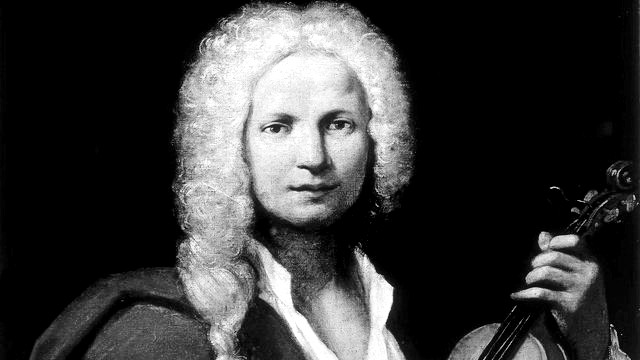
Antonio Vivaldi stands as one of the defining composers of the Baroque era, a musician whose prolific output and innovative approach to instrumental music reshaped the European soundscape of the early eighteenth century. Best remembered for his vibrant violin concertos and the iconic cycle The Four Seasons, Vivaldi combined technical brilliance with dramatic imagination, leaving a legacy that continues to influence classical music centuries after his death.
Early life and musical formation
Antonio Lucio Vivaldi was born on 4 March 1678 in Venice, then one of Europe’s most vibrant cultural centres. The son of Giovanni Battista Vivaldi, a professional violinist at St Mark’s Basilica, he was introduced to music at an early age and quickly demonstrated exceptional talent on the violin.
Vivaldi was ordained as a Catholic priest in 1703, earning the nickname Il Prete Rosso — “The Red Priest” — due to his distinctive red hair. However, his clerical duties were short-lived. Chronic health issues, often described as “tightness of the chest”, likely asthma, limited his ability to conduct regular mass. Instead, he increasingly devoted his life to composition and teaching.

The Ospedale della Pietà and a musical laboratory
Vivaldi’s career became closely tied to the Ospedale della Pietà, a charitable institution and music school for orphaned girls in Venice. Appointed as violin master, he trained the students and composed extensively for the institution’s orchestra and choir.
The Pietà became famous across Europe for its musical excellence. Visitors to Venice often attended performances there, marvelling at the technical skill of the young musicians. For Vivaldi, the institution functioned as a creative laboratory where he could experiment with new forms and orchestration.
Revolutionising the concerto
During his lifetime, Vivaldi composed more than 500 concertos, the majority for violin, though many were written for instruments ranging from the flute and bassoon to the mandolin and cello.
His works played a decisive role in shaping the structure of the Baroque concerto, particularly the ritornello form, where recurring orchestral passages alternate with virtuosic solo sections. This approach created dramatic contrasts and a clear musical narrative, influencing later composers such as Johann Sebastian Bach, who studied and transcribed several of Vivaldi’s concertos.
Among Vivaldi’s most celebrated compositions is The Four Seasons, published in 1725 as part of Il cimento dell’armonia e dell’inventione. The four violin concertos depict the changing moods of the year — storms, birdsong, harvest celebrations and winter chill — making them among the earliest examples of programme music.
Operatic ambitions and decline
Beyond instrumental works, Vivaldi was deeply involved in opera. He composed more than 40 operas and frequently travelled across Italy to stage productions. For a time he enjoyed considerable success, though changing musical tastes and financial difficulties gradually eroded his position.
By the late 1730s, Vivaldi’s music was falling out of fashion as the Baroque style gave way to emerging classical forms.
Death and rediscovery
In 1740, Vivaldi moved to Vienna, possibly hoping to secure patronage from Emperor Charles VI, a known admirer of his music. However, the emperor died shortly after Vivaldi’s arrival, leaving the composer without support.
Antonio Vivaldi died in Vienna on 28 July 1741 and was buried in a modest grave. For nearly two centuries, much of his music remained largely forgotten.
It was only in the early twentieth century that scholars rediscovered a large cache of his manuscripts in Italian archives. The revival sparked renewed appreciation of his work, and today Vivaldi is recognised as one of the most influential composers of the Baroque era.
Newshub Editorial in Europe — March 4, 2026

If you have an account with ChatGPT you get deeper explanations,
background and context related to what you are reading.
Open an account:
Open an account
Recent Comments