
The US Department of Defense has awarded major artificial intelligence contracts to leading tech firms Anthropic, OpenAI, Google, and xAI, signalling a significant expansion in military applications of AI technologies. The move reflects growing interest in leveraging advanced AI to enhance national security capabilities.
Big tech steps into defence AI
The multi-million dollar agreements are part of a broader initiative to integrate AI tools into military systems, including intelligence analysis, autonomous vehicles, and cyber defence. Anthropic and OpenAI, known for their cutting-edge large language models, will provide natural language processing and decision-support solutions designed to improve battlefield communications and data interpretation.
Google, with its extensive AI research and cloud infrastructure, has been contracted to develop machine learning models focused on logistics optimisation and predictive maintenance for defence hardware. Meanwhile, xAI, Elon Musk’s AI startup, will contribute in areas related to autonomous systems and real-time threat assessment.

Government strategy aims for technological edge
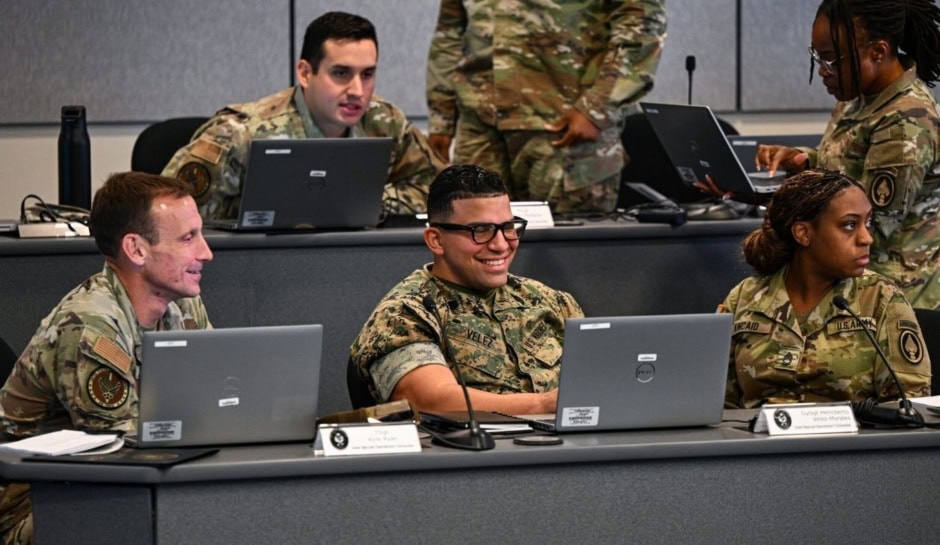
Officials emphasise that these contracts are vital to maintaining US military superiority in an era where AI-driven innovation is rapidly reshaping warfare. The Pentagon’s AI strategy prioritises partnerships with private-sector leaders to accelerate development cycles and deploy state-of-the-art solutions.
“The collaboration with Anthropic, OpenAI, Google, and xAI enables us to harness the best talent and technology to safeguard our national interests,” said a Defence Department spokesperson. “Artificial intelligence is a game changer, and these partnerships reflect our commitment to staying ahead.”
Ethical and security concerns
The awards come amid ongoing debates about the ethical use of AI in military contexts. Critics caution that the deployment of autonomous systems and decision-making algorithms raises complex moral questions and the potential for unintended consequences. Transparency, accountability, and robust safeguards will be critical as these technologies evolve.
Industry insiders also note the challenge of balancing innovation with security, especially given the sensitive nature of defence contracts. Firms must navigate strict compliance requirements while advancing AI capabilities rapidly.
Implications for the AI landscape
The involvement of prominent AI companies in defence work underscores the technology’s expanding role beyond commercial and consumer markets. It may also spur increased investment and competition in the sector, with potential spillovers into other industries such as healthcare, transportation, and cybersecurity.
Analysts predict that military funding will accelerate AI research and deployment, prompting both opportunities and challenges for innovation ecosystems globally.
REFH – Newshub, 17 July 2025
Fråga ChatGPT
Recent Comments