
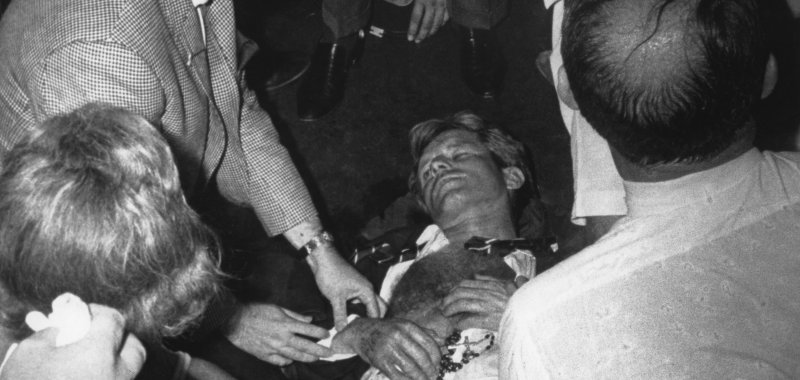
On 6 June 1968, the United States awoke to the devastating news that Senator Robert F. Kennedy had died, succumbing to wounds inflicted by an assassin’s bullet the previous day. The tragedy unfolded in Los Angeles, at the Ambassador Hotel, where Kennedy had just delivered a speech celebrating his victory in the California Democratic primary for the 1968 presidential election. As he exited through the hotel’s kitchen, a 24-year-old Palestinian, Sirhan Sirhan, opened fire, striking Kennedy three times. The senator, a beacon of hope for many in a nation riven by division, was rushed to hospital but passed away in the early hours of 6 June, aged 42. His death sent shockwaves through a country already reeling from the assassination of Martin Luther King Jr. just two months earlier.
Robert F. Kennedy, often known as Bobby, was more than a politician; he was a symbol of change in a turbulent era. The younger brother of President John F. Kennedy, assassinated in 1963, Bobby carried forward a legacy of progressive ideals. As attorney general under his brother’s administration, he championed civil rights, combated organised crime, and advised on critical issues like the Cuban Missile Crisis. By 1968, running for president, he campaigned on ending the Vietnam War, addressing racial inequality, and healing a fractured nation. His ability to connect with diverse groups—Black Americans, working-class whites, and young idealists—made him a unifying figure in a year marked by protests, riots, and cultural upheaval.
The assassination occurred at a pivotal moment. Kennedy’s California primary win on 5 June bolstered his path to the Democratic nomination. His speech that night called for unity and peace, words that resonated deeply in a nation grappling with the Vietnam War’s escalation and domestic unrest. But as he left the stage, Sirhan, motivated by Kennedy’s support for Israel, fired his .22-calibre revolver. Five others were wounded, but Kennedy’s injuries were fatal. Doctors fought to save him, yet the damage was irreparable. His death, announced to a grieving public, felt like the loss of a dream for a better America.

The aftermath was profound. Kennedy’s funeral, held in New York’s St. Patrick’s Cathedral, drew thousands, with millions more watching on television. His body was transported by train to Washington, D.C., for burial at Arlington National Cemetery, near his brother. Along the route, mourners lined the tracks, a testament to his impact. The assassination intensified national despair, compounding the trauma of 1968—a year that saw the Tet Offensive, King’s murder, and violent clashes at the Democratic National Convention.
Sirhan was convicted and sentenced to life in prison, though debates over his motives and possible accomplices persist. For many, Kennedy’s death marked the end of an era of optimism. His vision of compassion and justice lingered, inspiring future generations. In 1968, a nation already on edge lost a leader who embodied hope, leaving an indelible scar on America’s soulRobin.
Recent Comments