
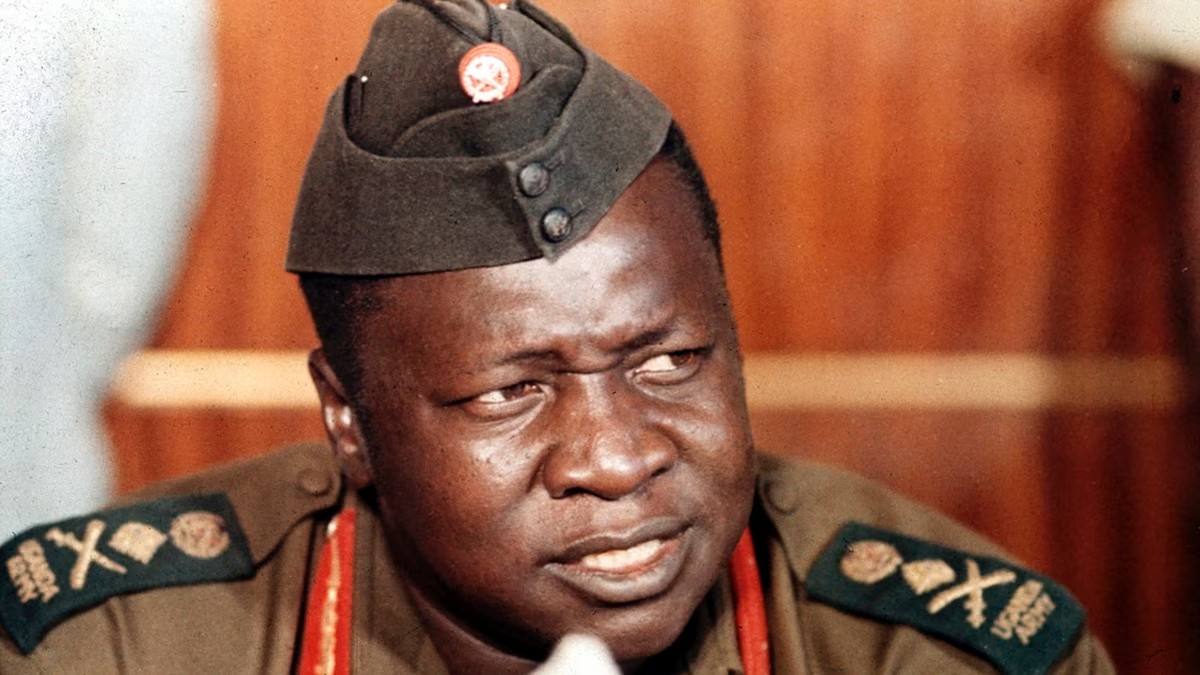
Idi Amin, who ruled Uganda from 1971 to 1979, stands as one of Africa’s most notorious dictators, leaving behind a legacy of terror and economic devastation. Rising to power through a military coup that overthrew President Milton Obote, Amin transformed from a celebrated military commander to a ruthless authoritarian leader whose regime was marked by widespread human rights violations and economic mismanagement.
During his eight-year rule, Amin earned the moniker “Butcher of Uganda” due to the estimated 300,000 people who were killed under his regime. His victims included political opponents, intellectual leaders, religious figures, journalists, and ethnic minorities. The persecution was particularly severe against Uganda’s Asian community, whom he expelled in 1972, giving them 90 days to leave the country. This expulsion of around 60,000 Asians, many of whom controlled Uganda’s business sector, led to a catastrophic economic collapse.
Amin’s persona was characterized by contradictions and eccentric behavior. He bestowed upon himself grandiose titles, including “His Excellency, President for Life, Field Marshal Al Hadji Doctor Idi Amin Dada, VC, DSO, MC, Lord of All the Beasts of the Earth and Fishes of the Seas and Conqueror of the British Empire in Africa in General and Uganda in Particular.” Despite the comedic nature of such declarations, they masked a deeply paranoid and violent ruler who maintained power through fear and brutality.


The dictator’s foreign policy was equally erratic. He shifted Uganda’s international alignments from West to East, cultivating relationships with Libya’s Muammar Gaddafi and the Soviet Union while antagonizing traditional allies, particularly Britain and Israel. His military adventurism culminated in the disastrous 1978 invasion of Tanzania, which ultimately led to his downfall when Tanzanian forces and Ugandan exiles counter-invaded in 1979.
Amin’s legacy continues to impact Uganda decades after his overthrow. The country’s economy, which was one of Africa’s most promising at independence, was left in ruins. The destruction of institutional frameworks and the normalization of violence created challenges that subsequent governments struggled to address. Amin’s reign serves as a stark reminder of how authoritarian rule, unchecked power, and personality cults can devastate a nation’s social, economic, and political fabric.
After his overthrow, Amin fled to Libya and eventually settled in Saudi Arabia, where he lived in exile until his death in 2003. His story remains a cautionary tale about the dangers of military dictatorships and the importance of strong democratic institutions in preventing the rise of autocratic rulers.
newshub
Idi Amin, who ruled Uganda from 1971 to 1979, stands as one of Africa's most notorious dictators, leaving behind a legacy of terror and economic devastation. Rising to power through a military coup that overthrew President Milton Obote, Amin transformed from a celebrated military commander to a ruthless authoritarian leader whose regime was marked by widespread human rights violations and economic mismanagement.
Recent Comments