
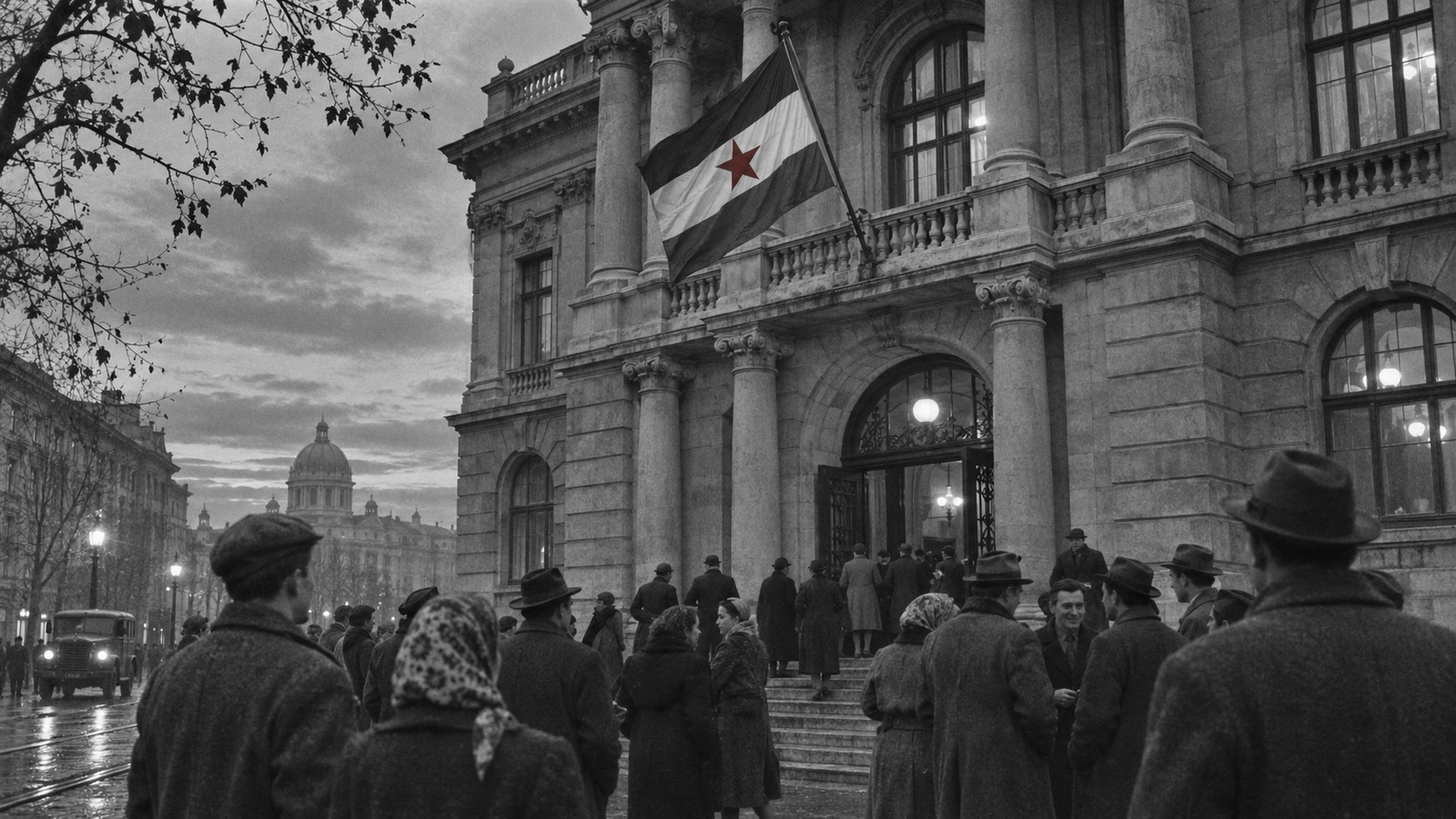
On 29 November 1945, Yugoslavia’s Constituent Assembly voted unanimously to abolish the monarchy and proclaim the Federal People’s Republic of Yugoslavia. The decision ended the reign of King Peter II and formalised the rise of Josip Broz Tito, whose communist-led Partisans had become the country’s dominant political force during the Second World War.
From wartime resistance to government
The proclamation came exactly two years after an assembly of the Partisan movement at Jajce, in what is now Bosnia and Herzegovina, laid the foundations for a federal Yugoslavia. Tito marked the anniversary with a reception in Belgrade. The American ambassador reported fireworks, gun salutes and dancing in the streets that evening. He also noted the absence of several opposition figures and groups from the Constituent Assembly.
In January 1946, a new constitution established a federation of six republics: Bosnia and Herzegovina, Croatia, Macedonia, Montenegro, Serbia and Slovenia. Kosovo and Vojvodina had autonomous status within Serbia. The constitution drew heavily on the Soviet model, reflecting Belgrade’s close relationship with Moscow in the first years after the war.


Yugoslavia breaks with Moscow
That relationship broke down in 1948. Stalin regarded Tito’s independent policies as a challenge to Soviet authority, and Yugoslavia was expelled from the Soviet-dominated Cominform. Western trade and aid helped Belgrade withstand pressure from Moscow. At home, the government began developing a system of workers’ self-management, giving workers’ councils a role in running enterprises.
The break with Moscow also shaped Yugoslavia’s diplomacy. In September 1961, Belgrade hosted the first summit of the Non-Aligned Movement. Leaders from countries including India, Egypt and Indonesia gathered in the Yugoslav capital to discuss how they could pursue independent foreign policies amid Cold War rivalry. By hosting the summit, Yugoslavia helped give the movement a forum for governments seeking greater influence in international affairs.
Newshub Editorial in Europe – 29 November 2026
On 29 November 1945, Yugoslavia’s Constituent Assembly voted unanimously to abolish the monarchy and proclaim the Federal People’s Republic of Yugoslavia. The decision ended the reign of King Peter II and formalised the rise of Josip Broz Tito, whose communist-led Partisans had become the country’s dominant political force during the Second World War.

Recent Comments