
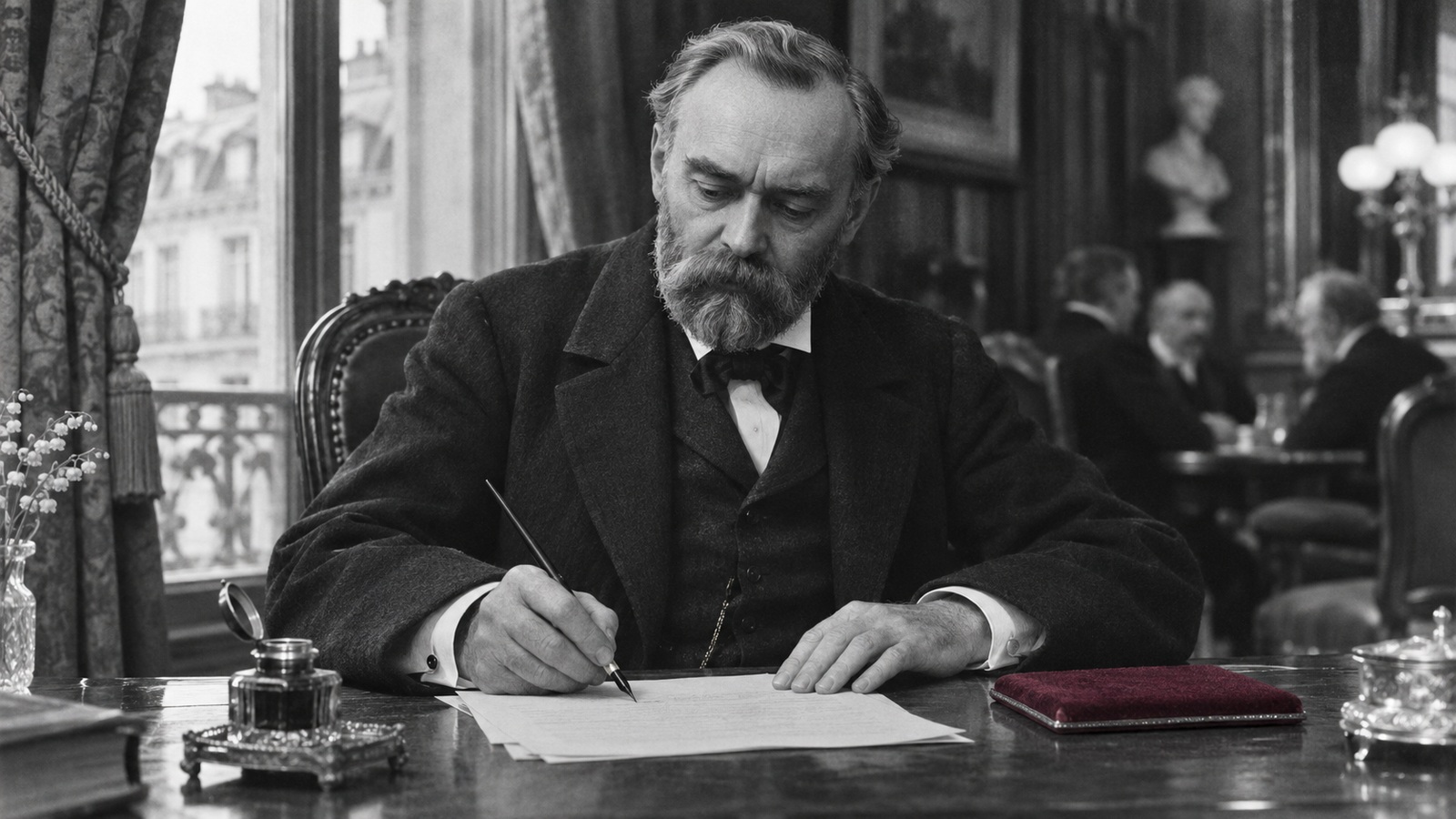
On 27 November 1895, Swedish inventor and industrialist Alfred Nobel signed his final will at the Swedish-Norwegian Club in Paris. He directed that most of his fortune be invested and that the income fund five annual prizes for work that had brought the greatest benefit to humanity. The first awards were presented six years later.
A fortune set aside for five prizes
Nobel, who made his fortune through inventions and industrial ventures, including the manufacture of dynamite, specified five fields in his will. Physics, chemistry, physiology or medicine, literature and peace would each receive an equal share of the annual prize money. By directing his executors to invest the capital and distribute the interest, Nobel designed the awards to continue long after his death.
He also insisted that nationality play no part in choosing the winners. That provision drew debate in Sweden, where some questioned why a Swedish industrialist’s fortune should reward people from anywhere in the world. Nobel entrusted the science and literature awards to Swedish institutions and gave responsibility for the peace prize to a committee appointed by the Norwegian parliament. Sweden and Norway were still united under a single monarch when he signed the will.


From a disputed will to the first awards
Nobel died in December 1896. His instructions drew objections from members of his family and left his executors with the work of organising an estate spread across several countries. The Swedish government approved the statutes of the Nobel Foundation in 1900, paving the way for the prizes to be awarded on 10 December 1901, the fifth anniversary of his death.
The five categories set out in Paris still carry Nobel’s name. The economics prize came later, in 1968, when Sweden’s central bank established a separate award in his memory. The original prizes began with a single decision in the will: to turn private wealth into a fund that could reward new work year after year.
NewsHub Finance | History | 27 November 2026
On 27 November 1895, Swedish inventor and industrialist Alfred Nobel signed his final will at the Swedish-Norwegian Club in Paris. He directed that most of his fortune be invested and that the income fund five annual prizes for work that had brought the greatest benefit to humanity. The first awards were presented six years later.

Recent Comments