
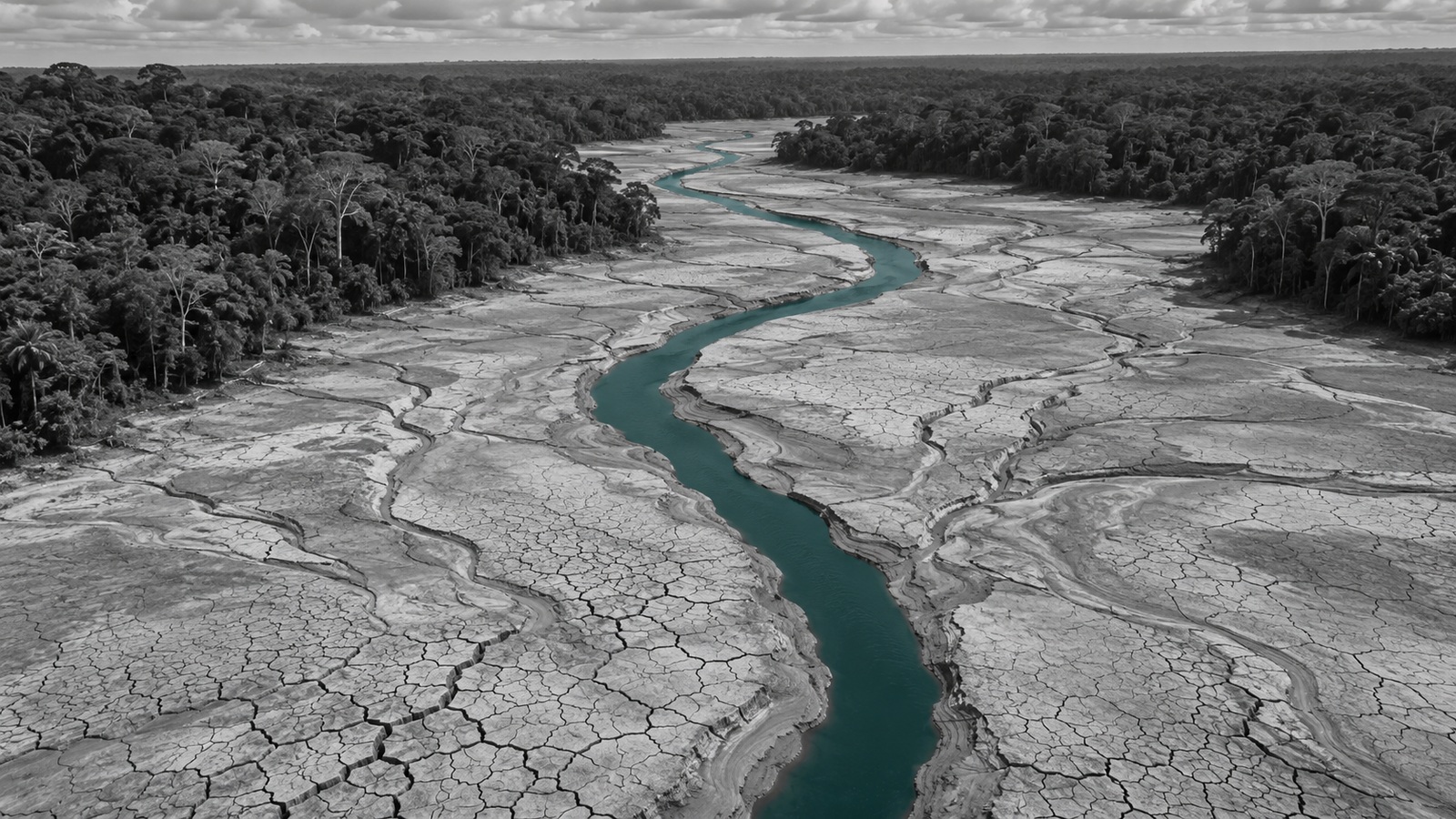
The world’s rivers carried less water and its lakes and reservoirs held less during the record heat of 2023 and 2024, an international study has found. South America recorded some of the steepest declines, even as parts of the continent experienced severe rainfall and flooding.
River flows and water storage fell together
Global river flows were about 5.7% below normal during the two years, while the volume of water stored in lakes and reservoirs was 9.5% below normal. Researchers found the largest simultaneous decline in the two measures in a dataset stretching back to 1991.
The team, led by the Chinese Academy of Sciences, combined river flow measurements from 150 major river basins with satellite data covering more than 1.2 million lakes and reservoirs. The analysis spans 1991 to 2025. In the Copernicus climate record, 2024 ranks as the warmest year and 2023 as the second warmest.


Flooding coincided with lower flows in South America
South America’s rivers carried 17.8% less water than usual over the two-year period, while lakes and reservoirs held 16.5% less. A downpour can send a river over its banks for a few days, while weeks or months of low flows keep its average well below normal. The continental figures capture those longer periods as well as the brief surges that cause flooding.
The researchers found that precipitation increased globally during the period, with much of the additional rain falling over oceans. Many land areas still received less rain than usual. Higher temperatures also increased evaporation, adding to the losses from rivers, lakes and soils.
The findings matter for communities that rely on steady river flows and stored water between rainy periods. Low flows can reduce the water available for irrigation and hydropower, while lower reservoir storage leaves less in reserve for the next dry spell. The South American figures show how water managers can face both flood damage and depleted supplies within the same period.
Newshub Editorial in South America – 27 November 2026
The world’s rivers carried less water and its lakes and reservoirs held less during the record heat of 2023 and 2024, an international study has found. South America recorded some of the steepest declines, even as parts of the continent experienced severe rainfall and flooding.

Recent Comments