
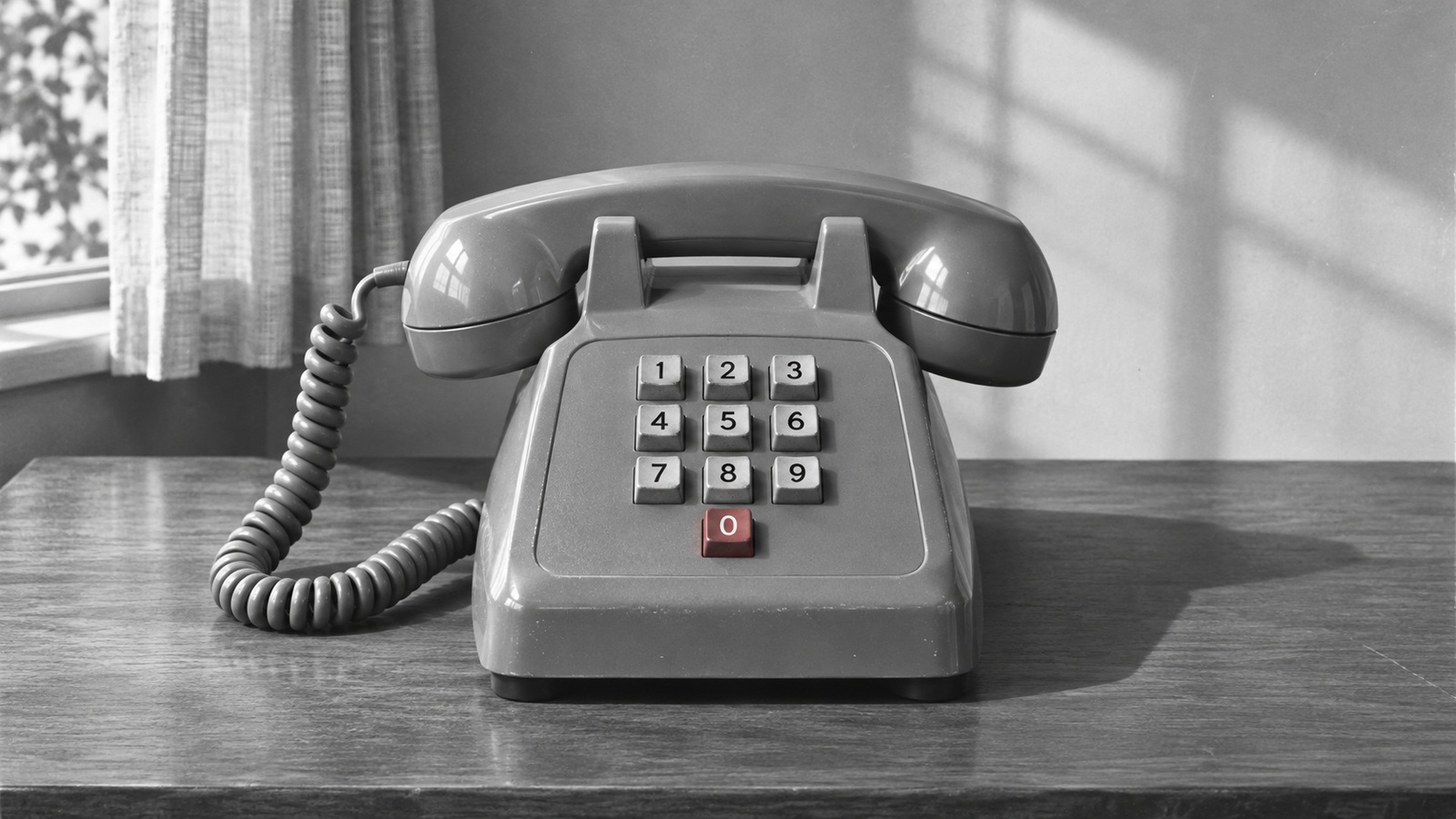
On 18 November 1963, telephone customers in two Pennsylvania towns became the first to be offered commercial Touch-Tone service. The new telephones replaced the rotary dial with ten push buttons, allowing callers to enter a number without waiting for the dial to return after each digit.
The service began in two towns
The Bell System introduced the service in Carnegie and Greensburg after trials in Pennsylvania and Ohio. Customers could subscribe for an additional charge and received a telephone manufactured by Western Electric. The original keypad contained only the digits zero to nine. The asterisk and hash keys appeared on later models.
The change involved equipment at the telephone exchange as well as the handset. A rotary telephone sent a series of electrical pulses for each digit, with the number of pulses telling the exchange which digit the caller had dialled. A Touch-Tone telephone sent two frequencies simultaneously for each key. The exchange identified the digit by recognising that pair of tones, a method known as dual-tone multi-frequency signalling, or DTMF.


The keypad gained a role beyond dialling
The first benefit was speed. Callers could enter digits in quick succession, and numbers containing several zeroes no longer meant waiting for repeated turns of the dial. Bell demonstrated Touch-Tone at the 1964 New York World’s Fair, bringing the technology to a wider audience. Rotary telephones remained in use for years as the service spread.
The same signalling method later allowed callers to send instructions once a call was connected. Automated systems could recognise the tones and use them to route a caller to the right department, accept an account number or let someone navigate a voicemail menu. Those functions gave the telephone keypad a second job. More than six decades after the Pennsylvania launch, callers still use it to make choices in automated phone menus.
Newshub Editorial in North America – 18 November 2026
On 18 November 1963, telephone customers in two Pennsylvania towns became the first to be offered commercial Touch-Tone service. The new telephones replaced the rotary dial with ten push buttons, allowing callers to enter a number without waiting for the dial to return after each digit.

Recent Comments