
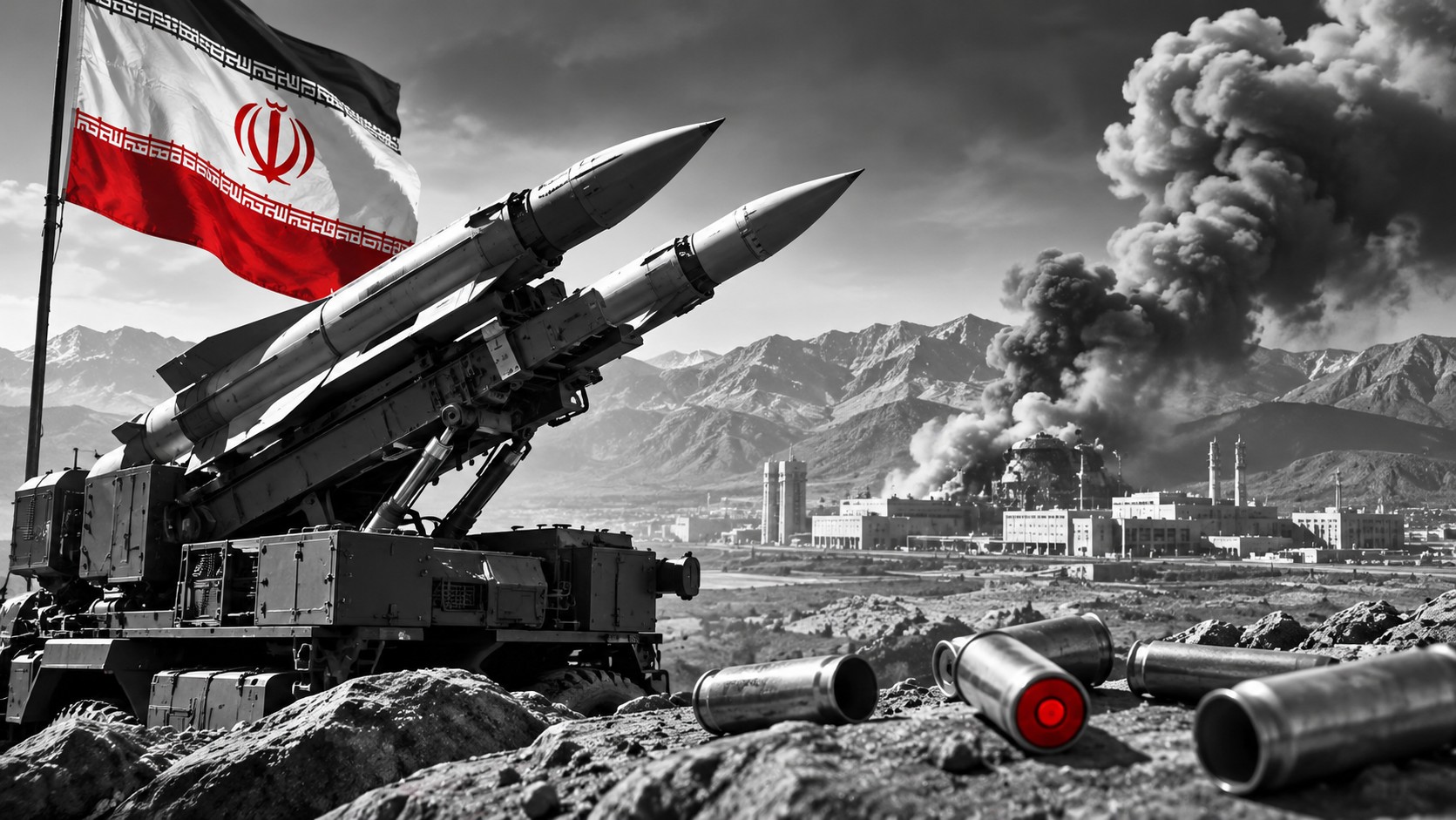
American and Israeli military strikes have inflicted substantial damage on Iran’s missile infrastructure, but new satellite imagery raises questions about Washington’s claims of military success. Images showing repairs, excavation and construction at several Iranian military installations suggest that Tehran is attempting to restore its capabilities. While the attacks have disrupted production and missile operations, independent evidence does not establish that Iran’s ability to continue fighting has been eliminated.
Satellite imagery reveals damage and reconstruction
Earlier satellite assessments identified damaged missile production facilities, launch installations and tunnel entrances across Iran.


The destruction has complicated military operations by restricting access to underground storage areas and disrupting essential infrastructure.
However, November satellite imagery reportedly shows renewed activity at the Garmdareh military installation near Karaj and the Shahroud base in northern Iran.
Additional repairs have been identified at several other locations, including Kermanshah and Parchin.
Analysts believe some excavation could be associated with underground military infrastructure, although the images cannot establish whether these facilities are operational.
Iran’s underground military network remains a challenge
Iran has spent decades developing dispersed and fortified missile facilities, including installations protected by mountainous terrain and underground construction.
These facilities present considerable difficulties for aerial bombardment and independent intelligence assessments.
Even when entrances, production buildings and supporting infrastructure are destroyed, missiles and equipment stored deeper underground may survive.
Nevertheless, underground facilities remain dependent on electricity, transportation networks, communications and operational personnel.
Disrupting these systems can significantly reduce military effectiveness without permanently eliminating the underlying capability.
Washington’s claims face scrutiny
The Pentagon has claimed that American operations destroyed up to 90% of Iran’s drone, missile and naval industrial infrastructure.
However, publicly available satellite evidence does not independently establish that percentage.
On 6 November, President Donald Trump also announced a limited American strike against an Iranian air-defence installation on Qeshm Island.
Although explosions were reported, the extent of the damage remained independently unverified.
Military destruction does not guarantee strategic victory
The distinction between damaging military infrastructure and permanently neutralising an adversary is fundamental to assessing the campaign.
Iran’s apparent reconstruction activity indicates efforts to recover and adapt, but does not establish that its previous operational capacity has been restored.
For Washington, the critical question is whether repeated strikes can prevent Iran from rebuilding faster than its military systems are degraded.
The evidence suggests American attacks have achieved significant tactical results, but claims of decisive strategic success remain premature.
The United States is not shooting blanks. Whether its military campaign can permanently diminish Iran’s ability to produce and deploy missiles remains an unanswered question.
NewsHub Finance | Middle East | 8 November 2026
American and Israeli military strikes have inflicted substantial damage on Iran's missile infrastructure, but new satellite imagery raises questions about Washington's claims of military success. Images showing repairs, excavation and construction at several Iranian military installations suggest that Tehran is attempting to restore its capabilities. While the attacks have disrupted production and missile operations, independent evidence does not establish that Iran's ability to continue fighting has been eliminated.

Recent Comments