
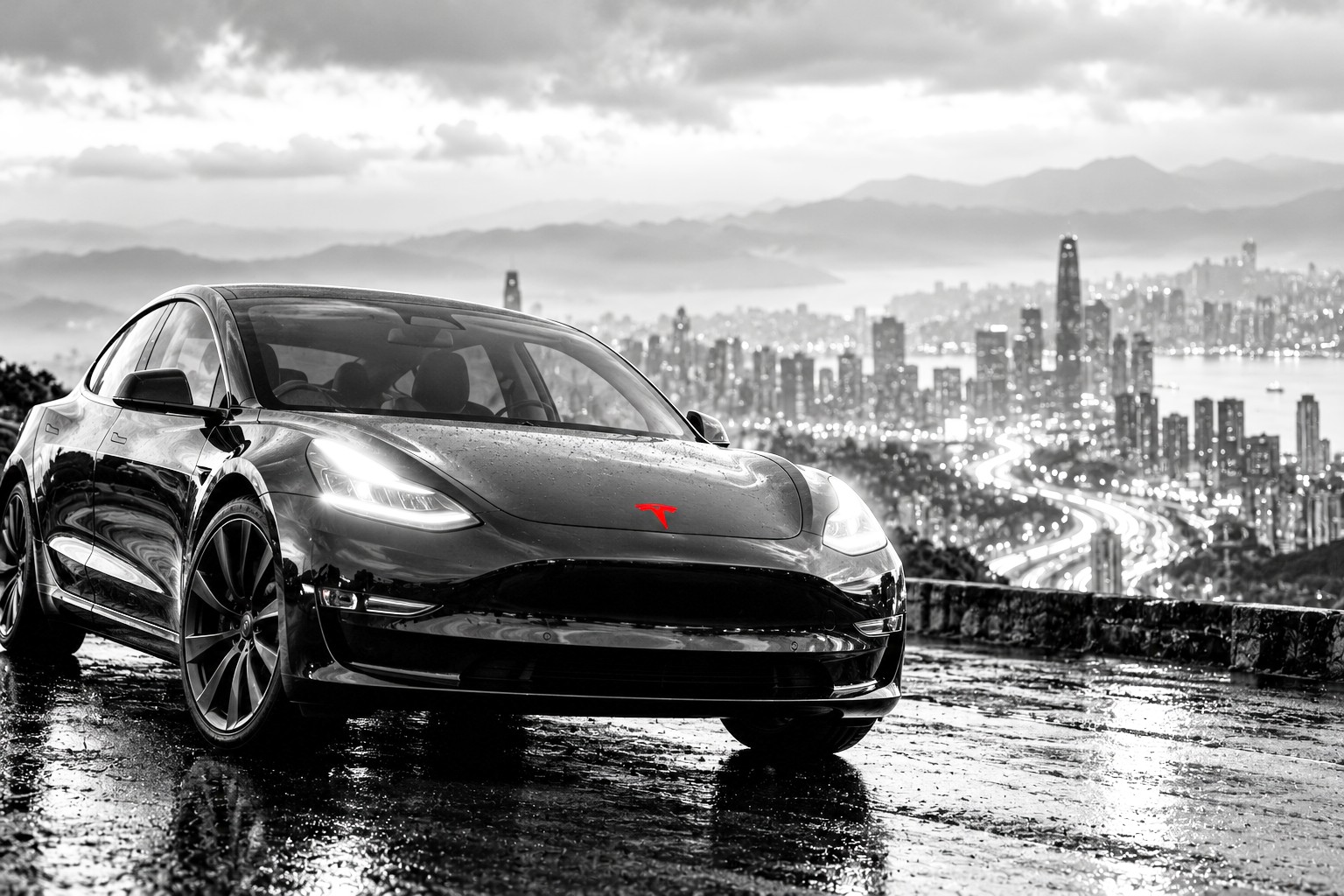
Tesla revolutionised the automotive industry and transformed electric vehicles from a niche product into a global phenomenon. Yet the company that once appeared years ahead of its competitors now faces mounting pressure from Chinese manufacturers, an ageing model range and growing uncertainty about its future direction.
Sales recover, but competition intensifies
Tesla delivered 486,532 vehicles during the third quarter of 2026, exceeding market expectations but falling approximately 2% below the same period last year.
More revealing is the composition of those deliveries. The Model 3 and Model Y accounted for 478,237 vehicles, leaving just 8,295 deliveries across Tesla’s other models.


Despite its technological reputation, Tesla remains heavily dependent on two established vehicles while competitors introduce new models at an accelerating pace.
China challenges Tesla’s dominance
Chinese manufacturer BYD overtook Tesla in global battery-electric vehicle sales in 2025, delivering approximately 2.26 million electric cars compared with Tesla’s 1.64 million.
Manufacturers including BYD, Xpeng and Nio are competing through aggressive pricing, rapid product development and increasingly sophisticated driver-assistance technology.
New charging systems, advanced parking features and expanding model ranges are challenging Tesla’s historical reputation for technological leadership.
The competitive landscape has fundamentally changed. Tesla is no longer defining the industry’s direction alone.
Flying cars and robots replace traditional ambitions
Tesla’s latest Roadster demonstration illustrated the company’s increasingly futuristic strategy.
Unveiled in October, the redesigned sports car performed extraordinary aerial manoeuvres using SpaceX-developed thrusters. However, production is not expected until 2028, and the technology faces significant regulatory and commercial obstacles.
Meanwhile, Tesla is shifting resources towards its Cybercab robotaxi, autonomous driving technology and Optimus humanoid robots.
The decision to discontinue the Model S and Model X further illustrates that transformation.
An industrial pioneer at a crossroads
Tesla retains substantial advantages, including its charging infrastructure, manufacturing capabilities and expanding energy-storage operations. The company deployed 13.7 gigawatt-hours of energy-storage products during the third quarter.
However, technological ambition does not automatically translate into commercial success.
Investors await Tesla’s third-quarter financial results on 21 October for clearer evidence of profitability and future growth.
The fundamental question is whether Tesla can remain competitive in today’s electric vehicle market while pursuing tomorrow’s autonomous technologies.
Elon Musk continues to promise a future of self-driving vehicles, humanoid robots and extraordinary engineering.
But customers increasingly have access to affordable, technologically advanced alternatives available today.
Tesla helped create the electric vehicle revolution. Its next challenge is proving that it can still lead it.
NewsHub Finance | Automotive & Technology | 18 October 2026
Tesla revolutionised the automotive industry and transformed electric vehicles from a niche product into a global phenomenon. Yet the company that once appeared years ahead of its competitors now faces mounting pressure from Chinese manufacturers, an ageing model range and growing uncertainty about its future direction.
Recent Comments