
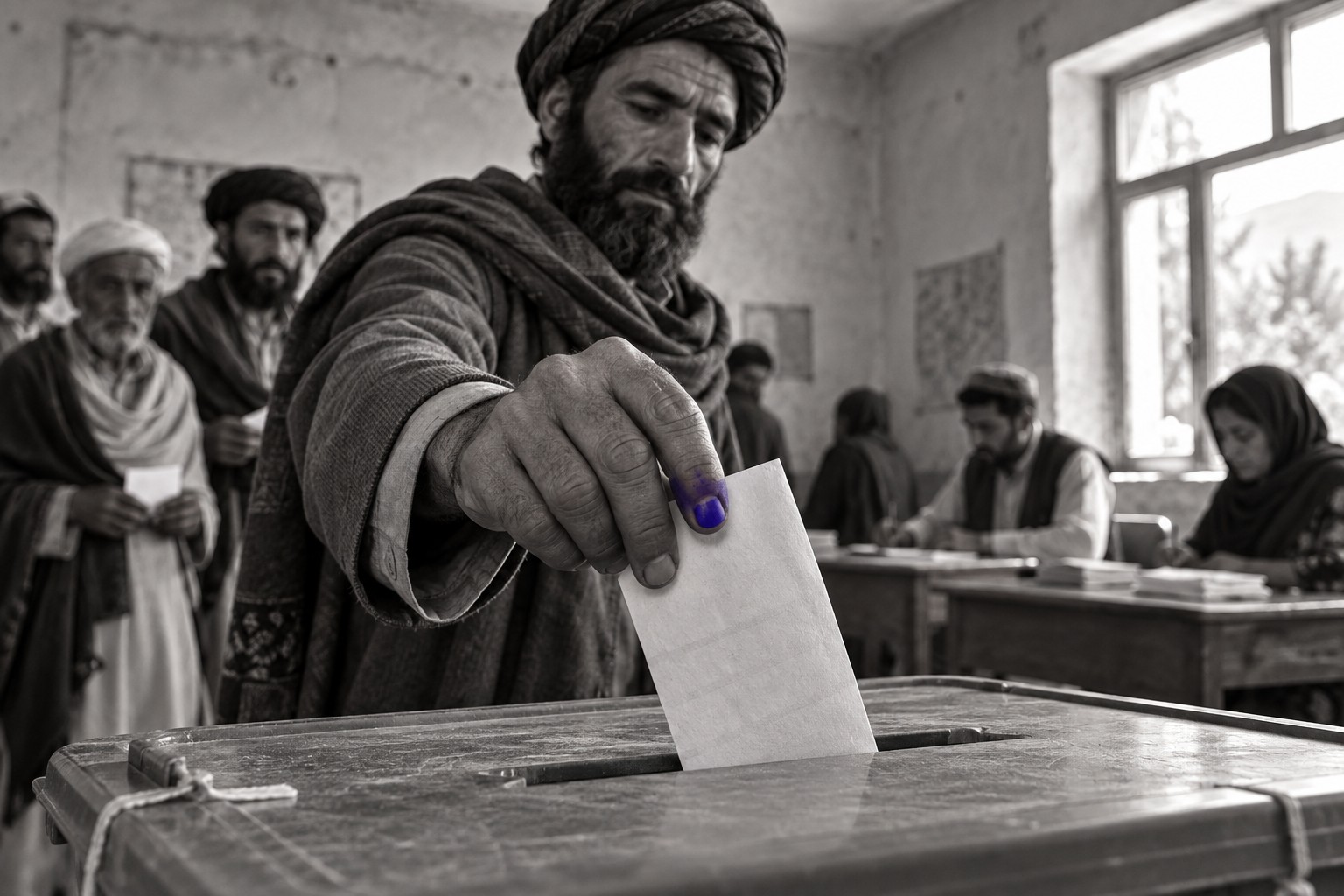
On 9 October 2004, Afghans went to the polls in their country’s first direct presidential election. The vote gave Hamid Karzai an electoral mandate after years of conflict and political transition, marking a significant moment in Afghanistan’s attempt to establish a representative government.
More than eight million people cast ballots, including Afghan refugees living in neighbouring Pakistan and Iran. Women accounted for approximately 40 per cent of voters, a notable development following their exclusion from much of public life under Taliban rule.
Karzai, who already headed the transitional administration, faced 17 challengers. He secured 55.4 per cent of the valid vote, enough to avoid a second round. His nearest rival, former education minister Yunus Qanooni, received 16.3 per cent.


A new political framework
The election followed the overthrow of the Taliban government in 2001 and the internationally supported transition outlined in the Bonn Agreement. A new constitution, adopted in January 2004, established the framework for a presidential republic.
For Afghanistan’s international partners, the ballot was a central step towards replacing transitional arrangements with elected institutions. For voters, it offered an opportunity to influence national leadership after decades shaped by invasion, civil war and competing armed factions.
The presidential election did not complete that process. Parliamentary elections remained a separate stage, while insecurity, weak institutions and the influence of regional powerbrokers continued to complicate reconstruction.
Disputed ballots and a confirmed result
Polling day brought controversy over the ink intended to mark voters’ fingers and prevent repeat voting. Complaints that it could be removed prompted several candidates to demand that the election be annulled.
An independent international panel investigated those complaints alongside allegations of intimidation and other irregularities. It identified shortcomings but concluded that they had not materially affected the overall result.
Karzai’s victory was formally certified on 3 November, rather than on polling day itself.
A milestone with unfinished promises
The significance of 9 October lay in the direct participation of millions of Afghans in choosing their president. The election established a public mandate, but delivering security, accountable government and lasting political stability required far more than a successful ballot.
Twenty-two years later, the vote remains an important episode in Afghanistan’s history: a moment of broad participation whose ambitions proved difficult to sustain.
Newshub Editorial in Asia – 9 October 2026
On 9 October 2004, Afghans went to the polls in their country’s first direct presidential election. The vote gave Hamid Karzai an electoral mandate after years of conflict and political transition, marking a significant moment in Afghanistan’s attempt to establish a representative government.
Recent Comments