
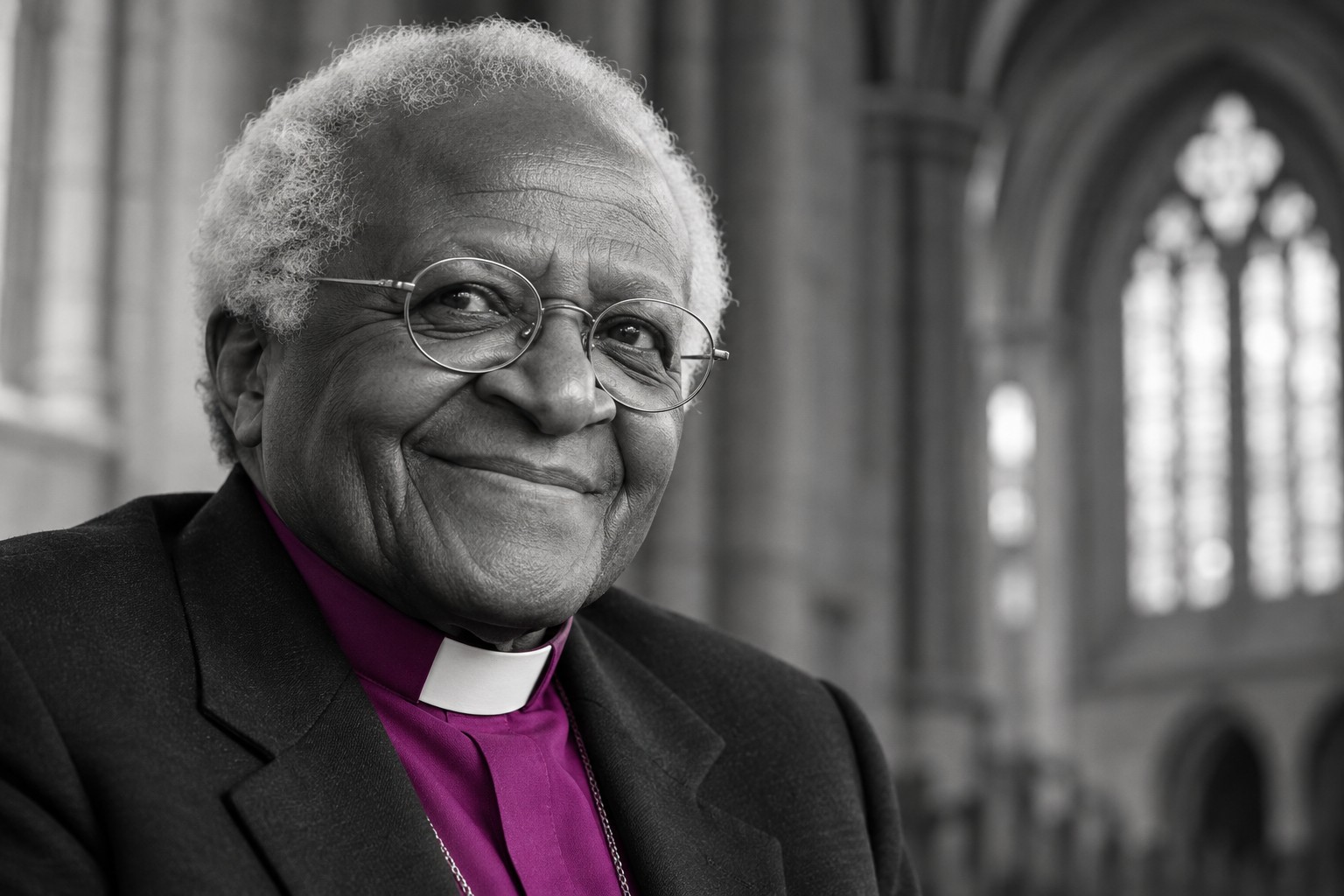
Desmond Tutu: the cleric who challenged apartheid and championed reconciliation
Born on 7 October 1931 in Klerksdorp, South Africa, Desmond Tutu became one of the world’s best-known campaigners against apartheid. On the 95th anniversary of his birth, his life is remembered for its contribution to racial equality, human rights and South Africa’s difficult transition towards reconciliation.
Tutu initially trained as a teacher, following his father into the profession. However, he abandoned teaching in protest against the apartheid government’s discriminatory education policies and turned to the Church.
Ordained an Anglican priest in 1961, he continued his theological studies in Britain before returning to southern Africa. His ministry increasingly combined religious leadership with opposition to a political system that denied the black majority basic rights.


An international voice against apartheid
In 1978, Tutu became general secretary of the South African Council of Churches. The position provided a platform from which he challenged white minority rule while many prominent liberation leaders were imprisoned, banned or exiled.
He supported non-violent resistance and international economic pressure against apartheid. His speeches and public appearances helped draw global attention to racial oppression and the daily experiences of black South Africans.
The Nobel Peace Prize followed in 1984, recognising his role in the peaceful struggle against apartheid. In 1986, he became the first black Archbishop of Cape Town and leader of the Anglican Church in southern Africa.
Facing the country’s past
After South Africa’s transition to democracy, President Nelson Mandela appointed Tutu to chair the Truth and Reconciliation Commission.
The commission investigated gross human rights violations, bringing victims’ testimony into public view. Its work placed painful personal experiences at the centre of a national effort to establish the truth about political violence.
The process also exposed difficult questions about justice, forgiveness and accountability. Its report condemned abuses committed by different sides, demonstrating Tutu’s willingness to challenge those associated with the liberation struggle as well as the apartheid state.
An independent public conscience
Tutu remained outspoken after apartheid ended. He criticised corruption and persistent inequality, supported gay rights and opposed the Iraq War. Political freedom, in his view, did not remove the obligation to confront injustice.
He died in Cape Town on 26 December 2021, aged 90. His legacy remains closely connected to both the defeat of apartheid and the unfinished work of building a more equal society.
Newshub Editorial in Africa – 7 October 2026
Desmond Tutu: the cleric who challenged apartheid and championed reconciliation Born on 7 October 1931 in Klerksdorp, South Africa, Desmond Tutu became one of the world’s best-known campaigners against apartheid. On the 95th anniversary of his birth, his life is remembered for its contribution to racial equality, human rights and South Africa’s difficult transition towards reconciliation.
Recent Comments