
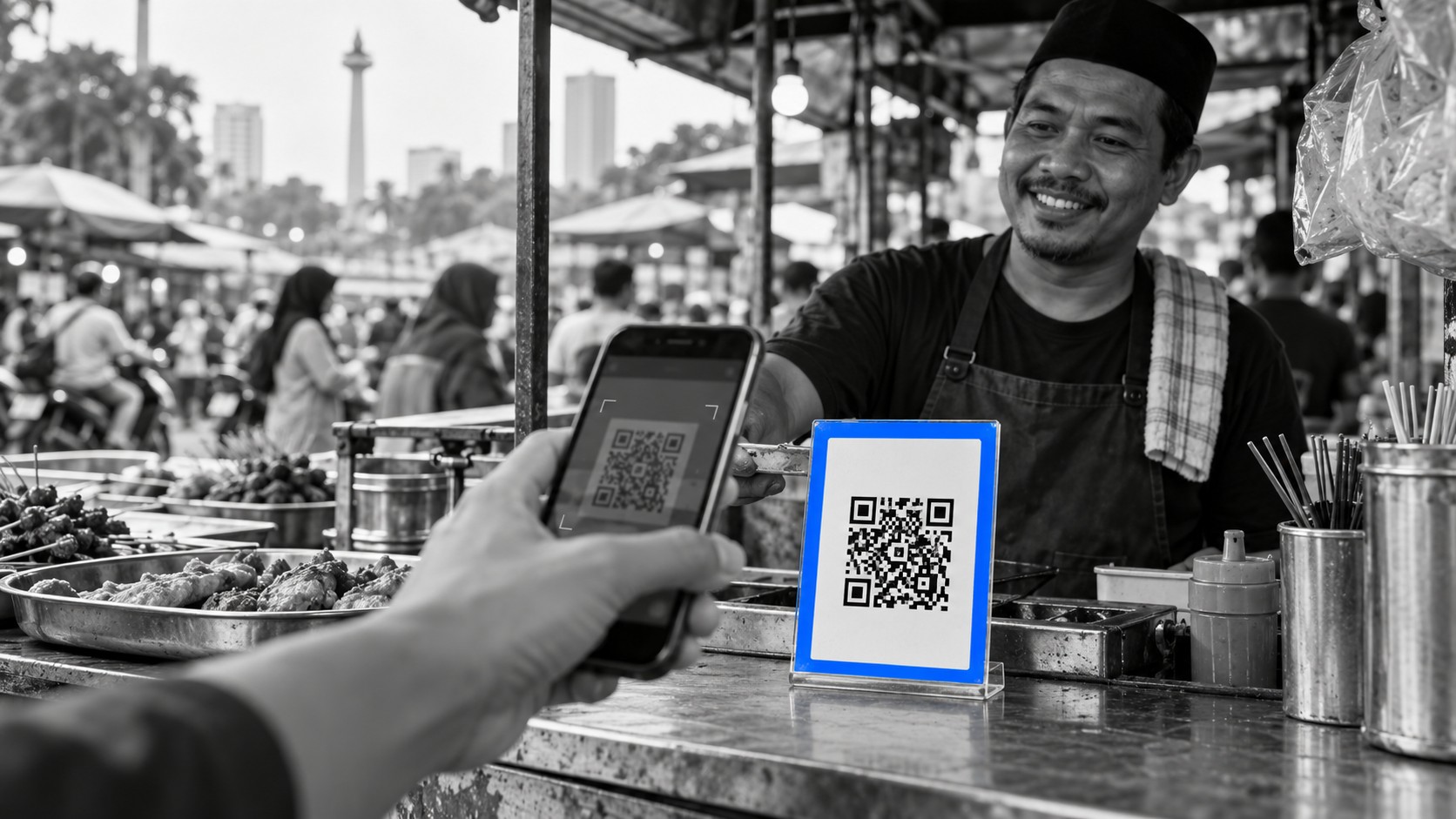
Indonesia’s expanding cross-border QR-payment system is helping connect Asia’s domestic financial infrastructure, potentially making everyday purchases abroad easier for consumers and opening new opportunities for small merchants. The development reflects a broader regional effort to link national payment systems.
Bank Indonesia is moving towards additional QRIS Cross-Border connectivity with Hong Kong and Timor-Leste, building on existing links with markets including Singapore, Malaysia and Thailand.
QRIS, the Quick Response Code Indonesian Standard, began as a unified domestic standard for QR payments. Its expansion across borders is turning that national infrastructure into a bridge between participating economies.

According to Bank Indonesia, QRIS reaches approximately 69 million users and nearly 46 million merchants, with small and medium-sized businesses accounting for the majority of participating merchants.
Familiar payments across borders
Cross-border QR connectivity allows travellers to pay participating overseas merchants through supported financial applications from their home country.
Customers scan a local merchant’s QR code, while the connected payment systems handle the transaction across borders. This can reduce the need to exchange cash or adopt an unfamiliar payment application during a visit.
For merchants, the attraction is equally practical: an existing QR-payment arrangement can provide access to foreign customers without requiring additional card terminals.
The potential benefits are particularly relevant to market traders, restaurants, taxi operators and small accommodation businesses serving international visitors.
A regional effort gathers pace
Indonesia’s expansion forms part of a wider movement towards payment interoperability across Southeast Asia.
Singapore’s PayNow, Thailand’s PromptPay, Malaysia’s DuitNow and Indonesia’s QRIS illustrate the domestic foundations supporting that development, although their functions and cross-border arrangements differ.
Central banks and payment authorities are pursuing connections intended to make regional payments faster, more accessible and less expensive. The actual benefits will depend on participating providers, transaction charges, exchange rates and merchant coverage.
From national systems to shared infrastructure
The broader significance lies in countries connecting payment infrastructure they have already built.
Rather than requiring every consumer and merchant to join a single commercial platform, this approach links existing national systems through agreed technical and operational arrangements.
Global card networks and correspondent banking remain important. However, expanding QR connectivity offers an additional route for everyday cross-border commerce.
Asia’s emerging network is being assembled through successive connections between national systems — with the familiar QR code becoming an increasingly useful gateway.
Newshub Editorial in Asia – 27 September 2026

Ask NF GPT
If you have an account with ChatGPT you get deeper explanations,
background and context related to what you are reading.
Recent Comments