
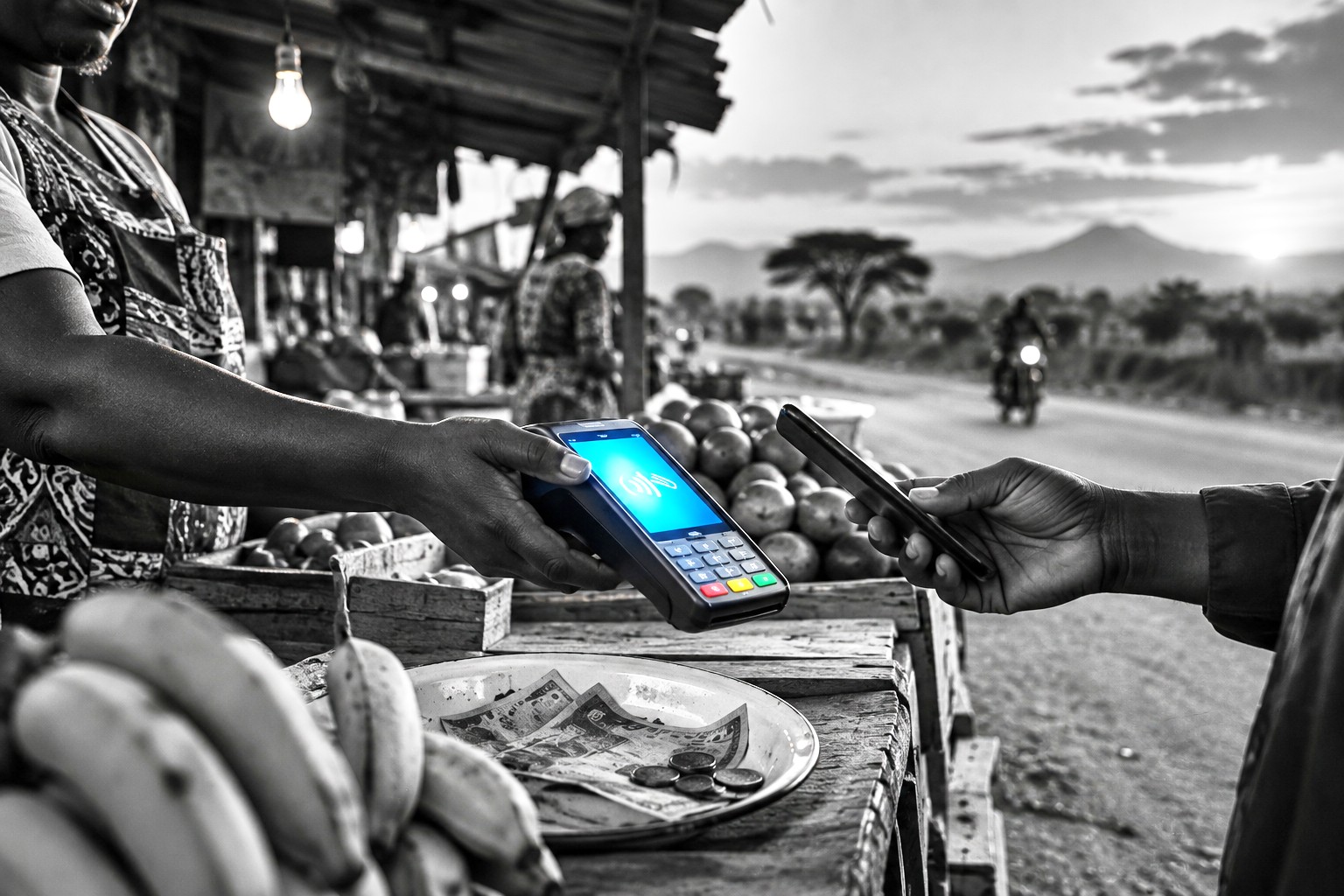
A new $700 million initiative from the World Bank Group illustrates one of the defining characteristics of emerging economies: millions of people may move directly from cash into digital finance without ever passing through the traditional banking infrastructure that developed economies spent generations building.
WASHINGTON — September 17, 2026
The International Finance Corporation, the World Bank Group’s private-sector arm, has launched a risk-sharing programme intended to help banks, fintech companies and other financial institutions expand digital payments across emerging markets.


The initiative initially provides up to $700 million in guarantees covering part of the settlement risk faced by financial institutions participating in global payment networks.
IFC estimates that institutions participating in the programme could generate approximately $280 billion in additional digital payments and issue 360 million additional cards.
It expects the number of active users to increase by 90 million, including 39 million women.
The infrastructure that never gets built
The significance goes beyond payment cards.
For much of the twentieth century, financial inclusion followed a predictable physical sequence.
Banks opened branches. Branches employed staff. ATMs followed. Consumers opened accounts and eventually received payment cards.
Emerging economies increasingly have an opportunity to bypass parts of that sequence.
A merchant equipped for digital payments does not necessarily require a bank branch nearby. A customer using mobile money does not necessarily need an ATM. A small business building a digital transaction history can potentially establish a financial identity without decades of conventional banking records.
That is leapfrogging in practice.
Africa has already demonstrated the model
Sub-Saharan Africa provides perhaps the clearest evidence.
More than one billion mobile-money accounts have been registered across the region, with over 280 million monthly active users. Annual mobile-money transactions exceeded $1 trillion in 2025.
Many of those financial relationships were created not through conventional bank branches but through mobile networks.
The smartphone — and before it, even the basic mobile phone — became financial infrastructure.
Payments then became a foundation for savings, credit, insurance, merchant services and other products.
From cash directly to digital
That distinction matters for emerging economies.
Development does not necessarily require reproducing every stage followed by Europe or North America.
Countries without extensive fixed telephone networks moved rapidly into mobile communications.
Regions without comprehensive terrestrial broadband can increasingly use satellite connectivity.
Communities with limited banking infrastructure can move from cash directly into mobile and digital finance.
The missing infrastructure can sometimes become an advantage because there are fewer legacy systems to replace.
The next financial system may look different
There are still substantial obstacles.
Connectivity remains uneven. Digital fraud is growing. Regulation must keep pace with technology, and cash remains essential across many economies.
But the direction is becoming increasingly visible.
IFC’s new programme is designed to remove another barrier preventing local financial institutions from connecting consumers and merchants to digital payment networks.
That could bring millions more people into formal financial activity.
The important point is not that emerging economies are finally building the banking system developed countries already have.
It is that some may never need to.
They are beginning to build the system that comes next.
Newshub Editorial in Emerging Markets – 17 September 2026
A new $700 million initiative from the World Bank Group illustrates one of the defining characteristics of emerging economies: millions of people may move directly from cash into digital finance without ever passing through the traditional banking infrastructure that developed economies spent generations building.
Recent Comments