
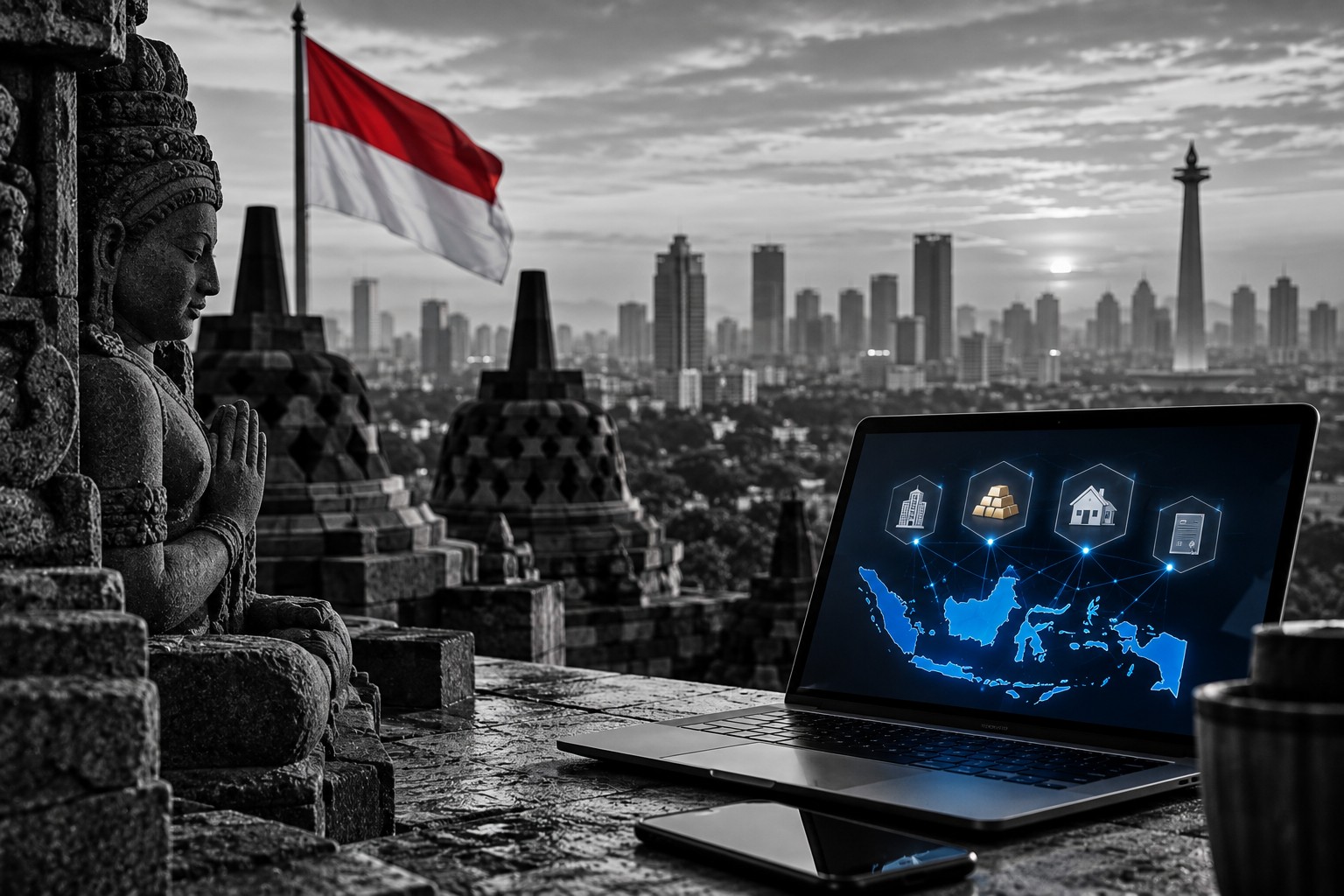
Indonesia’s blockchain industry is beginning to look beyond cryptocurrency trading towards something potentially much larger: putting real-world financial assets on digital networks. Tokenised assets and stablecoins are emerging as important elements in the country’s rapidly developing digital-finance infrastructure.
JAKARTA — September 17, 2026
Indonesia Blockchain Conference 2026 has put real-world asset tokenisation and stablecoins at the centre of discussions about the country’s next stage of blockchain development.

CFX, one of Indonesia’s two regulated crypto exchanges, used the conference to discuss infrastructure for digital-asset trading, tokenisation, settlement and institutional participation.
The direction represents an important change.
Blockchain in Indonesia is increasingly being discussed not simply as infrastructure for buying and selling cryptocurrencies, but as technology that could represent conventional assets digitally.
From crypto to real assets
Real-world asset tokenisation — usually abbreviated RWA — involves creating blockchain-based digital representations of assets that exist outside the blockchain.
Those assets could eventually include property, securities, commodities or infrastructure.
Indonesian policymakers have also discussed possibilities including tokenised government securities, mining assets and property.
Stablecoins could provide another part of that infrastructure, particularly for settlement between digital assets.
The challenge is to connect blockchain technology with regulated financial markets while preserving ownership rights, custody, compliance and investor protection.
Indonesia already has the scale
This is not developing in a small experimental market.
Indonesia had 22.69 million digital-asset customer accounts in June, according to financial regulator OJK. Monthly crypto transactions reached Rp28.58 trillion, up 24.2 per cent from May.
CFX reported that its own spot trading volume reached Rp17.6 trillion in August, an increase of 16 per cent from the previous month. Derivatives volume rose 50 per cent to Rp5.98 trillion.
OJK has meanwhile licensed 33 entities across Indonesia’s crypto ecosystem, including two exchanges, two clearing institutions, two custodians and 27 digital-asset traders.
Blockchain moves into the financial system
Perhaps the most significant development is regulatory.
Indonesia is creating an increasingly formal bridge between blockchain markets and its conventional financial system.
OJK has already completed regulatory sandbox trials involving tokenised gold, tokenised securities, tokenised property ownership benefits and a rupiah stablecoin.
New digital-asset trading rules also came into effect on September 1, strengthening reporting, risk-management and supervisory requirements.
That suggests Indonesia’s blockchain story is entering a different phase.
The first phase was cryptocurrency adoption.
The next could be using blockchain to create digital versions of assets that already exist in the physical and financial economy.
For Southeast Asia’s largest economy, that could eventually make blockchain less about trading crypto — and more about rebuilding the infrastructure through which assets themselves are owned, transferred and settled.
Newshub Editorial in Asia – 17 September 2026
Recent Comments