
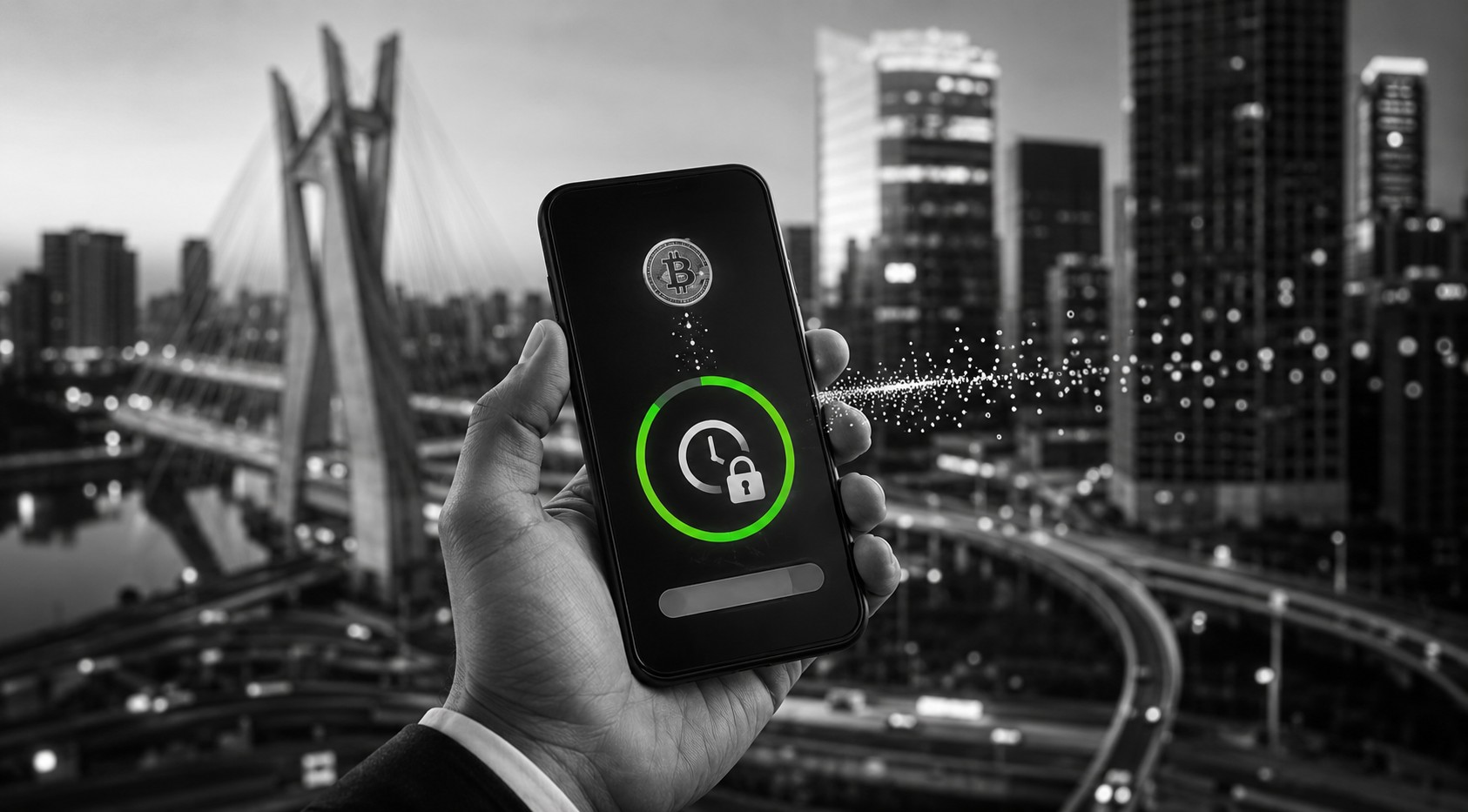
Brazil is tightening oversight of its rapidly expanding digital-asset market, introducing a 24-hour review period for certain cryptocurrency transfers in an effort to prevent fraud and stop stolen funds from disappearing beyond the reach of financial institutions.
New safeguard targets large transfers
Under rules announced by the Central Bank of Brazil, regulated virtual-asset providers will generally have to delay qualifying transfers worth more than US$10,000. The threshold can be reached through a single transaction or through several transfers made by the same customer during one day.
The requirement will apply when assets are being sent to cryptocurrency companies based outside Brazil or to self-custody wallets controlled directly by customers. Smaller transactions may also be delayed when monitoring systems identify unusual behaviour or other indicators of financial crime.

The regulation is scheduled to take effect on 1 January 2027, giving cryptocurrency platforms and other financial institutions time to update their technology, customer-notification procedures and fraud-detection controls.
Stablecoins included in the crackdown
The measure covers virtual assets including stablecoins, which are digital tokens designed to track currencies such as the US dollar. Stablecoins have become increasingly important in Latin America, where businesses and consumers use them for international payments, savings and protection against volatile local currencies.
Brazilian authorities are concerned that the speed of these transactions can also benefit criminals. Funds obtained through scams may be converted into digital assets and transferred abroad or into private wallets before banks, payment providers or law-enforcement agencies can intervene.
The waiting period is intended to give providers an opportunity to examine the customer, transaction, recipient and destination jurisdiction before releasing the assets.
A review period rather than a freeze
The central bank has stressed that the measure does not constitute a permanent asset freeze. Providers may release a transfer before the full 24 hours have elapsed if their risk assessment supports that decision and the reasoning is properly documented.
Customers must be informed when a transfer is delayed and told that the restriction is precautionary. Providers will also be expected to maintain records of fraud attempts, confirmed incidents and any corrective measures taken.
These requirements could increase operating costs for fintech companies, particularly smaller platforms that must invest in automated monitoring, record-keeping and compliance staff. They could also reduce one of cryptocurrency’s main attractions: the ability to transfer value almost instantly.
Brazil shapes regional crypto regulation
Brazil has emerged as one of Latin America’s largest markets for digital payments and virtual assets. Its regulatory decisions are therefore closely watched by financial institutions, investors and policymakers elsewhere in the region.
The new safeguard reflects a wider transition in the cryptocurrency sector. Regulators increasingly want digital-asset businesses to follow fraud-prevention and customer-protection standards similar to those imposed on banks and conventional payment companies.
For legitimate customers, the practical effect will be concentrated on larger transfers to offshore platforms and private wallets. For the industry, however, the message is broader: faster digital finance will be permitted, but not without stronger controls over where money is going and how quickly it can leave the regulated system.
Newshub Editorial in Latin America – 23 August 2026

Ask NF GPT
If you have an account with ChatGPT you get deeper explanations,
background and context related to what you are reading.
Recent Comments