
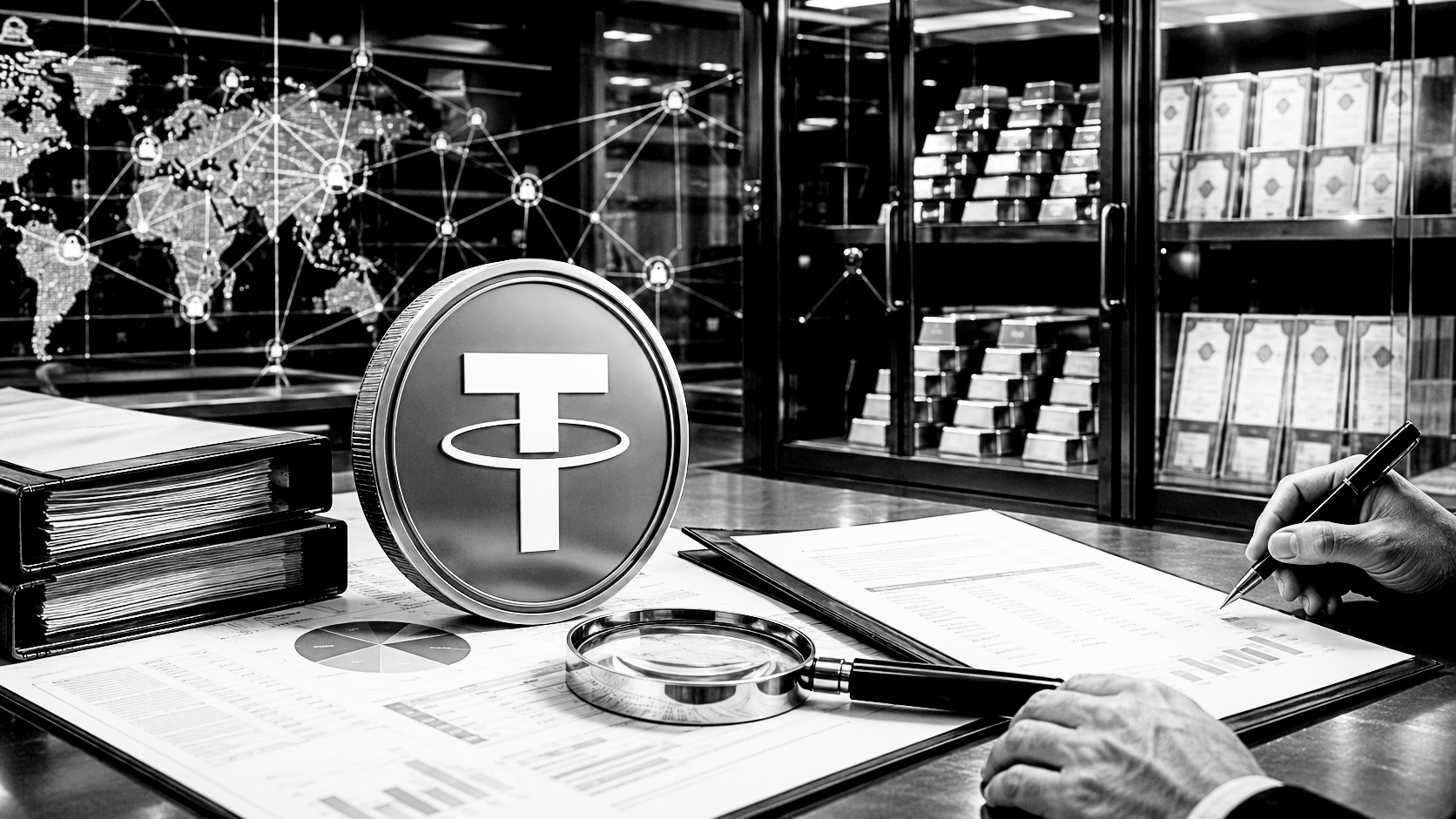
Stablecoin issuer Tether has completed its first full independent financial audit, marking a significant development for the blockchain industry’s largest dollar-linked digital asset. KPMG US issued an unqualified opinion on the company’s financial statements for the year ending 31 December 2025.
A long-awaited examination
Tether, which is based in El Salvador, has faced years of questions regarding the composition and availability of the reserves supporting its USDT stablecoin. The company had repeatedly promised to obtain a complete audit but had previously published quarterly attestations rather than fully audited annual financial statements.
An attestation examines selected information at a particular time, while a full audit involves a broader review of financial records, internal systems, ownership documentation, transactions, valuations and counterparties.


KPMG confirmed that it had issued its opinion in accordance with standards established by the American Institute of Certified Public Accountants. The accounting firm did not provide further details because of client confidentiality.
Reserves exceed liabilities
According to Tether, the audited statements showed that its reserves exceeded liabilities by $6.8 billion at the end of 2025. The company has issued approximately $183 billion in dollar-pegged tokens, making USDT the world’s largest stablecoin by circulation.
Tether says each token is supported by assets denominated in US dollars or instruments intended to preserve equivalent value. These holdings include US Treasury securities, cash-equivalent investments and gold.
The company said KPMG examined the evidence supporting its financial statements and physically counted every gold bar held as part of the reserve portfolio. Previous reserve attestations had been conducted by BDO Italia.
Audit remains unpublished
Although KPMG confirmed the audit and its unqualified opinion, the complete audited financial statements have not been made public. This means investors, regulators and market participants cannot independently examine the detailed composition, maturity or risk profile of all reserve assets.
An unqualified opinion generally indicates that an auditor considers the financial statements to present the company’s position fairly under the relevant accounting framework. It does not remove financial, operational or market risks, nor does it guarantee the future ability of an issuer to meet redemption demands.
Implications for blockchain finance
Stablecoins have become essential infrastructure within digital-asset markets. They are used to settle cryptocurrency trades, transfer funds between blockchain networks and provide access to dollar-linked value in countries where traditional financial services may be limited.
Their expansion into payments, cross-border transfers and institutional settlement has increased regulatory pressure on issuers to demonstrate that tokens are fully backed and readily redeemable.
Tether’s audit could therefore raise transparency expectations across the stablecoin sector. Competing issuers may face greater pressure to publish complete audited accounts rather than limited reserve snapshots.
The development also illustrates the blockchain industry’s gradual convergence with established financial standards. As stablecoins become more integrated with conventional payments and capital markets, independent audits, reserve disclosures and regulatory supervision are likely to become central requirements rather than voluntary assurances.
Newshub Editorial in North America – 15 August 2026

Ask NF GPT
If you have an account with ChatGPT you get deeper explanations,
background and context related to what you are reading.
Stablecoin issuer Tether has completed its first full independent financial audit, marking a significant development for the blockchain industry’s largest dollar-linked digital asset. KPMG US issued an unqualified opinion on the company’s financial statements for the year ending 31 December 2025.
Recent Comments