
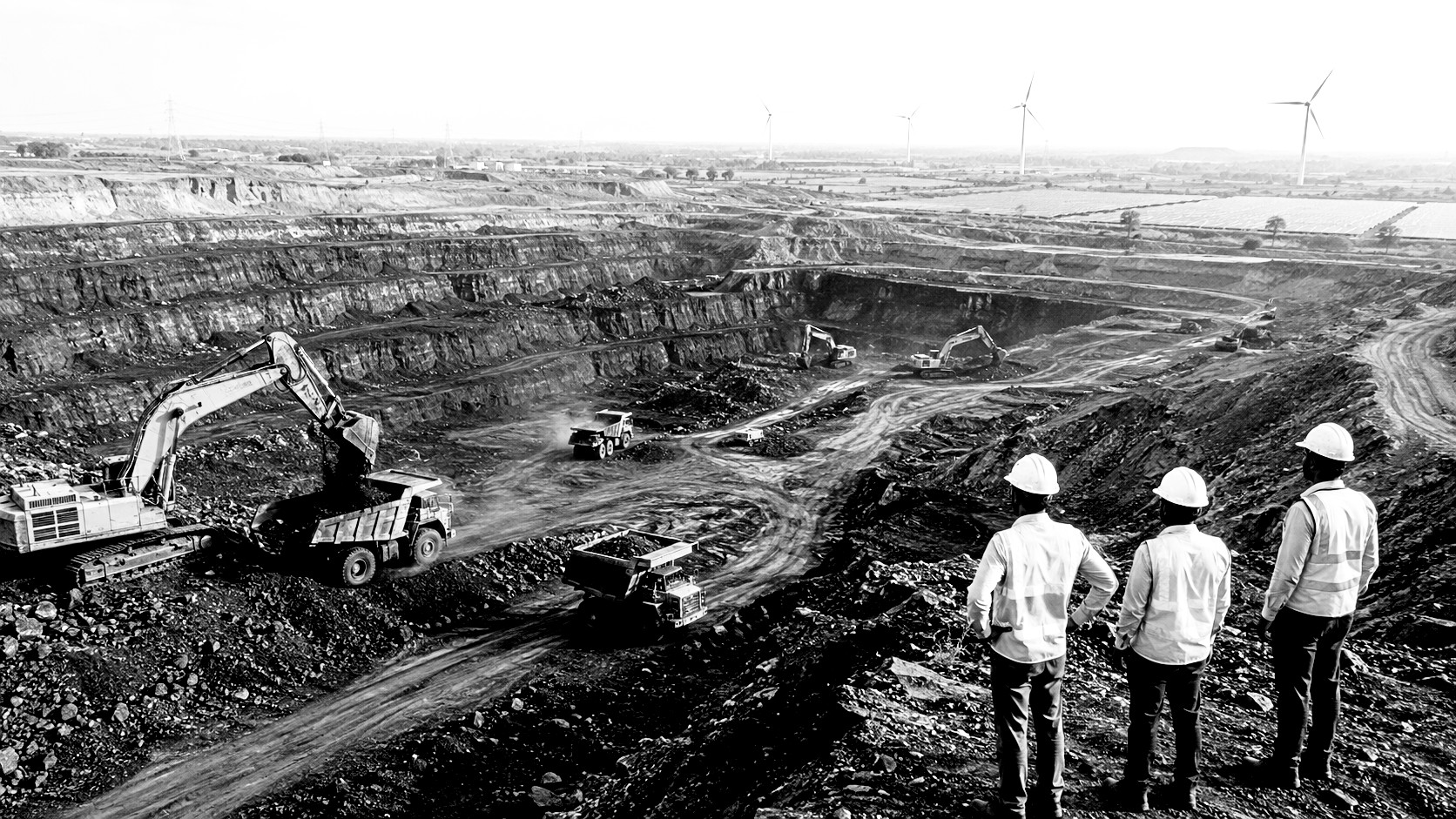
India nearly doubled its planned coal-mining capacity during 2025, driving almost the entire global increase in proposed new projects despite expectations that worldwide coal demand will plateau before declining towards the end of the decade. The expansion reflects New Delhi’s efforts to secure domestic energy supplies as electricity consumption continues to rise.
Global pipeline expands by 11 per cent
Proposed coal-mine capacity worldwide increased by approximately 11 per cent to 2.52 billion tonnes a year, according to new research from Global Energy Monitor. The organisation identified 835 mining projects under development, including 781 million tonnes of annual capacity already under construction or undergoing trial operations.
India’s planned capacity rose from 329 million tonnes a year to 638 million tonnes, accounting for almost all the annual increase in the global project pipeline.


China still has the world’s largest total pipeline, with proposed capacity of about 1.32 billion tonnes annually. Together, China, India, Australia, Russia and South Africa represent more than 90 per cent of all planned coal-mining capacity.
Odisha and Jharkhand lead Indian expansion
Most of India’s new proposals are concentrated in the eastern states of Odisha and Jharkhand, which contain substantial coal reserves and already support large mining, power-generation and industrial operations.
The Indian government is targeting national production of nearly 1.15 billion tonnes during the 2025–26 financial year, rising to 1.5 billion tonnes by 2030. Increasing domestic output is intended to strengthen energy security, reduce reliance on imports and provide fuel for power stations, steel producers and other energy-intensive industries.
India’s electricity consumption is growing rapidly as its economy expands, urbanisation continues and increasingly severe heatwaves increase demand for air conditioning. Coal remains important because it provides reliable generation when solar and wind output is unavailable.
Expansion conflicts with changing energy market
The surge in proposals comes as the outlook for global coal becomes less certain. The International Energy Agency expects worldwide demand to plateau before edging lower by 2030 as renewable generation, nuclear power and supplies of liquefied natural gas increase.
Wind and solar reportedly overtook coal in the global electricity mix for the first time in 2025. However, the transition remains uneven. The IEA expects India’s coal consumption to increase by an average of approximately 3 per cent annually through 2030, producing the largest absolute rise of any country.
Despite the increased number of proposals, new mining capacity entering operation worldwide fell by nearly 40 per cent in 2025 to 113 million tonnes a year. Declines in China and Australia contributed substantially to that reduction, indicating that many announced developments may never become operational.
Financial and environmental risks increase
The scale of India’s planned expansion creates potential economic risks. Mines typically require large initial investments and operate for decades. If renewable energy, storage technology and grid development reduce coal demand faster than forecast, new projects could become underused or stranded assets.
Environmental consequences extend beyond carbon dioxide released when coal is burned. Global Energy Monitor estimates that proposed mines could collectively emit 16.8 million tonnes of methane annually. Methane has a considerably stronger short-term warming effect than carbon dioxide.
India therefore faces a difficult balance between immediate energy security and its longer-term transition. Expanding coal may help meet near-term electricity and industrial demand, but it could also lock the country into costly infrastructure as the global energy system moves increasingly towards cleaner alternatives.
Newshub Editorial in Asia – 13 August 2026

Ask NF GPT
If you have an account with ChatGPT you get deeper explanations,
background and context related to what you are reading.
India nearly doubled its planned coal-mining capacity during 2025, driving almost the entire global increase in proposed new projects despite expectations that worldwide coal demand will plateau before declining towards the end of the decade. The expansion reflects New Delhi’s efforts to secure domestic energy supplies as electricity consumption continues to rise.
Recent Comments