
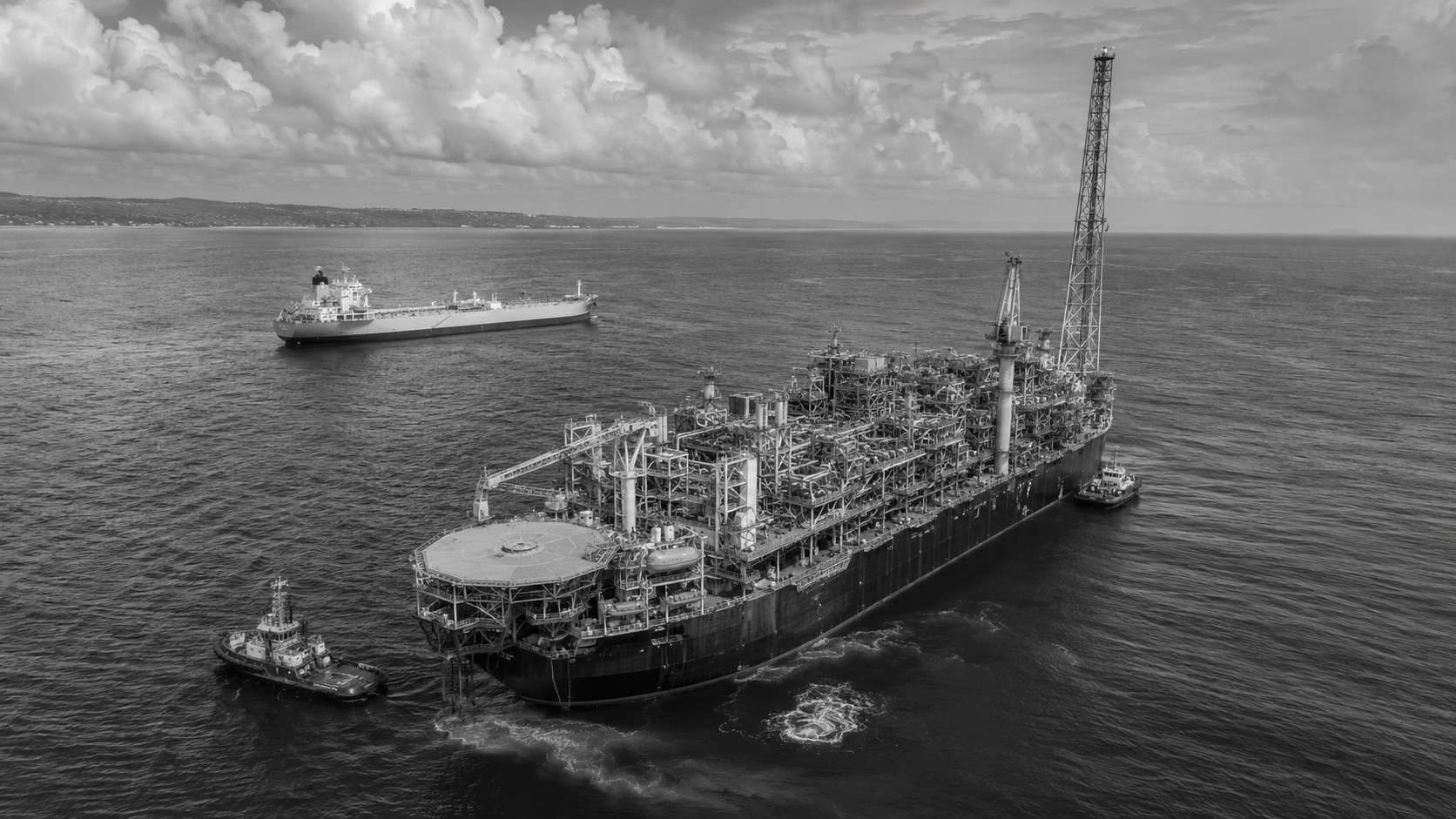
Guyana is expected to receive a larger share of revenue from its rapidly expanding offshore oil industry after the ExxonMobil-led consortium operating the Stabroek Block recovered approximately $55bn in accumulated investment costs. The milestone was reached around two years earlier than anticipated, potentially accelerating the flow of petroleum income into the Caribbean nation’s public finances.
Historic costs recovered ahead of schedule
The consortium has invested heavily in exploration, production vessels, subsea infrastructure and other development work since oil was discovered offshore Guyana in 2015. Under the country’s production-sharing agreement, the companies were permitted to use up to 75 per cent of monthly oil output to recover eligible costs.
With the accumulated expenditure now recovered, a larger proportion of production can be classified as profit oil. This remaining output is divided equally between Guyana and the consortium, alongside the royalty payments received by the government.

The change does not eliminate future development expenses, but it marks an important transition for one of the world’s fastest-growing oil-producing regions.
Stabroek becomes a global energy asset
The Stabroek Block is estimated to contain at least 11bn barrels of oil equivalent. Guyana is already producing more than 900,000 barrels per day, despite having a population of only about one million people.
ExxonMobil operates the block and holds a 45 per cent interest. Chevron controls 30 per cent following its acquisition of Hess, while China’s CNOOC owns the remaining 25 per cent.
The scale and relatively competitive production costs of the offshore fields have made Guyana increasingly important to the international strategies of the three companies.
More production capacity is coming
Further growth is expected as additional offshore projects enter operation. Production from the Uaru development is scheduled to begin during 2026, followed by Whiptail in 2027.
ExxonMobil expects to record a smaller share of Guyanese production after the recovery of historic costs, reducing the volume booked by the company by roughly 100,000 barrels per day from the third quarter. However, the group has indicated that its free cash flow from Guyana could double by 2030 compared with 2025.
The company is also continuing to assess exploration opportunities, including the use of artificial intelligence to interpret geological and drilling data.
Oil revenues present a national opportunity
The additional income could strengthen Guyana’s ability to finance roads, electricity generation, healthcare, education and climate-resilient infrastructure. Reliable power supplies and improved transport links will be particularly important if the government wants oil wealth to support industries outside the energy sector.
Managing the expansion will nevertheless require strong oversight. Rapid public spending can create inflation, labour shortages and pressure on state institutions if projects are approved faster than they can be properly assessed and delivered.
Economic and territorial risks remain
Guyana also faces the challenge of reducing its dependence on petroleum while prices and production remain favourable. Agriculture, tourism, manufacturing and business services will need investment if the country is to build a more balanced economy.
Longstanding tensions with neighbouring Venezuela represent another risk. Parts of the offshore area are affected by the wider territorial dispute between the countries, which remains before an international court.
The early recovery of development costs therefore represents a significant financial milestone, but the lasting value of Guyana’s oil boom will depend on how effectively the resulting revenue is managed and converted into broader economic development.
Newshub Editorial in the Caribbean – 6 August 2026

Ask NF GPT
If you have an account with ChatGPT you get deeper explanations,
background and context related to what you are reading.
Recent Comments