
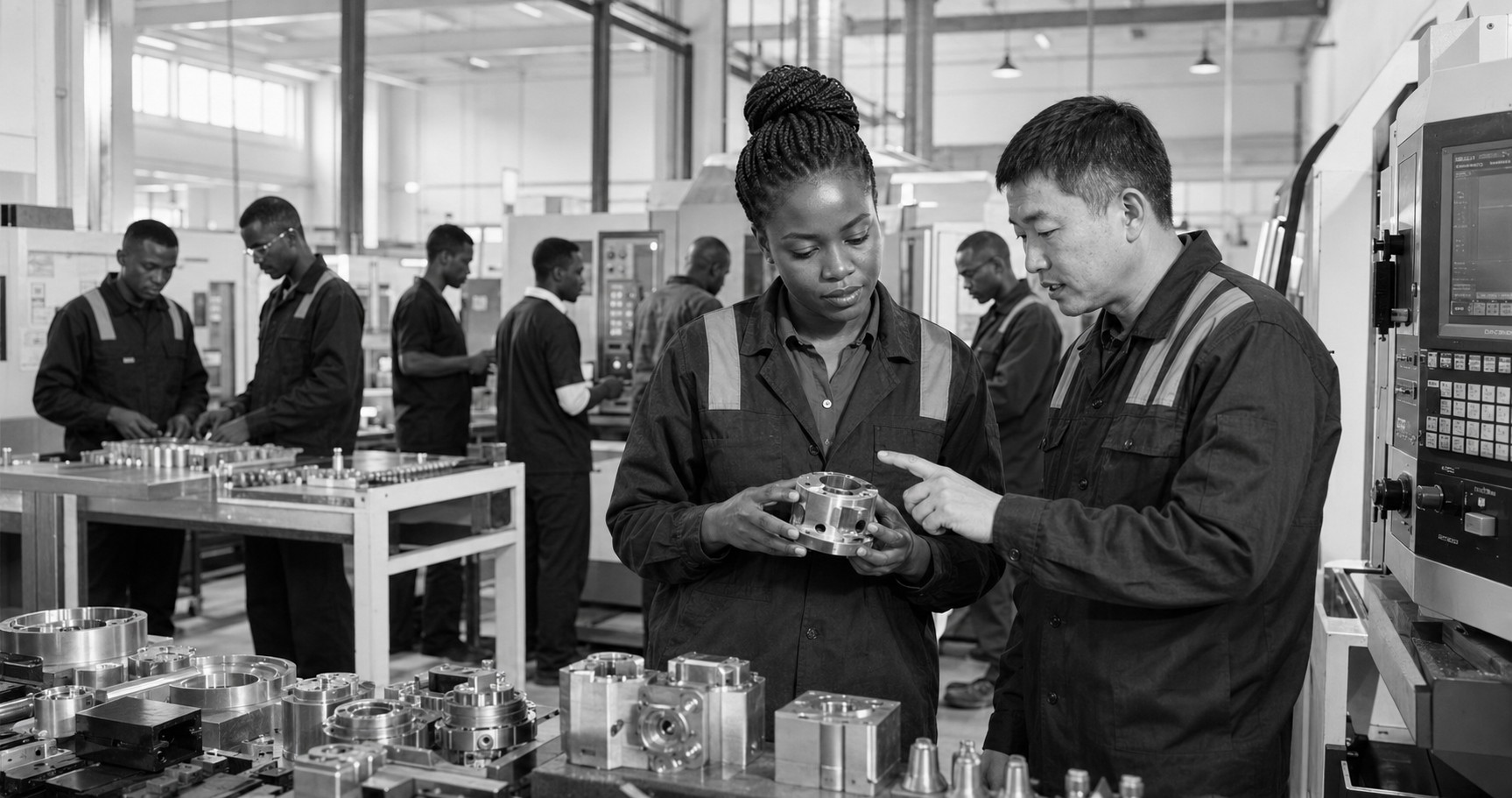
China did not become the world’s leading manufacturer simply by attracting foreign companies or offering inexpensive labour. Its transformation was built on a deliberate process of learning, adapting imported technology and creating dense networks of domestic suppliers capable of producing increasingly sophisticated goods. That process offers important lessons for African countries seeking to move beyond raw-material exports.
Foreign investment should be a starting point
When China opened its economy, foreign manufacturers brought capital, machinery, production systems and access to international markets. Chinese companies observed how these businesses operated, recruited experienced workers and gradually absorbed their technical and managerial knowledge.
The objective was not merely to host foreign-owned factories. It was to ensure that domestic companies could eventually manufacture components, maintain equipment, improve production processes and develop competing products.
African governments frequently measure foreign investment by the total amount committed or the number of direct jobs created. Those figures matter, but they reveal little about whether an investment is building long-term domestic capacity.

A factory that imports its machinery, components, engineers and maintenance services may create employment without establishing a broader industrial ecosystem.
Investment agreements should therefore include practical programmes for apprenticeships, engineering education, local procurement, supplier development and cooperation with domestic universities and technical institutions.
Supplier networks create lasting value
China’s industrial strength does not rest solely on large corporations. It is supported by thousands of specialised companies supplying components, tools, packaging, software, logistics and industrial services.
These clusters reduce production costs and allow manufacturers to solve problems quickly. They also ensure that knowledge spreads beyond the original foreign investor.
Africa needs similar supplier networks. Governments can help smaller manufacturers meet international standards by providing affordable finance, testing laboratories, reliable industrial power and access to modern machinery.
Local-content targets can support this process, but unrealistic requirements may discourage investment or protect inefficient producers. Targets should therefore rise gradually as domestic companies acquire the skills and capacity to supply competitive products.
The goal should be genuine capability rather than the simple assembly of imported components.
Infrastructure must serve production
China connected industrial zones to ports, railways, energy systems and major domestic markets. Infrastructure spending was closely linked to production and exports.
African countries have invested heavily in roads, ports and special economic zones, but some projects remain isolated from local businesses or operate without reliable electricity and efficient customs services.
Industrial infrastructure must be designed around specific value chains. Agricultural regions need processing plants, refrigerated transport and packaging companies. Mineral-producing countries require refineries, chemical facilities and component manufacturers capable of turning resources into higher-value products.
Regional integration is equally important. Few African economies individually offer a market comparable with China’s, but the African Continental Free Trade Area can provide manufacturers with access to a consumer base of more than one billion people.
Current investments offer an opportunity
Chinese companies are already expanding African production. Morocco is developing a major electric-vehicle battery industry, Chery is preparing an automotive manufacturing hub in South Africa and Chinese companies are investing in lithium processing in Zimbabwe.
The decisive question is whether these projects remain foreign-controlled production islands or become foundations for African-owned industrial ecosystems.
Governments must negotiate from a clear national strategy, identify the capabilities they want to acquire and measure whether technology and knowledge are actually reaching domestic firms.
China’s experience cannot simply be copied. Its vast domestic market, centralised political system and historical circumstances were distinctive, while its rapid industrialisation also produced environmental damage, regional inequality and excessive industrial capacity.
The transferable lesson is nevertheless clear: countries achieve industrial power when they use foreign investment to build their own skills, companies and supply chains. Africa’s success will depend not only on attracting factories, but on learning how to replace imported industrial capability with domestic strength.
Newshub Editorial in Africa – July 29, 2026

Ask NF GPT
If you have an account with ChatGPT you get deeper explanations,
background and context related to what you are reading.
Recent Comments