
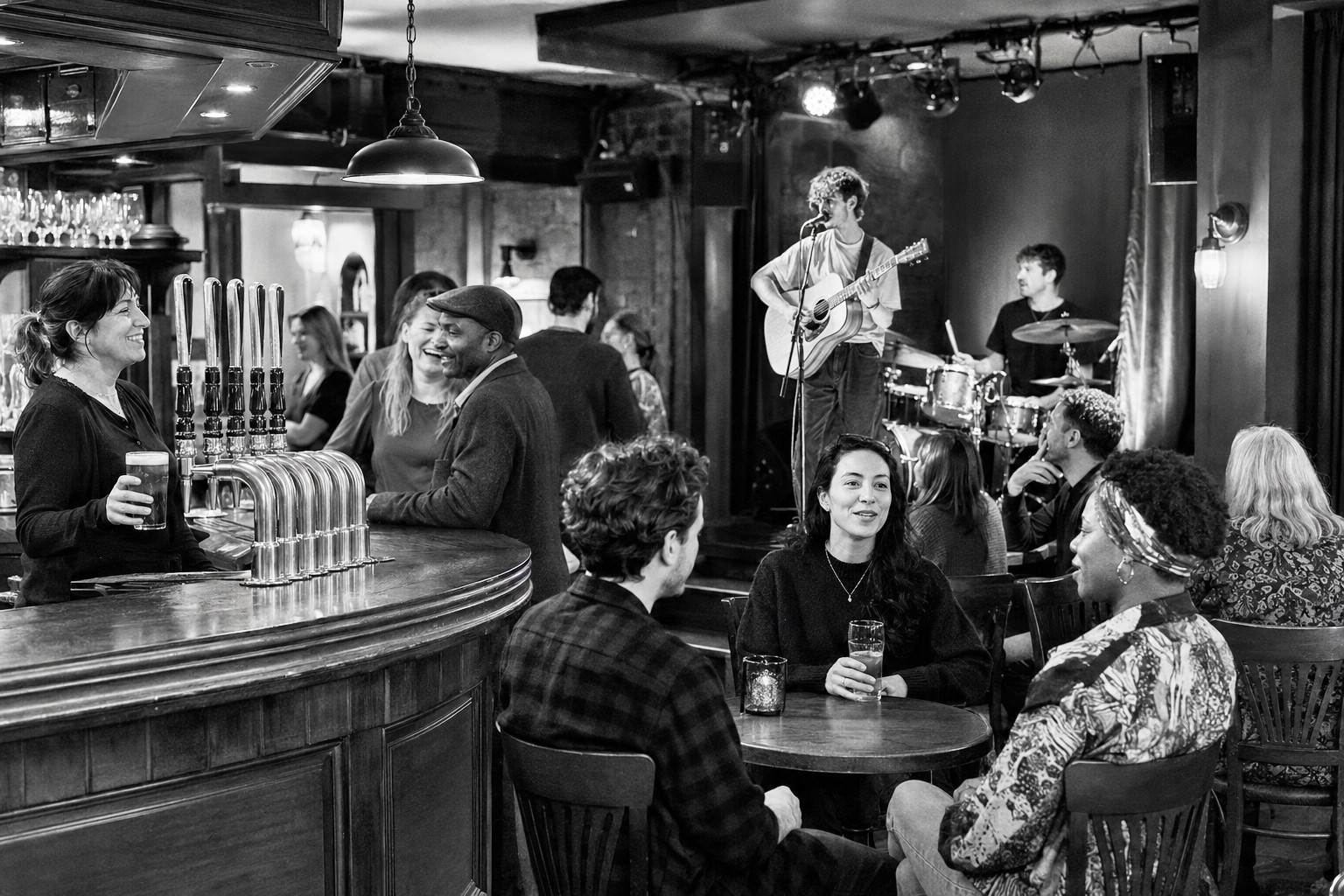
Pubs, clubs and live music venues across England will receive a 20 per cent reduction in their business rates from April, as Prime Minister Andy Burnham moves to ease mounting financial pressure on businesses at the centre of Britain’s high streets and night-time economy.
Relief for nearly 32,000 venues
Downing Street said the measure would support almost 32,000 properties across England. A typical pub is expected to save approximately £1,100 a year when the reduction takes effect.
The relief will apply to qualifying pubs, clubs and smaller live music venues, although some of the country’s largest entertainment venues are expected to fall outside the scheme.

The announcement fulfils one of Burnham’s most visible economic pledges. Before entering Downing Street, he argued that the business rates system placed too great a burden on local hospitality businesses while failing to reflect the growth of online retail and large distribution centres.
The government described pubs and music venues as businesses that deliver social and cultural value beyond their direct economic contribution. Ministers said they support employment, tourism, local supply chains and community life, particularly in towns where traditional high streets have struggled.
Hospitality remains under pressure
The sector has faced a combination of higher energy bills, wage increases, employer costs and reduced consumer spending. Business rates have become an especially sensitive issue following changes to post-pandemic relief and the latest property revaluation.
Operators have warned that apparently modest increases in taxation can determine whether an independent pub, nightclub or performance venue remains open. A continuing stream of closures has also raised concerns about the decline of Britain’s night-time economy and the loss of smaller stages on which new musicians traditionally develop their audiences.
Industry representatives broadly welcomed the announcement, although some argued that the savings would only partially offset the wider increase in operating costs. Others called for permanent reform of the business rates system rather than another targeted relief programme.
Who will pay for the reduction?
Burnham had previously proposed financing the policy through higher rates on large e-commerce warehouses, shifting part of the tax burden from town centres to the distribution infrastructure used by online retailers.
The government’s immediate funding package appears broader. Ministers plan to reconsider reliefs received by businesses such as vape shops, which Downing Street argues do not make the same contribution to community life. Officials will also intensify efforts to tackle tax non-compliance among companies selling through online marketplaces and examine whether those platforms should bear greater responsibility for unpaid taxes.
Questions remain over whether warehouse taxation alone could produce sufficient revenue. Earlier analysis suggested that relatively few large properties are operated exclusively by online retailers, raising the possibility that supermarkets, department stores and other companies with substantial distribution networks could eventually be affected.
An early signal from the new government
The rates reduction forms part of Burnham’s attempt to define his administration as a “cost of living government”. It follows commitments to reduce household utility costs and limit public transport fares.
For hospitality businesses, the announcement offers immediate reassurance but not a complete solution. Its longer-term significance will depend on whether the government proceeds with a wider redistribution of commercial taxation from local high streets towards online commerce and large logistics operations. Reuters
Newshub Editorial in Europe – 23 July 2026

Ask NF GPT
If you have an account with ChatGPT you get deeper explanations,
background and context related to what you are reading.
Recent Comments